
Spaced repetition is worth building into your study routine from day one of medical school. A 2026 meta-analysis of 21,415 learners found it significantly outperformed standard study methods, with an effect size (SMD = 0.78) large enough to move exam scores meaningfully. The spacing effect explains why: memory holds better when review is distributed over time instead of crammed the night before. Start today. Pick one lecture, build some cards, and schedule your first review for tomorrow.
TL;DR:
- Spaced repetition significantly improves exam scores, with a large effect size of 0.78, and doubles long-term retention compared to cramming.
- Implementing consistent study habits, writing one fact per flashcard, and avoiding recognition-based rereading are key to maximizing benefits.
- Starting early in medical school prevents interval compression and ensures steady progress, especially during preclinical years.
- Focused review sessions balanced with card creation, honest recall ratings, and regular deck audits sustain long-term effectiveness.
- Using AI tools to generate review materials saves setup time, but disciplined habits and proper scheduling remain essential for success.
Table of Contents
- The Science Behind Spaced Repetition and Long-Term Retention
- How Do You Actually Implement Spaced Repetition?
- What Does a Spaced Repetition Schedule Look Like Through Med School?
- What Mistakes Wreck Spaced Repetition, and How Do You Fix Them?
- How Do You Combine Spaced Repetition With Lectures and Question Banks?
- Does This Actually Work? A Real Student Example
- My Practical Week-1 and Month-1 Plan
- Get Started With BoardMaster's Spaced Repetition Tools
- Sources
- FAQ
The Science Behind Spaced Repetition and Long-Term Retention
The forgetting curve isn't a metaphor. It's a measurable decline in recall that starts within hours of learning something new, unless that information gets reactivated at the right moment. Spaced repetition works by interrupting that decline right before it would otherwise take hold, then stretching the interval a little further each time you succeed at recalling the material.
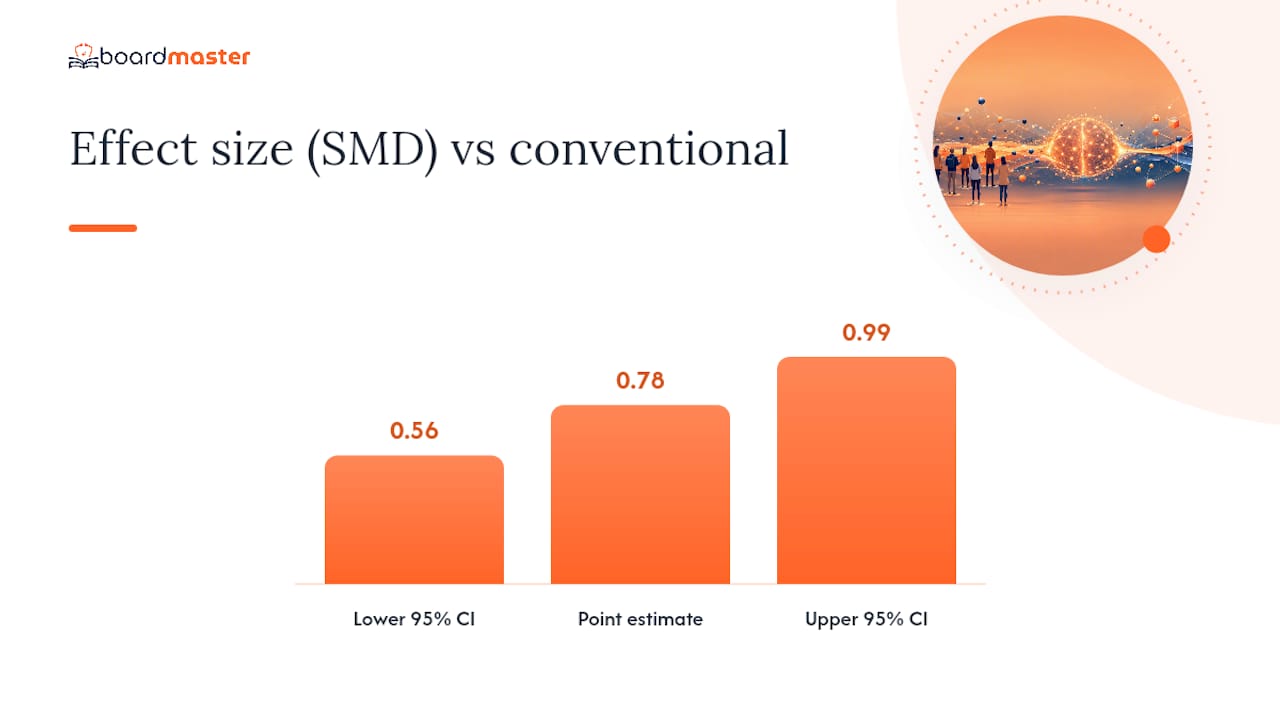
Statistic Callout: The meta-analysis behind this article pooled data from 21,415 learners and found spaced repetition produced a standardized mean difference of 0.78 over conventional study techniques, with a 95% confidence interval of 0.56 to 0.99. In plain terms, that's a substantial jump in test performance. An effect that size, in education research, sits well above what most interventions achieve.
A broad review of spacing research found distributed practice beat massed practice (cramming) in 96% of direct comparisons, often roughly doubling retention when total study time was held equal. That's the science version of what every third-year already knows intuitively: the stuff you crammed for step exams in undergrad evaporates by finals week, while the stuff you kept revisiting sticks.
There's a catch, and it's the part most students get wrong. Spacing works because it introduces what cognitive psychologists call desirable difficulty. Retrieval feels harder when you've let time pass, and that friction is the mechanism, not a warning sign. Common misconceptions block a lot of students from trusting the process:
- "If it feels hard to recall, I must not know it." Wrong. Struggle during retrieval is often what strengthens the memory trace.
- "Rereading notes counts as review." It doesn't. Rereading is recognition, not recall, and it barely moves the forgetting curve.
- "Cramming before boards feels effective because I score well the next day." True short term, but the same material fades fast without spaced follow-up.
- "Spacing means I'll forget things before the next review." Occasional lapses are normal and part of how the algorithm recalibrates your intervals.
How Do You Actually Implement Spaced Repetition?
Software matters less than most students think. Programs like Anki work by adjusting review intervals based on how you rate your recall, but the algorithm can't fix a poorly written card or a schedule you abandon by week three. The habit is the product. The app is just the delivery mechanism.
Here's a workflow that holds up across a full semester:
- Choose one system and commit. Whether it's a dedicated flashcard app or a tool that generates cards for you, pick one and stop switching. Inconsistency kills spacing benefits faster than any single bad habit.
- Write one fact per card. A card asking you to recall three things at once forces partial credit, and partial credit muddies your self-assessment. Use cloze deletions for vignettes and add images for anatomy or pathway questions whenever visual recall matters.
- Set your new-card ceiling early. Cap new cards at a sustainable daily number. Pushing past that early in the semester leads to an unmanageable review queue later on.
- Let intervals expand naturally. A card you nail three times in a row should be pushed out to weeks, not days. Fighting the algorithm's expansion defeats the purpose.
- Review before you create. Reviewing due cards takes priority over making new ones. A backlog of unreviewed cards is worse than a backlog of un-made ones.
Aim for daily review sessions of moderate length once your deck matures, with separate time blocks for card creation. Include a weekly longer session to catch up as needed.
Pro Tip: Rate your recall honestly. Marking a shaky answer as "easy" just to move faster sabotages the whole system. If you had to think for more than three seconds, rate it as "hard," even if you got there eventually.
What Does a Spaced Repetition Schedule Look Like Through Med School?
The rhythm changes as your training does. A ready-made weekly schedule can help you see this in practice, but the underlying logic stays consistent across every phase.
- Preclinical years (M1 to M2): Cap new cards around 20 to 25 per day tied directly to lecture content. Review daily, no exceptions, even on weekends. Intervals should expand from 1 day, to 3, to a week, to several weeks as you master material.
- Clinical rotations (M3): Ditch the marathon nightly sessions. Build micro-decks of 5 to 10 high-yield cards per shift and squeeze in two short review blocks, one before rounds and one at shift change.
- Board prep overlays (dedicated study period): Intensify volume, but don't collapse your intervals to zero. Increase daily review time substantially, while still letting mastered cards sit at longer spacing. Reserve short, compressed review (same-day or next-day) only for the final week before the actual exam.
- Earlier adoption pays off. Observational research shows students who start spacing early in the year outperform those who start late, because late starters end up compressing intervals just to catch up, which erodes the benefit spacing is supposed to provide.
What Mistakes Wreck Spaced Repetition, and How Do You Fix Them?
The single biggest trap is the illusion of competence. A 2009 flashcard study found 90% of participants actually performed better with spaced review, yet 72% believed massed practice was more effective right after studying. Your gut feeling about what's working is often wrong.
- Passive review (just flipping cards without answering aloud or in writing) feels productive but teaches you almost nothing. Force yourself to answer before revealing the back.
- Card clutter piles up fast; prune duplicates, merge overlapping cards, and tag by organ system so decks stay purposeful instead of bloated.
- Starting late compresses your intervals into something closer to cramming than spacing, which cancels out most of the benefit.
- Retire cards you've nailed five times running. Mastered material doesn't need to keep eating review time.
Pro Tip: Set a monthly 15 minute "deck audit." Delete or merge anything that no longer earns its place. A lean deck reviews faster and stays honest about what you actually know.
How Do You Combine Spaced Repetition With Lectures and Question Banks?
Spacing works best as one piece of a daily routine, not a standalone activity. Faculty-created spaced materials paired with low-stakes testing have shown real gains in student uptake, and you can build the same structure yourself.
- Align your deck with the syllabus. Pull cards straight from lecture slides the same day you attend, while the material is still fresh.
- Use short, ungraded quizzes (self-made or class-provided) to force retrieval outside your flashcard app.
- Try a daily combo: lecture, then 20 minutes building cards, then 30 minutes reviewing, then 30 qbank questions tied to that system.
- Interleave related organ systems (cardiac and renal, for instance) rather than blocking one system for days straight. Switching between related topics strengthens discrimination between similar-looking conditions.
A daily board-prep guide walks through how this combo scales into dedicated board review without breaking your spacing rhythm.
Does This Actually Work? A Real Student Example
Dr. Ahmed Abuzoor, whose background in clinical education informs this workflow, points to a straightforward case: a medical student named Sarah moved from the 73rd to the 92nd percentile on practice exams while cutting her study hours roughly in half.
The gain wasn't from studying harder. Sarah was already putting in the hours. The shift came from studying the right material, at the right interval, instead of rereading slides she'd already half memorized.
An AI lecture-to-question generator and flashcard builder can cut the setup time that normally eats into review sessions. That said, the method itself doesn't require paid software. Anki and a disciplined weekly schedule get you most of the way there. BoardMaster is an accelerant for students who want less friction between lecture and review, not a replacement for the habit itself.
My Practical Week-1 and Month-1 Plan
Set up your deck and tag system before classes pile up. Import one to two weeks of lecture material and create 20 to 30 cards to start. For the first month, review daily, even if it's only 15 minutes, and track one measurable goal: percentage of due cards reviewed on time. Small wins, like clearing a full week without a missed review, build the habit that makes everything after it easier.
— Dr. Ahmed Abuzoor
Get Started With BoardMaster's Spaced Repetition Tools
Building a deck from scratch takes hours most students don't have between lectures, labs, and clinic. Some platforms cut that setup time by turning your own lecture notes into AI-generated flashcards with built-in spaced scheduling, plus USMLE-style practice questions tailored to lecture content.

Instead of building cards manually or hunting for generic decks that don't match your course, you upload your lecture, and BoardMaster generates the cards and questions for you, already aligned with what will show up on your exam. The flashcard and spaced-repetition demo shows exactly how that import-to-review pipeline works. If boards are closer on your calendar, the USMLE prep tools apply the same lecture-aware approach to Step 1 and Step 2 material. Upload your next lecture and see how many review-ready cards come out the other side.
Sources
- The Effectiveness of Spaced Repetition in Medical Education: A Systematic Review and Meta‐Analysis
- Evidence of the Spacing Effect and Influences on Perceptions of Learning and Science Curricula
- Optimising learning using flashcards: Spacing is...
FAQ
What Is the 2/3/5/7 Rule for Revision?
It's a common informal spacing schedule where you review new material after 2 days, then 3 more days, then 5, with intervals expanding as recall improves. It's a rough template, not a fixed rule; most spaced repetition software calculates intervals dynamically based on your actual recall performance instead.
What's the Hardest Thing to Learn in Med School?
Most students point to the sheer volume of interconnected material, especially in preclinical courses like pharmacology and pathology, where forgetting outpaces traditional review methods. That volume problem is exactly what spaced repetition and active recall are built to solve.
What Is the 3-2-1 Memory Technique?
Definitions vary across sources, and there's no single peer-reviewed standard for a "3-2-1" method in medical education. If you've seen it referenced, treat it as informal study advice rather than an evidence-backed framework, and lean on documented approaches like spaced repetition and active recall instead.
How Do Med Students Remember So Much Information?
The students who retain the most volume tend to combine spaced repetition with active recall and interleaving, reviewing material at expanding intervals rather than rereading it once and hoping it sticks. Tools like BoardMaster shorten the setup work by turning lecture notes directly into spaced flashcards and practice questions, so more study time goes toward actual review.