
The most effective dual-purpose study strategy examples combine practice testing with spaced repetition, interleaving with worked examples, and elaboration with dual coding — each pairing hits two learning goals in a single session. Here are five you can start tonight:
- Spaced retrieval cards: Write a question on one side of a flashcard, answer from memory, then schedule the card for review in 1, 3, and 7 days. Builds retention and exam recall simultaneously.
- Blank-page dump: Close your notes, write everything you remember about a topic, then check gaps. Retrieval practice and self-diagnosis in under 10 minutes.
- Interleaved problem sets: Mix three different problem types in one 30-minute session instead of drilling one type. Builds problem-solving skill and trains you to identify which method to apply.
- Teach-back summary: Explain a concept aloud as if teaching a classmate, then write a one-paragraph summary. Retrieval and organization in one pass.
- Diagram + question pair: Draw a labeled diagram from memory, then write two practice questions based on it. Dual coding and retrieval practice, back to back.
Key Takeaways
Pairing practice testing with distributed practice is the single highest-yield dual-purpose strategy, rated high utility by Dunlosky et al. and applicable across virtually every subject and learning stage.
| Point | Details |
|---|---|
| Highest-yield pair | Practice testing + spaced repetition earns high utility ratings and builds retention and exam recall simultaneously. |
| Interleaving advantage | Interleaved practice led to 43% higher accuracy on a delayed geometry test versus blocked practice in one cited study. |
| Avoid passive review | Highlighting and re-reading are rated low utility; replace them with blank-page dumps or 10-question self-tests. |
| Plan by subject type | Match technique to course: spaced retrieval for memorization-heavy content, interleaving for problem-solving courses. |
| BoardMaster for med students | BoardMaster automates retrieval practice and spaced repetition from your own lecture notes, merging class and board prep. |
Table of Contents
- 1. Spaced repetition + practice testing: the highest-yield pair
- 2. Interleaving + worked examples: the problem-solving accelerator
- 3. Elaborative interrogation + concrete examples: the comprehension builder
- 4. Dual coding + retrieval practice: the visual memory pair
- 5. Summary-based note triage + practice testing: the efficiency combo
- 6. Teach-back + written summary: the organization-retrieval pair
- 7. Spaced practice + interleaving: the scheduling-level combo
- 8. Concept mapping + elaboration: the big-picture connector
- 9. Practice testing + error analysis: the self-coaching loop
- 10. Dual coding + spaced repetition: the visual flashcard upgrade
- 11. Elaboration + spaced practice: the "why" review cycle
- 12. Active recall + sleep-protected scheduling: the consolidation pair
- How to plan sessions and weekly schedules using these strategies
- Common mistakes that derail dual-purpose study plans
- What the research actually says about these techniques
- Four scenario cards you can copy tonight
- Why most students abandon good strategies too quickly
- BoardMaster puts these dual-purpose strategies on autopilot for medical students
- Sources
- FAQ
1. Spaced repetition + practice testing: the highest-yield pair
Dunlosky et al.'s 2013 review rated both practice testing and distributed practice as high-utility techniques, the only two in the entire review to earn that label. Combining them is the closest thing to a guaranteed return on study time.
What it is: You test yourself on material at increasing intervals rather than reviewing it passively. Each test attempt is a retrieval event; the spacing forces your brain to reconstruct the memory rather than recognize it.
Why it serves two goals: One session builds long-term retention (spacing) and exam-style recall under pressure (testing). You are not studying for class and then separately studying for boards — you are doing both at once.
Session template (30 minutes):
- Pull up 15–20 flashcards or practice questions from the last three days of material.
- Answer each from memory before checking. Mark any miss.
- Review missed items once, then re-test only those.
- Schedule the full deck for review in 3 days; missed items in 1 day.
Works best for: Anatomy, pharmacology, biochemistry, foreign language vocabulary, any course with high-volume factual content.
2. Interleaving + worked examples: the problem-solving accelerator
Blocked practice — drilling 20 problems of the same type — feels productive but trains pattern recognition in the wrong direction. Interleaving forces you to identify which method applies before you solve, which is exactly what exams test.
Why it serves two goals: You build problem-solving fluency and diagnostic skill (recognizing problem types) in the same session. A student who can only solve a derivative problem when they know it is a derivative problem will struggle on a mixed exam.
Session template (40 minutes):
- Select 3 problem types from recent material (e.g., related rates, optimization, implicit differentiation).
- Write 4–5 problems of each type on separate index cards, shuffle them.
- Work through 12–15 problems in random order. Before solving each, write one sentence naming the method you will use.
- Check answers and note which problem types you misidentified.
Works best for: Calculus, physics, organic chemistry, statistics, clinical diagnosis practice.
3. Elaborative interrogation + concrete examples: the comprehension builder
Elaborative interrogation means asking "why is this true?" after every fact you encounter. It sounds slow, but it cuts re-reading time sharply because you are building a web of meaning rather than a list of isolated facts.
Why it serves two goals: You deepen conceptual understanding and generate your own concrete examples, which are one of the six evidence-backed strategies the Learning Scientists identify as classroom-ready. When exam questions reframe a concept, you have a personal example to anchor your reasoning.
Session template (25 minutes):
- Read one section of your notes (no highlighting).
- For each major claim, write "Why?" in the margin and answer in one sentence.
- Write one concrete example from real life or a prior course that illustrates the claim.
- Close notes and recite the claim, your why, and your example from memory.
Works best for: Physiology, economics, psychology, any conceptual course where understanding beats memorization.
4. Dual coding + retrieval practice: the visual memory pair
Dual coding means representing information in both verbal and visual form. Paired with retrieval, it forces you to reconstruct both representations from scratch, which is significantly harder than re-reading a diagram and significantly more durable.
Why it serves two goals: You build visual-spatial memory (useful for anatomy, biochemical pathways, circuit diagrams) and retrieval fluency in the same pass. Students who only read descriptions of the brachial plexus rarely outperform students who have drawn it from memory six times.
Session template (35 minutes):
- Study a diagram or process flow for 5 minutes.
- Close the source. Draw the diagram from memory, labeling every component.
- Compare to the original. Circle every error or omission.
- Write two practice questions based on the diagram (e.g., "What happens if this structure is damaged?").
- Answer those questions without looking at the diagram.
Works best for: Anatomy, biochemistry pathways, electrical engineering, geography, any course with process diagrams.
5. Summary-based note triage + practice testing: the efficiency combo
Most students review all their notes equally. That is a time sink. Note triage means sorting material by what you do not yet know, then testing only on those gaps.
Why it serves two goals: You cut total review time (efficiency) and build exam recall on your weakest material (targeted retrieval). The Cornell Learning Strategies Center describes blank-page testing as one of the most practical ways to identify gaps and convert them into targeted follow-up study.
Session template (30 minutes):
- Scan your notes for the current topic. Mark each concept: green (confident), yellow (shaky), red (blank).
- Write 5–8 practice questions targeting only yellow and red items.
- Answer from memory. Check. Re-test any you missed.
- Move mastered items to green; schedule reds for tomorrow.
Works best for: Any subject before a midterm or final; especially useful for courses with dense lecture slides.
6. Teach-back + written summary: the organization-retrieval pair
Teaching forces you to organize information in a way that passive review never does. You cannot fake understanding when you have to explain a mechanism from start to finish.
Why it serves two goals: Teach-back is a proven active learning technique that combines retrieval with the organizational demand of explaining a concept coherently. The written summary adds a second retrieval pass and a reference you can review later.
Session template (20 minutes):
- Pick one concept from today's lecture.
- Explain it aloud for 3–5 minutes as if teaching a classmate who missed class.
- Write a 150-word summary of what you just said, without looking at notes.
- Compare your summary to the source material and mark any gaps.
Works best for: Pathophysiology, history, literature analysis, any course requiring synthesis over memorization.
7. Spaced practice + interleaving: the scheduling-level combo
This one operates at the weekly schedule level rather than the session level. Instead of blocking all your chemistry study on Tuesday, you spread it across Monday, Wednesday, and Friday, and mix it with physics problems on those same days.
Why it serves two goals: Spacing builds retention across subjects; interleaving builds the ability to switch cognitive modes, which is exactly what a multi-subject exam demands. A practical triage system for multiple exams recommends separating dissimilar subjects to reduce interference and interleaving similar ones to sharpen discrimination.
Works best for: Students juggling three or more courses simultaneously, especially when exams cluster in the same week.
8. Concept mapping + elaboration: the big-picture connector
A concept map is not a mind map. It shows relationships between ideas, not just categories. Drawing one forces you to articulate how concepts connect, which is elaboration in visual form.
Why it serves two goals: You build a mental schema (comprehension) and generate elaborative connections (retention). Students who can draw a concept map from memory before an exam tend to handle novel question formats better than those who only reviewed linear notes.
Session template (30 minutes):
- Write the central concept in the middle of a blank page.
- Branch out with related concepts, connecting each with a labeled arrow that names the relationship (e.g., "inhibits," "is a type of," "causes").
- Close the map. Redraw it from memory on a fresh page.
- Write one practice question that requires understanding at least two of the connections you drew.
Works best for: Immunology, pharmacology drug classes, political science, any course with interconnected systems.
9. Practice testing + error analysis: the self-coaching loop
Taking a practice test and moving on is half the strategy. The second half — reviewing every wrong answer and diagnosing why it was wrong — is where most of the learning happens.
Why it serves two goals: You build exam-taking skill (practice testing) and targeted knowledge repair (error analysis) in one pass. Students who skip error analysis tend to repeat the same mistakes on the next test.
Session template (45 minutes):
- Take a 10–15 question practice set under timed conditions (no notes).
- Score it. For every wrong answer, write one sentence: "I chose X because I thought Y. The correct answer is Z because W."
- Flag the underlying concept for each error and add it to your spaced repetition deck.
Works best for: Board exam prep, standardized test prep, any course with cumulative assessments.
10. Dual coding + spaced repetition: the visual flashcard upgrade
Standard flashcards test verbal recall. Adding a hand-drawn diagram or sketch to the back of each card adds a second memory channel and makes the card harder to answer correctly by rote alone.
Why it serves two goals: Visual encoding (dual coding) strengthens the memory trace; spacing ensures it consolidates over time rather than fading after one review session.
Session template (20 minutes):
- For each new flashcard, add a small sketch or diagram on the back alongside the text answer.
- When reviewing, try to recall both the verbal answer and the visual before flipping.
- Score the card as correct only if both are accurate.
Works best for: Anatomy, histology, biochemistry, any course where visual structure matters.
11. Elaboration + spaced practice: the "why" review cycle
This is elaborative interrogation applied across a spaced schedule rather than in a single session. Each time a card or concept comes up for review, you answer the "why" question again, not just the "what."
Why it serves two goals: Repeated elaboration deepens the conceptual web (comprehension) while spacing ensures the memory persists (retention). The combination is particularly useful for students who understand material in class but cannot recall it two weeks later.
Works best for: Physiology, biochemistry, any course where mechanisms matter as much as facts.
12. Active recall + sleep-protected scheduling: the consolidation pair
Sleep is not a passive gap between study sessions. Memory consolidation happens during sleep, and research on multi-exam scheduling consistently points to protecting sleep as one of the highest-leverage scheduling decisions a student can make.
Why it serves two goals: Active recall during the day builds the memory trace; sleep consolidates it. Cramming the night before an exam trades consolidation for coverage, which is usually a bad deal.
Session template:
- Do your active recall session (flashcards, practice questions, blank-page dump) at least 90 minutes before bed.
- Do not review new material in the final hour before sleep. Light review of already-mastered material is fine.
- Schedule the next retrieval session for the following morning, when consolidation is fresh.
Works best for: Any subject, but especially high-volume memorization courses where retention across weeks matters.
How to plan sessions and weekly schedules using these strategies
One-night review template
When you have one evening before an exam, the goal is not to cover everything. It is to maximize retrieval on your weakest material.
- Spend 10 minutes triaging notes (green/yellow/red as in Strategy 5).
- Spend 20 minutes on a blank-page dump of the highest-yield topics.
- Spend 20 minutes on 10–15 practice questions targeting red items only.
- Spend 10 minutes reviewing errors and adding missed concepts to a quick list.
- Stop at least 90 minutes before bed. Do not start new material.
Sample weekly plan for multiple subjects
A triage-based scheduling approach recommends building a master schedule that maps subjects to days based on exam proximity and difficulty, not habit or preference.
| Day | Primary subject | Dual-purpose activity | Secondary subject |
|---|---|---|---|
| Monday | Biochemistry | Spaced retrieval + dual coding | Physiology elaboration |
| Tuesday | Physiology | Teach-back + written summary | Anatomy diagram recall |
| Wednesday | Anatomy | Blank-page dump + practice Qs | Biochemistry error review |
| Thursday | Mixed | Interleaved problem set (all 3) | Concept map review |
| Friday | Weakest subject | Practice test + error analysis | Spaced card review |
| Saturday | Light review | Mastered cards only | Sleep protection |
| Sunday | Planning | Triage next week's material | Schedule reviews |
The 1-3-7 review rule adapted for dual-purpose sessions
The classic 1-3-5-7 spacing heuristic maps to dual-purpose sessions this way: review new material the next day (Day 1) with a blank-page dump, again on Day 3 with practice questions, and again on Day 7 with an interleaved mixed set. Weight subjects by multiplying difficulty by exam proximity: a hard subject with an exam in five days gets daily sessions; an easy subject with an exam in two weeks gets every-other-day sessions.
Subject mapping
| Course type | Primary challenge | Recommended dual-purpose technique |
|---|---|---|
| Vocabulary-heavy (anatomy, pharmacology) | Volume of facts | Spaced repetition + retrieval practice |
| Problem-solving (calculus, physics) | Method selection | Interleaving + worked examples |
| Conceptual (physiology, economics) | Understanding mechanisms | Elaboration + concrete examples |
| Clinical / diagnostic | Pattern recognition | Practice testing + error analysis |
| Language learning | Recall under pressure | Dual coding + spaced retrieval |
These mappings align with topic-organized strategy guides that match technique to task demand.
Common mistakes that derail dual-purpose study plans
Mistake 1: Passive review disguised as study. Highlighting and re-reading feel productive because they are easy. Dunlosky et al. rated both as low-utility techniques. The fix: replace any re-reading session with a blank-page dump or a 10-question self-test on the same material.
Mistake 2: Overloading a single session with too many techniques. Trying to do spaced repetition, interleaving, dual coding, and teach-back in one 45-minute block causes cognitive overload, not efficiency. Pick one dual-purpose pair per session and do it well.
Mistake 3: Ignoring error analysis. Students who take practice tests and skip the review phase are leaving the most valuable part of the session on the table. Every wrong answer is a diagnostic signal. Write down why you were wrong, not just what the right answer was.
Mistake 4: Cramming the night before. A single long session the evening before an exam compresses material into short-term memory that fades within 24 hours. Distributed sessions across multiple days build durable recall.
Mistake 5: Treating difficulty as failure. Active methods feel harder than passive ones because they are harder. That friction is the mechanism, not a sign you are doing it wrong. Cognitive scientists call this "desirable difficulty" — the short-term struggle that produces long-term retention.
Pro Tip: If a study method feels effortless after the first week, it has probably stopped challenging your memory. Add a harder retrieval condition (longer delay, mixed context, no cues) rather than switching to an easier technique.
What the research actually says about these techniques
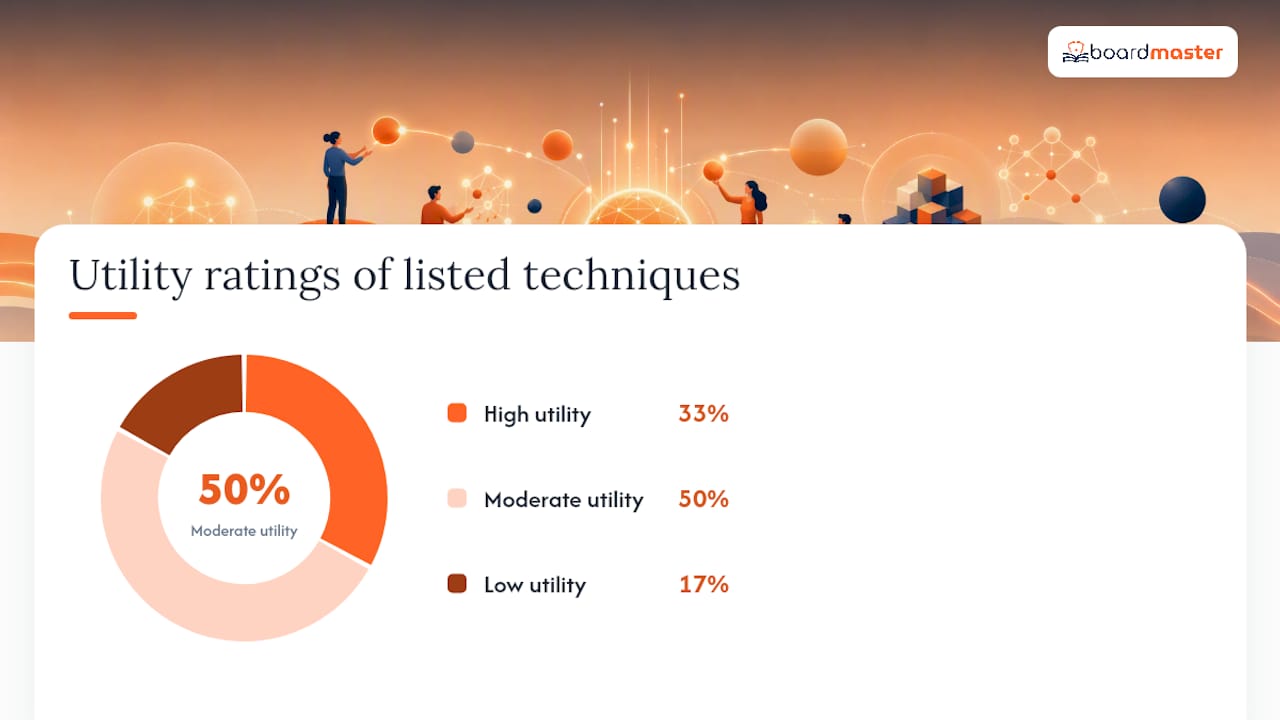
The evidence base for dual-purpose study strategies is not thin. Dunlosky et al.'s 2013 review evaluated ten commonly used learning techniques across multiple dimensions and assigned utility ratings based on generalizability, effect size, and practical applicability:
- Practice testing: High utility. Generalizes across ages, subjects, and formats.
- Distributed practice: High utility. Robust across nearly all learning conditions.
- Interleaving: Moderate utility. Strong for problem-solving and discrimination tasks; mixed for simple recall.
- Elaborative interrogation: Moderate utility. Works best when prior knowledge is sufficient to generate meaningful "why" answers.
- Dual coding: Moderate utility. Strongest when verbal and visual representations are genuinely complementary.
- Highlighting and re-reading: Low utility. Widely used but consistently outperformed by active methods.
On interleaving specifically, Scientific American's summary of the empirical literature cites one geometry study in which interleaved practice led to 43% higher accuracy on a delayed test compared to blocked practice. That result comes from a specific experimental context, so treat it as an illustrative signal rather than a universal guarantee — but the direction of the effect is consistent across multiple studies.
The Learning Scientists synthesize these findings into six classroom-ready strategies (spacing, retrieval practice, elaboration, interleaving, concrete examples, dual coding) and provide free teaching materials. Their framework is a useful shorthand for students who want to know which combinations are evidence-backed.
One important boundary condition: these techniques generalize well across most subjects and ages, but the optimal implementation varies. A student with strong prior knowledge benefits more from elaboration than a student encountering a topic for the first time, who may need more worked examples before interleaving becomes useful. Adapt the pairing to where you are in the learning curve, not just to the subject.
Four scenario cards you can copy tonight
Scenario 1: Intro biology memorization (cell organelles)
Problem: 40 organelles, functions, and locations to memorize before Friday's lab practical.
Strategy: Dual coding + spaced retrieval
Session flow (35 minutes):
- Draw a blank cell outline from memory. Label every organelle you can.
- Check against your notes. Add missed organelles in a different color.
- Write one flashcard per missed organelle: front = function question, back = name + sketch.
- Review all cards tomorrow and again in 3 days.
Success marker: You can draw and label 90% of the cell from memory without prompting.
Scenario 2: Calculus problem-solving (derivatives)
Problem: You can solve related rates problems when you know that is what they are, but you freeze on mixed exams.
Strategy: Interleaving + worked examples
Session flow (40 minutes):
- Pull 5 related rates, 5 implicit differentiation, and 5 optimization problems.
- Shuffle. Before solving each, write the method name.
- After finishing, review any problem where you misidentified the type. Work through the correct method step by step.
Success marker: You correctly identify the method before solving on at least 80% of problems.
Scenario 3: Language vocabulary (Spanish, 50 new words)
Problem: You recognize words in context but cannot produce them from English prompts.
Strategy: Spaced retrieval + dual coding
Session flow (25 minutes):
- For each new word, create a flashcard with the English prompt on the front and the Spanish word plus a small sketch on the back.
- Test yourself English-to-Spanish only (production, not recognition).
- Schedule missed cards for tomorrow; correct cards for Day 3.
Success marker: You can produce 80% of the new words from English prompts without visual cues.
Scenario 4: Medical school anatomy (brachial plexus)
Problem: The brachial plexus has five roots, three trunks, six divisions, three cords, and five terminal branches. Reading about it does not help.
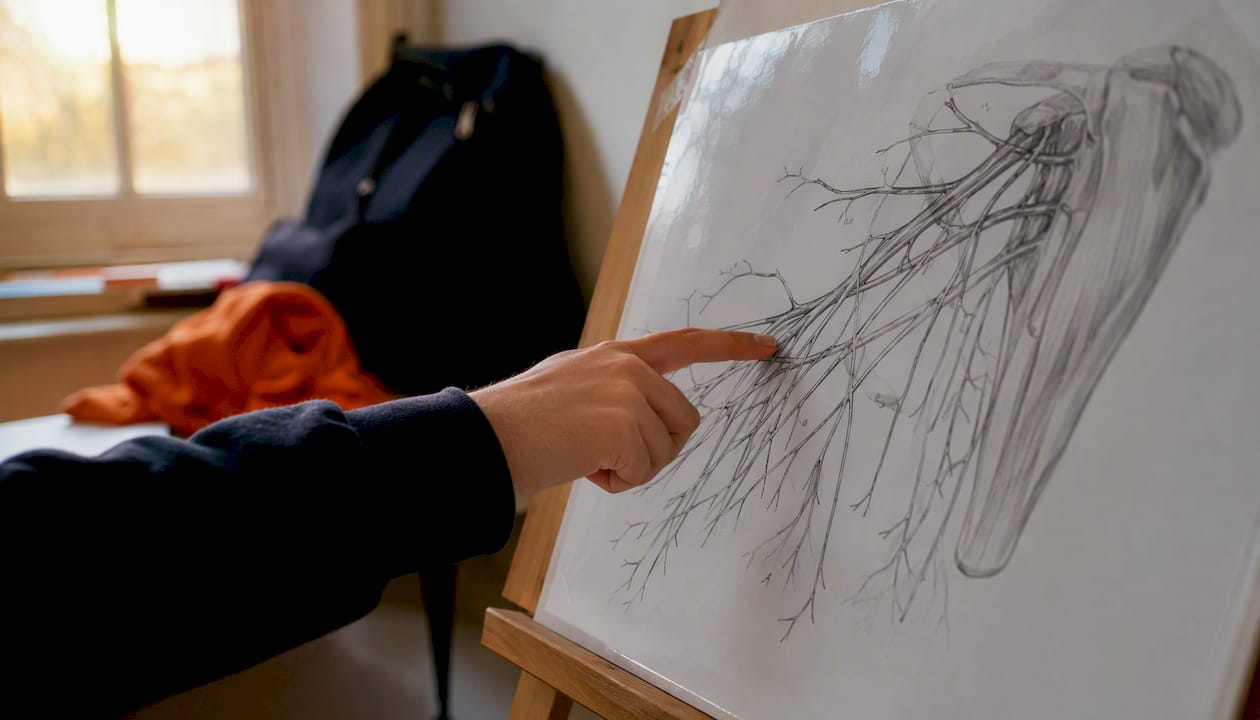
Strategy: Dual coding + practice testing + error analysis
Session flow (45 minutes):
- Study the diagram for 5 minutes.
- Draw it from memory, labeling every level.
- Write 5 clinical vignette questions (e.g., "Which cord is damaged if the patient cannot flex the elbow?").
- Answer without the diagram. Check. Add errors to your spaced deck.
Success marker: You can draw the full plexus and answer 4 of 5 clinical questions correctly without prompting.
Each of these scenarios maps directly to the weekly template in the planning section above. Slot Scenario 4 into Thursday's interleaved session and Scenario 2 into Monday's primary block.
For students in clinical programs, the BoardMaster guide to dual-purpose studying in med school covers how to align these scenarios with board exam prep specifically.
Why most students abandon good strategies too quickly
The research on effective study techniques is not new. Dunlosky's review came out in 2013. The Learning Scientists have been publishing free resources for years. Yet most students still default to highlighting and re-reading, which consistently underperform active methods. Why?
Because active methods feel worse in the moment. Retrieval practice is uncomfortable when you cannot remember an answer. Interleaving is frustrating when you keep misidentifying problem types. Spaced repetition feels inefficient when you are reviewing cards from three weeks ago instead of cramming tonight's lecture.
That discomfort is the signal, not the problem. Students who understand this tend to stick with the methods long enough to see results. Students who interpret difficulty as evidence that a technique is not working for them switch back to passive review, which feels better and produces less.
One thing worth saying plainly: you do not need to use all twelve strategies. Pick one dual-purpose pair that fits your current course and run it for two weeks before adding another. The students who try to overhaul their entire study system in one weekend rarely sustain any of it. The ones who add one technique at a time, track whether it is working, and adjust gradually tend to build something durable.
For students navigating clinical coursework specifically, the personalized study guide for clinical courses on the BoardMaster blog addresses how to prioritize when the material volume is genuinely overwhelming.
BoardMaster puts these dual-purpose strategies on autopilot for medical students
Medical students face a specific version of this problem: they need to prepare for class exams and USMLE/COMLEX boards simultaneously, using the same study hours. That is the exact scenario dual-purpose strategies were built for, and it is what BoardMaster is designed to handle.
Upload your lecture notes and BoardMaster's AI question generator produces USMLE-style practice questions drawn from your professor's actual material. That is retrieval practice and board-style exam training in one pass, no separate qbank session required. The platform's flashcard system with spaced repetition automates the scheduling decisions that students most often get wrong, surfacing cards at the right interval without manual tracking. And the 5,000+ physician-written board questions give you a mixed interleaved set whenever you need one.
The result: students using BoardMaster's targeted approach spend less time covering low-yield material and more time on the concepts their professors actually test. Start with the free tier at Boardmaster and run one dual-purpose session tonight using your own lecture notes.
Sources
- Improving Students’ Learning With Effective Learning Techniques (Dunlosky et al.)
- Effective Study Strategies – Learning Strategies Center (Cornell LSC)
- Learningscientists
- 17 active learning strategies to help you succeed while studying (CMich blog)
- How to Study for Multiple Exams at Once: A Complete System - Study Nearby
- Psychologists identify best ways to study (Scientific American)
- List of Proven Study Strategies by Topic (college guide PDF)
FAQ
What are examples of dual-purpose study strategies?
Spaced repetition paired with practice testing, interleaving combined with worked examples, and dual coding paired with retrieval practice are the most well-supported examples. Each method hits two learning goals — retention and exam skill, or comprehension and problem-solving fluency — in a single session.
What is the 1-3-7 rule for studying?
The 1-3-7 rule is a spacing heuristic: review new material the day after learning it (Day 1), again on Day 3, and again on Day 7. Each review session uses an active method (practice questions, blank-page recall) rather than passive re-reading, so spacing and retrieval practice run together.
What are five study strategies backed by evidence?
Dunlosky et al.'s 2013 review rated practice testing and distributed practice as high utility; interleaving, elaborative interrogation, and dual coding received moderate utility ratings. All five can be paired into dual-purpose sessions.
How do you combine interleaving and spaced repetition?
Build a weekly schedule that spreads each subject across non-consecutive days (spacing) and mixes problem types within each session (interleaving). For example, study calculus on Monday, Wednesday, and Friday, and within each session mix related rates, optimization, and implicit differentiation problems rather than drilling one type per day.
Can BoardMaster help with dual-purpose study for medical exams?
Yes. BoardMaster generates USMLE-style practice questions directly from your uploaded lecture notes, combining retrieval practice with board-style exam training in one pass. Its spaced repetition flashcard system automates review scheduling, so class prep and board prep happen simultaneously rather than sequentially.