Never Waste Another Sunday Making Anki Cards
Upload a lecture, get 300 flashcards with medical images and spaced repetition in seconds. Export any flashcards to Anki with images included, or import your entire deck in 30 seconds.
No credit card required. 30-day money-back guarantee.
Making Anki Cards Is Eating Your Study Time Alive
Sunday afternoon. You've got 6 lectures to review before Tuesday's exam. Your study group is making Anki cards.
You spend 4 hours making 200 cards. Copy-paste text from slides. Add images. Tag everything. Create cloze deletions. By hour 3, you're so burned out you can't even remember what you're making cards about.
Monday: You've got 200 new cards to review. Plus 350 cards from last week that are due. Tuesday morning: You're drowning in reviews instead of actually studying.
You didn't sign up for medical school to become an Anki card factory. Yet here you are, spending more time making study materials than actually studying.
The average medical student spends 10+ hours per week making and formatting Anki cards. That's 10 hours of studying you're not doing.
Why Existing Solutions Still Leave You Stuck
Anki - Free, but costs you time
The app is free. Making the cards is not. Every card you create is time you could have spent actually reviewing content. And pre-made decks? They're generic, not matched to your professor's lectures.
Pre-made Anki decks (AnKing, Zanki)
Thousands of community-made cards for boards prep. But they don't cover what your professor emphasized in your lecture. Your exam is your professor's exam, not a standardized test.
Manual note-taking
Handwriting or typing notes from lectures. Better for initial learning, but without active recall and spaced repetition, retention drops off a cliff within days.
You need flashcards from YOUR lectures. You need them instantly. And you need spaced repetition built in - not bolted on.
When Your Flashcards Make Themselves, You Finally Have Time to Study
Sunday afternoon. You upload all 6 lectures to BoardMaster. Takes seconds.
You get 300 flashcards with medical images already included, diagrams already annotated. Spaced repetition is built in from day one. No tagging, no formatting, no cloze deletion busywork.
Your study group is still making their Anki decks. You're already reviewing. Two hours later, you've gone through 200 cards. They're still formatting.
And those 5,000 Anki cards you spent months creating? Import your entire deck in 30 seconds. All your progress, none of the rework. Now you've got AI-powered explanations on every card plus automatic spaced repetition scheduling. Or go the other way: export any AI-generated flashcards - images included - straight to Anki.
When you stop making flashcards and start using them, studying actually feels like studying again.
300
Flashcards generated in seconds from a single lecture upload
Everything You Need - Without the Busywork
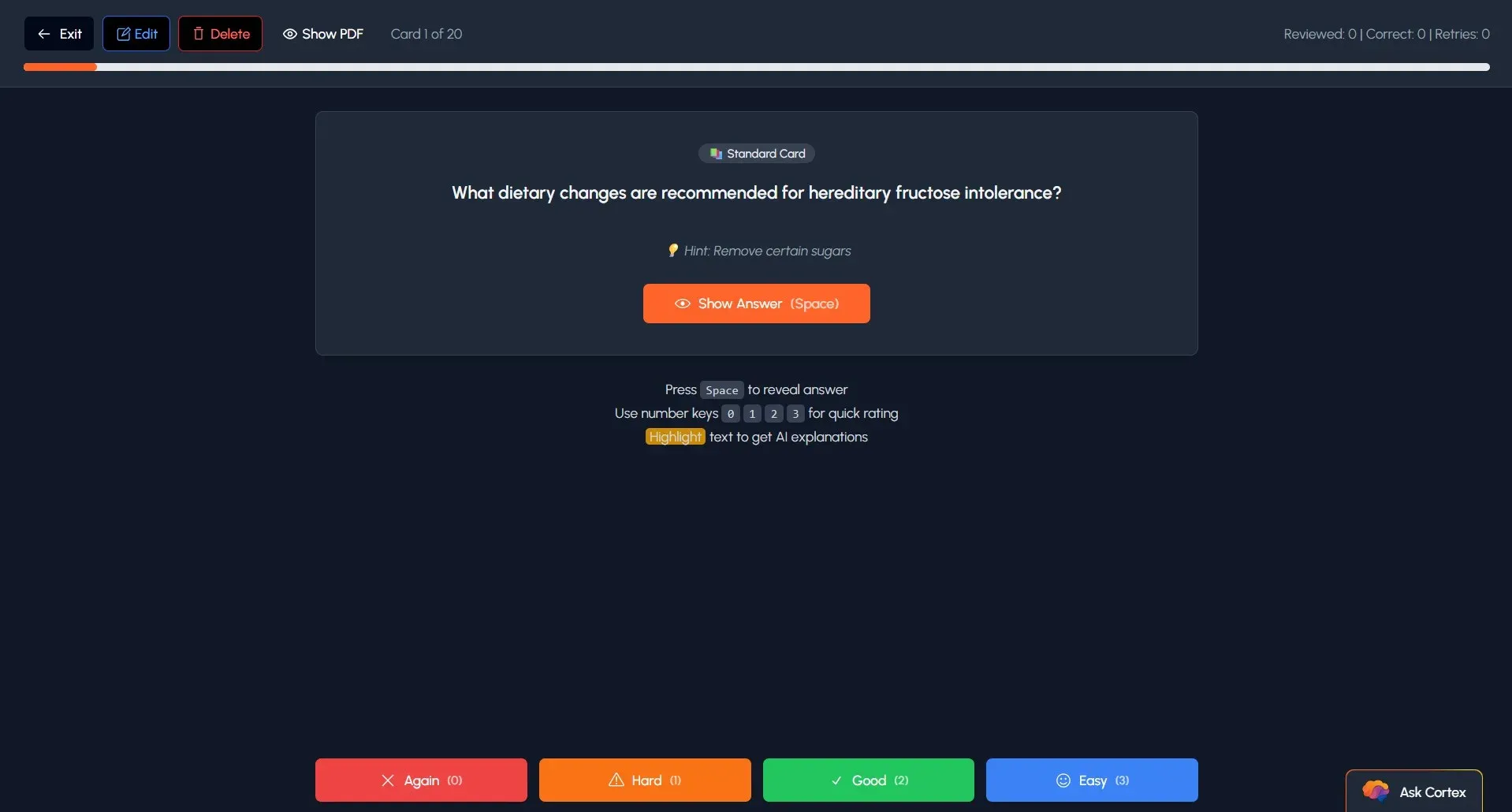
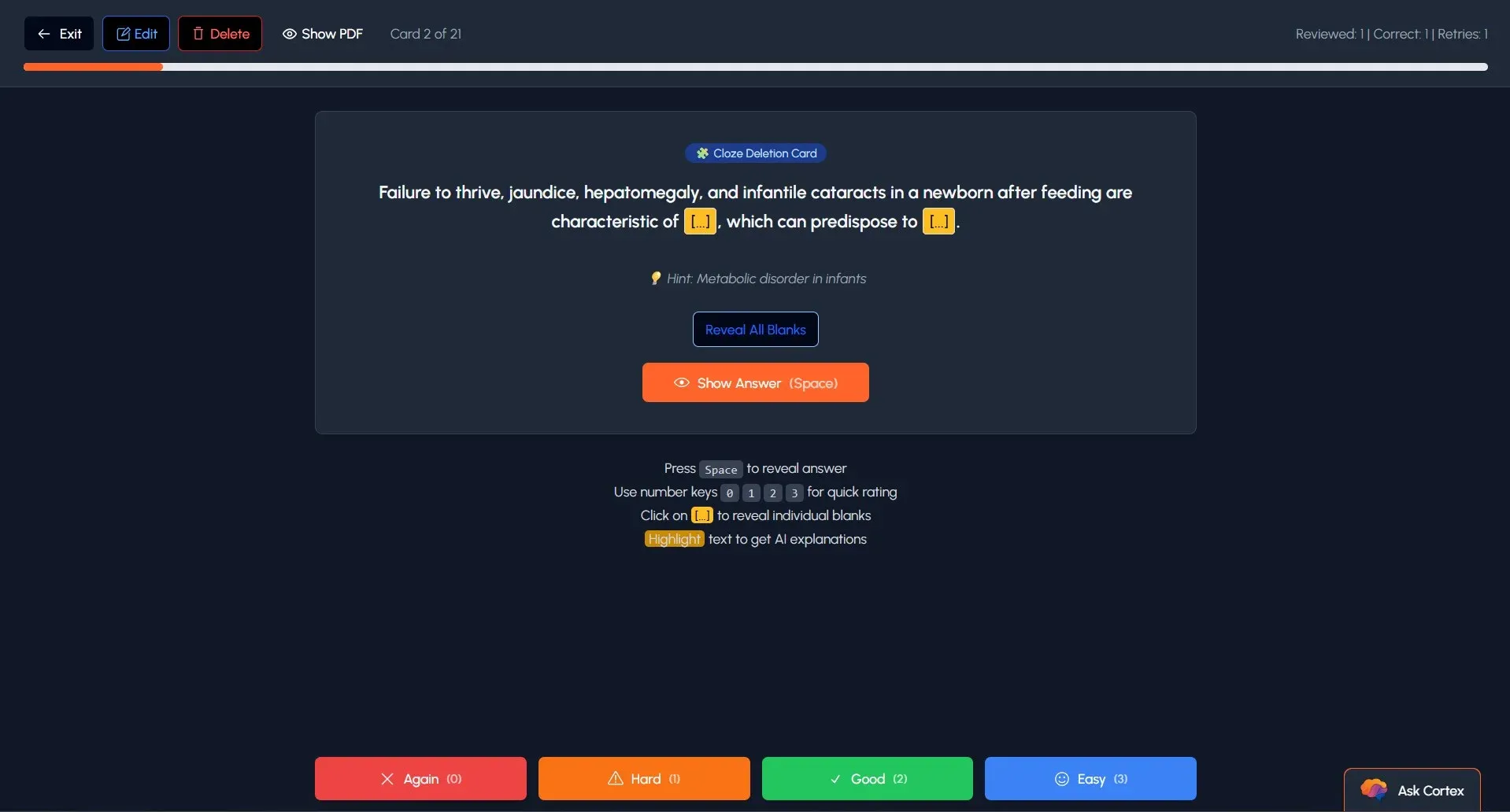
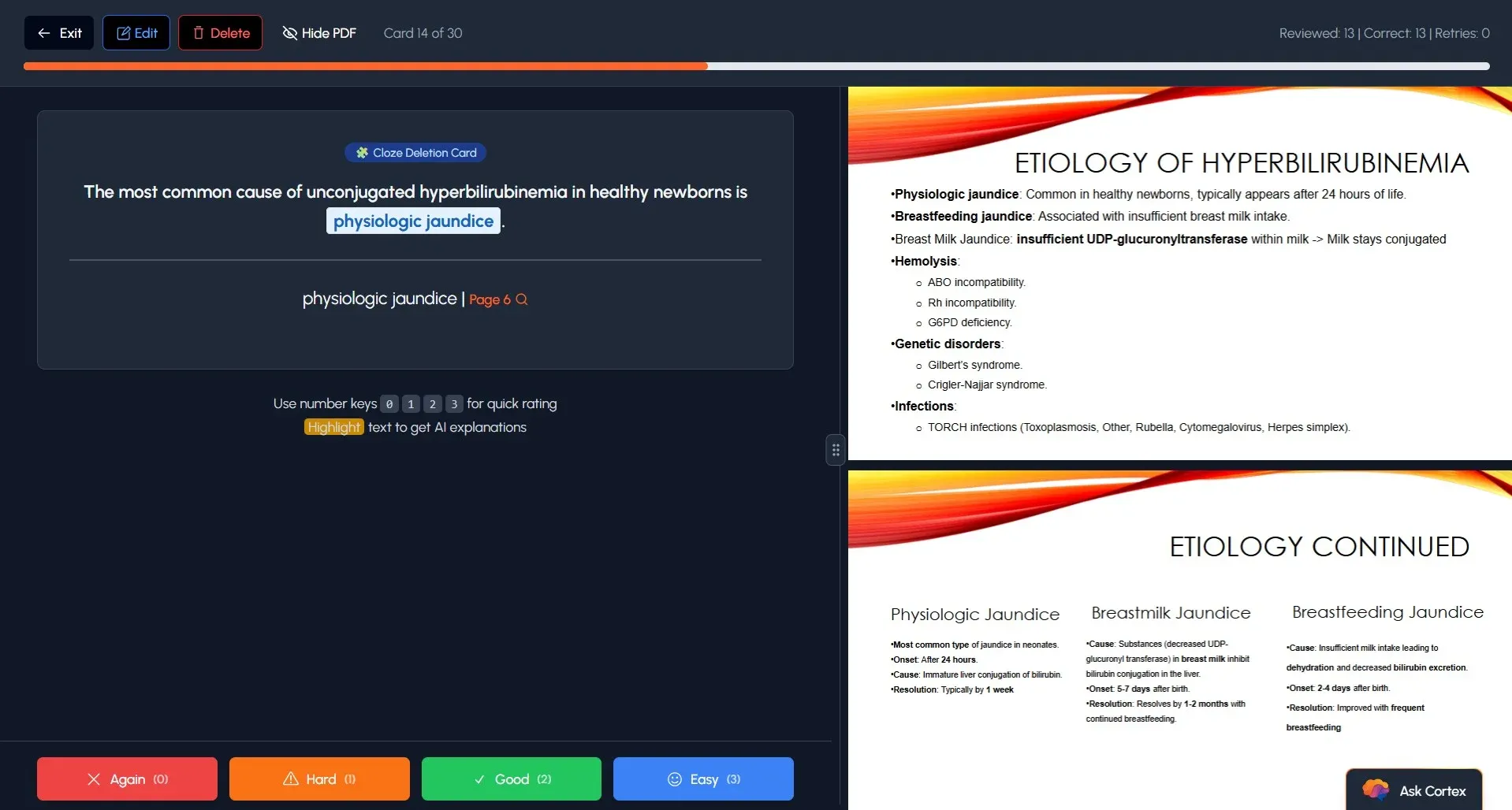
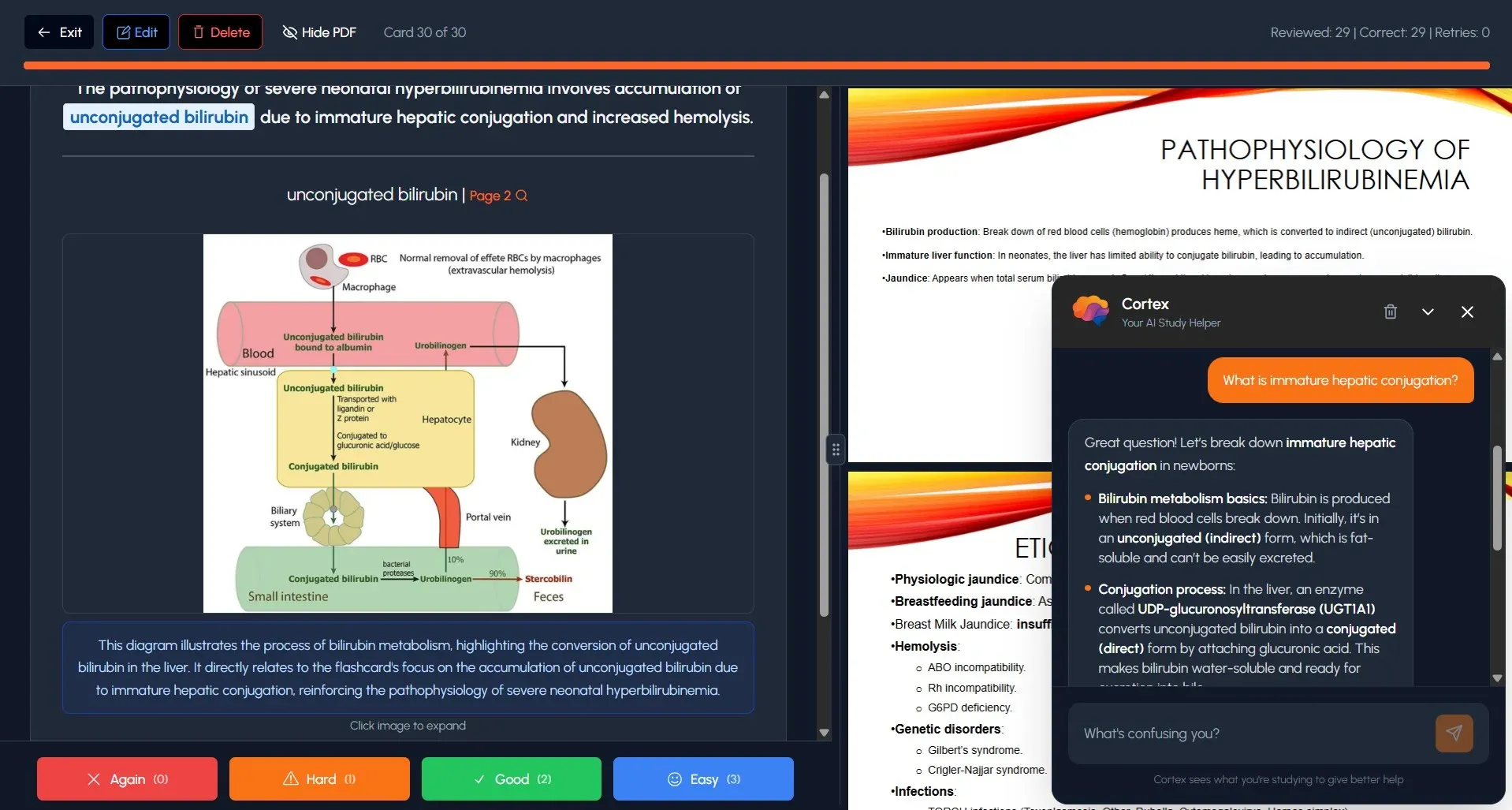
Instant generation from any lecture
Upload PowerPoint, PDF, Word, or handwritten notes. Get flashcards that cover exactly what your professor taught.
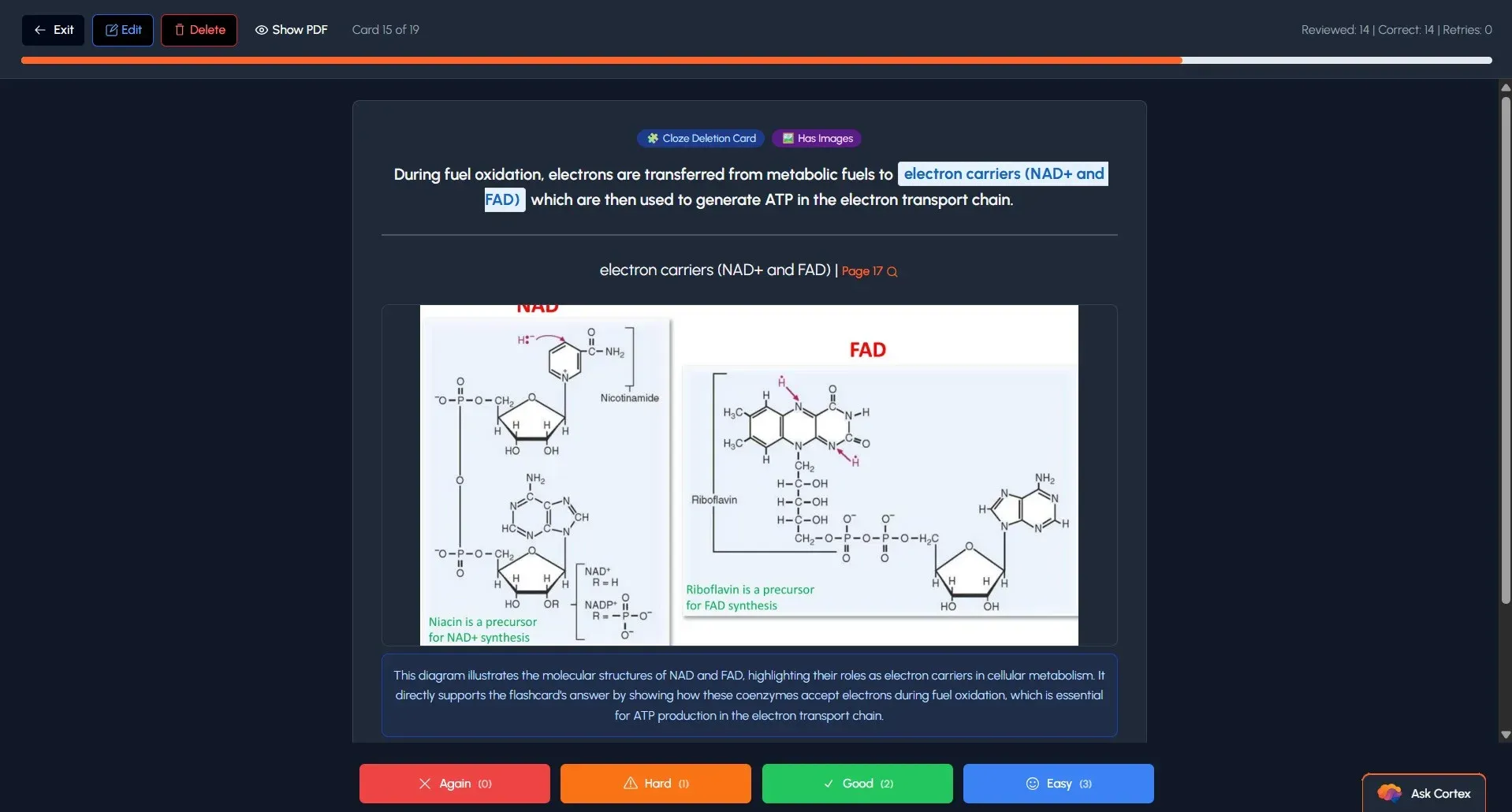
Medical images included
Diagrams, pathology images, and anatomical illustrations are automatically pulled from your lectures and embedded in the cards.
Built-in spaced repetition
No need for separate scheduling. Cards automatically resurface at optimal intervals to maximize retention and minimize wasted review time.
Anki export and import
Export any AI-generated flashcards to Anki with images included. Or import your existing deck in 30 seconds - keep your progress, add AI explanations, and get automatic scheduling.
AI explanations on every card
Stuck on a card? Tap to get an instant explanation powered by Cortex AI - without leaving your review session.
The Science Behind Flashcards: Why They Work and How to Use Them Right
Flashcards leverage two of the strongest evidence-based learning principles: active recall and spaced repetition. But most medical students use them wrong.
Keep cards atomic - one concept per card
A card that asks "List the 6 causes of metabolic acidosis" forces rote memorization. Six separate cards - each asking you to connect one cause to a clinical scenario - build deeper understanding. The best flashcards test recognition and application, not list recall.
Front-load cards with clinical context
Instead of "What drug treats H. pylori?" try "A 45-year-old with epigastric pain and positive urea breath test - what's first-line treatment?" Clinical framing on the front of the card forces you to think the way board exams test.
Trust the spaced repetition algorithm - don't skip days
Spaced repetition works by showing you cards right before you'd forget them. Skipping a day doesn't just miss those cards - it disrupts the spacing intervals for everything. Even 10 minutes of daily review outperforms a 2-hour weekend cram session.
Retire cards you've mastered, add new ones constantly
If you consistently get a card right after long intervals, it's stored in long-term memory. Retire it and free up review time for newer, harder material. A deck that only grows but never shrinks leads to review fatigue and burnout.
300
Flashcards generated per lecture
Seconds
From upload to study-ready cards
30 sec
To import or export an Anki deck
Trusted by students at









Stop Making Flashcards. Start Studying.
Upload a lecture and get 300 flashcards with spaced repetition in seconds. Export to Anki with images, or import your existing deck in 30 seconds. Your Sundays deserve better.