Learn Half the Material Before You Sit Down to Study
Upload any lecture and get an engaging 8-minute podcast where two AI hosts break down the content like they're teaching a friend over coffee. Listen anywhere.
No credit card required. 30-day money-back guarantee.
That 47-Page Pharmacology PDF Is Sitting Unread - and You Both Know It
You've got a 47-page pharmacology PDF. You know you need to read it. You've been telling yourself you'll get to it for three days.
You sit down to read. Page 4: your eyes glaze over. Page 7: you're re-reading the same paragraph for the third time. Page 12: you check your phone. By page 15, you've been "reading" for 45 minutes and absorbed almost nothing.
Dense lecture material wasn't designed to be read. It was designed to be taught - explained, broken down, contextualized. But you can't attend the lecture again. So you're stuck with 47 pages of text and a dwindling attention span.
Meanwhile, you have a 20-minute commute, a 30-minute workout, and a walk between buildings that you spend scrolling Instagram. Time you could be studying - if studying didn't require sitting down and staring at a screen.
Why You Can't Study Dense Material Passively
Re-reading lecture slides
Passive review. Your eyes scan the words but your brain checks out. Studies show re-reading is one of the least effective study methods for retention.
Medical podcasts (general)
Great for supplementary learning, but they cover standardized topics - not YOUR professor's specific lecture on renal tubular acidosis from last Thursday.
Recording and re-listening to lectures
You'd have to sit through the entire 50-minute lecture again. Most of it is filler, pauses, and tangents. You need the content, distilled and engaging, not the raw recording.
You need your professor's specific material delivered in a format you can actually absorb - during the time you already have.
When Your Commute Becomes a Study Session, You Start Ahead
You upload the 47-page pharmacology PDF. BoardMaster generates an 8-minute podcast where two AI hosts - Noah and Maria - explain the whole thing like they're teaching a friend over coffee.
You put in your earbuds on the bus. Noah explains the mechanism of action. Maria adds a clinical pearl. They go back and forth, making connections you missed reading the slides.
20 minutes later, you walk into the library. Your classmates are starting from scratch on the same material. You've already heard the key concepts explained clearly. Twice, actually - you listened to it once more during your walk.
When you sit down to study, you're not starting from zero. You're reinforcing what you already learned. The flashcards make more sense. The practice questions feel familiar. You studied without ever sitting down to study.
8 min
Engaging podcast episodes generated from any lecture - ready to play on your commute
Your Lectures, Explained - Not Just Read Aloud
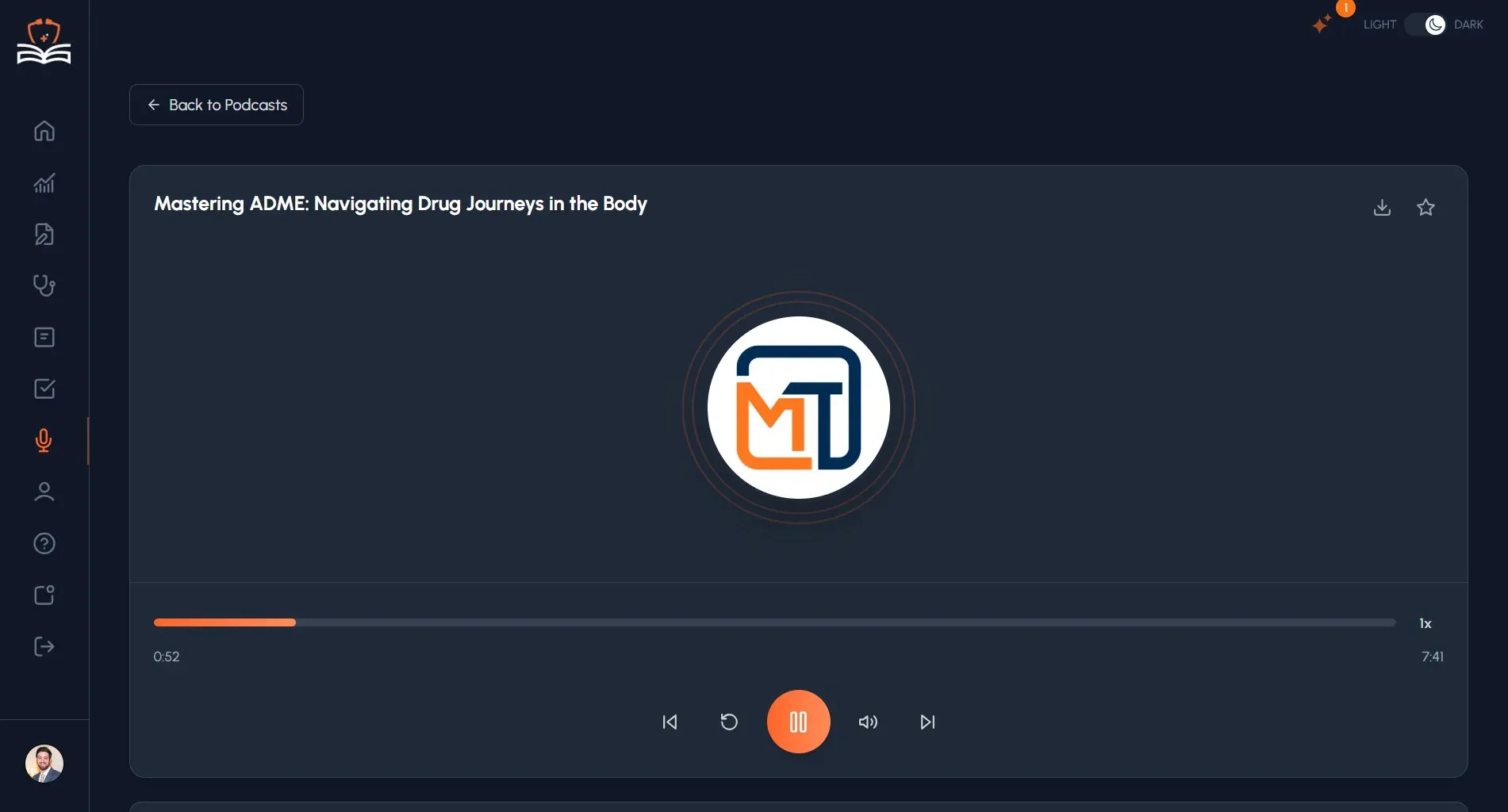
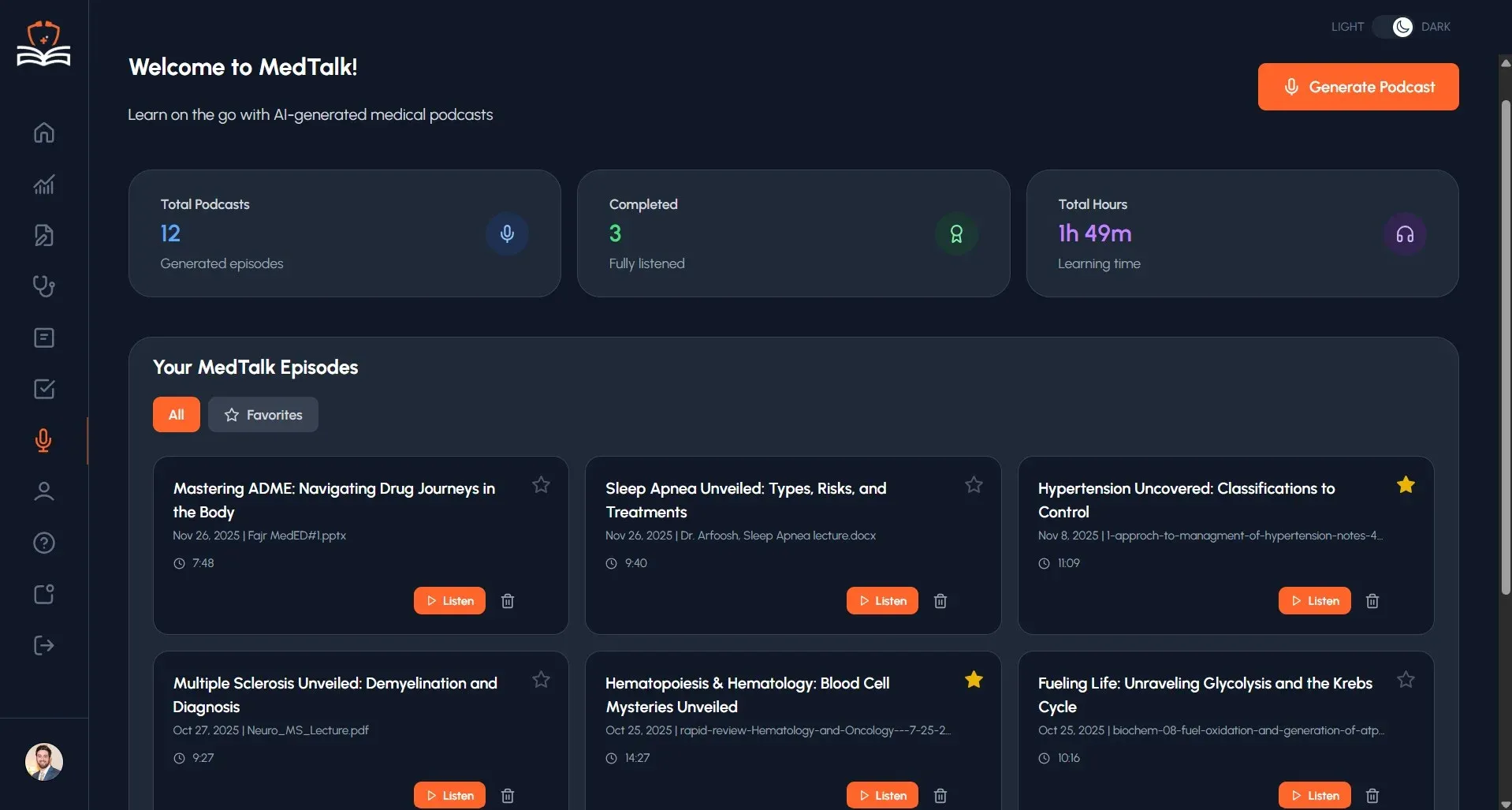
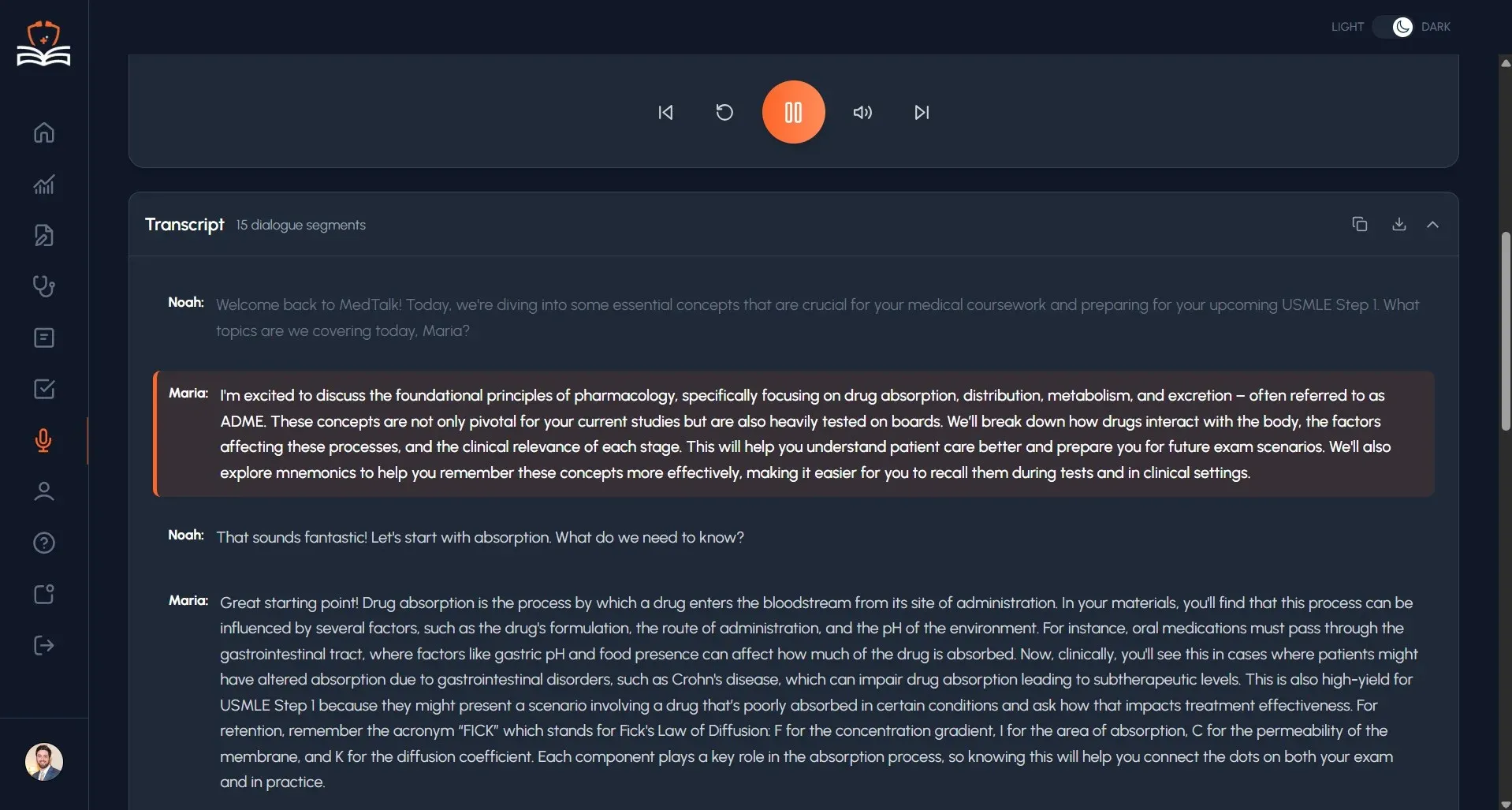
Conversational AI hosts
Noah and Maria break down your lecture content in a natural, engaging conversation. Not a robotic text-to-speech reading - an actual explanation.
Distilled to what matters
50 minutes of lecture condensed into 8 minutes of key concepts, clinical correlations, and high-yield facts. No filler, no tangents.
Generated from YOUR lectures
This isn't a generic medical podcast. It's YOUR professor's material, explained clearly, covering exactly what was taught.
Listen anywhere
On the bus. During your workout. Walking between buildings. Turn dead time into study time.
Perfect for pre-study priming
Listen before you sit down to review. When you start your focused study session, the concepts are already familiar.
Why Audio Learning Works for Medical Students
Your brain processes auditory information differently than visual text. Here's the science behind why study podcasts are an effective complement to traditional studying.
Use audio for review, not first exposure
Audio learning is most effective for material you've already seen once. Listen to a podcast after attending the lecture or reading the slides. Your brain fills in visual details from memory while the audio reinforces the narrative structure and key connections between concepts.
Pair audio with low-cognitive-demand activities
Commuting, exercising, cooking, walking between buildings - these are "dead time" windows where you can't read or do questions but can absolutely learn. Students who convert even 30 minutes of daily dead time into audio review gain 3+ hours of extra study time per week.
Listen at 1.0-1.25x for new material, 1.5-2x for review
Research on audio learning shows that comprehension drops significantly above 1.5x speed for novel material. But for material you're reviewing, faster playback is fine - your brain already has the scaffold and can fill gaps faster. Adjust speed based on familiarity, not impatience.
Use the "explain it back" technique while listening
After each major concept in the podcast, pause and explain it back in your own words - even just mentally. This transforms passive listening into active recall. If you can't explain it, that's a signal to revisit that topic with questions or flashcards later.
8 min
Average episode length - perfect for commutes
Any format
PDF, PowerPoint, Word, handwritten notes
2,000+
Medical students using BoardMaster
Trusted by students at









That Lecture Isn't Going to Read Itself. But It Can Explain Itself.
Upload a lecture and get an 8-minute podcast you can listen to anywhere. Turn your commute into a study session. Turn your workout into a review.