Walk Into Your OSCE Having Practiced 15 Times - Not Once
AI patient simulations that let you practice clinical encounters anytime. Take a history, order exams, generate differentials, and get scored instantly.
No credit card required. 30-day money-back guarantee.
Your School Gave You One Practice Session. One.
Your clinical skills exam is in three days. Your school gave you one standardized patient session. One.
Now they expect you to take a complete history, choose the right physical exam maneuvers, order appropriate labs and imaging, generate a differential diagnosis, and communicate with empathy. All while being recorded and graded.
Your classmates? Too awkward to practice with. The sim center? $100/session, and you need to book 3 weeks in advance. The schedule is already full.
So you walk into your clinical skills exam having practiced exactly once. And you wonder why you freeze when the standardized patient says something unexpected.
Clinical skills can't be learned from textbooks. They require practice - repeated, low-stakes practice where you can make mistakes, get feedback, and try again. One session isn't practice. It's a preview.
Why You Can't Get Enough Practice Before Your OSCE
Standardized patient sessions - $100+/hour
Expensive, limited availability, requires booking weeks in advance. Most schools only provide 1-2 sessions before the real exam. Not nearly enough.
Practicing with classmates
Awkward, inconsistent feedback, and your classmate playing the patient doesn't know the grading rubric. You end up practicing social skills, not clinical skills.
Watching OSCE videos online
Passive watching is not active practice. You can watch 50 videos and still freeze when you're the one conducting the encounter. Clinical skills require doing, not watching.
You need practice that's available when you are, as many times as you want, with instant feedback on exactly what to improve.
When You've Practiced 15 Times, the Real Thing Feels Easy
You open BoardMaster, choose "Chest Pain," and an AI patient greets you: "Hi doctor, I've been having this tightness in my chest for the past hour."
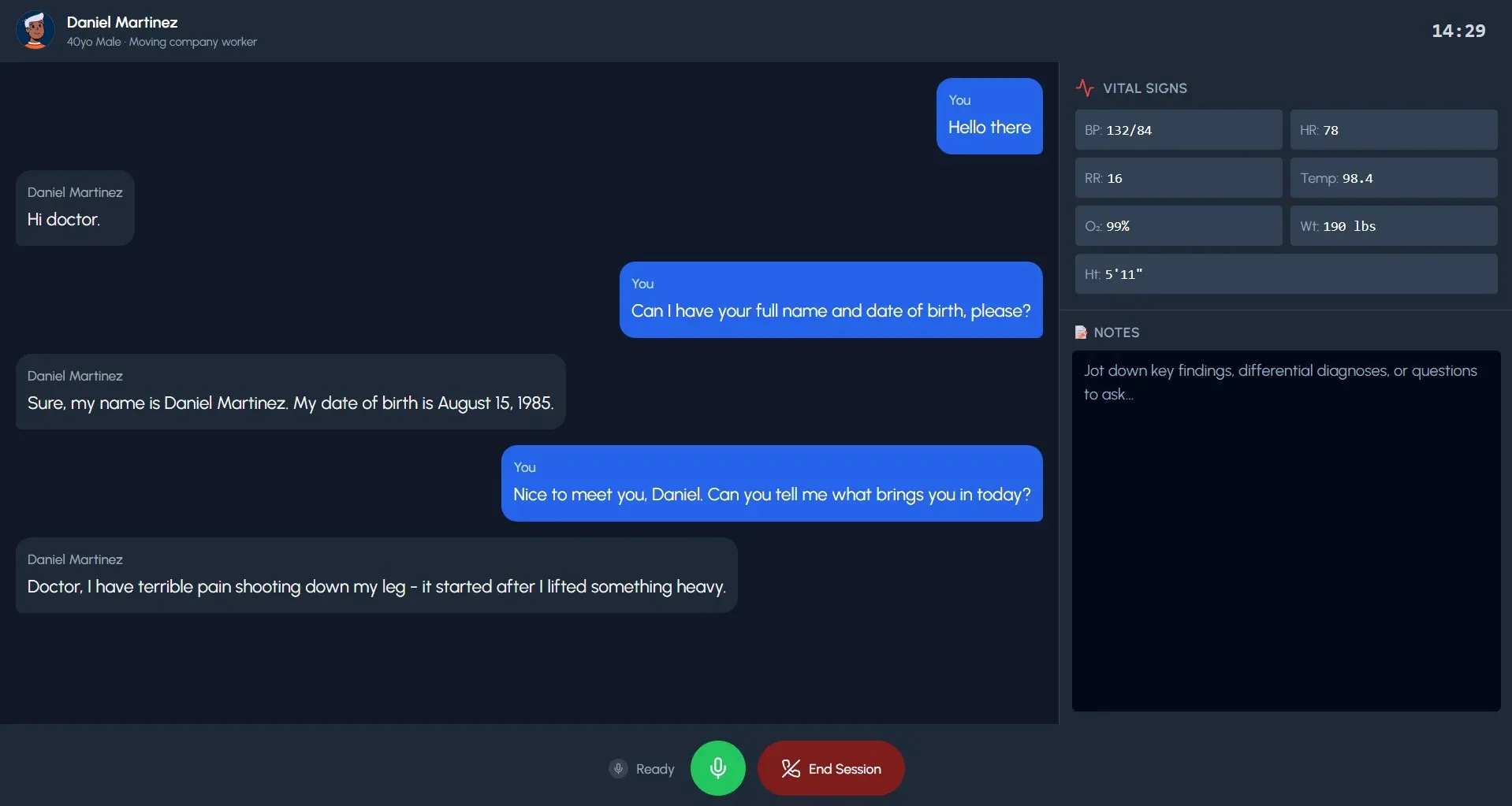
You take the history. You ask about onset, duration, quality, radiation, aggravating factors. The AI patient responds naturally - just like a real standardized patient would.
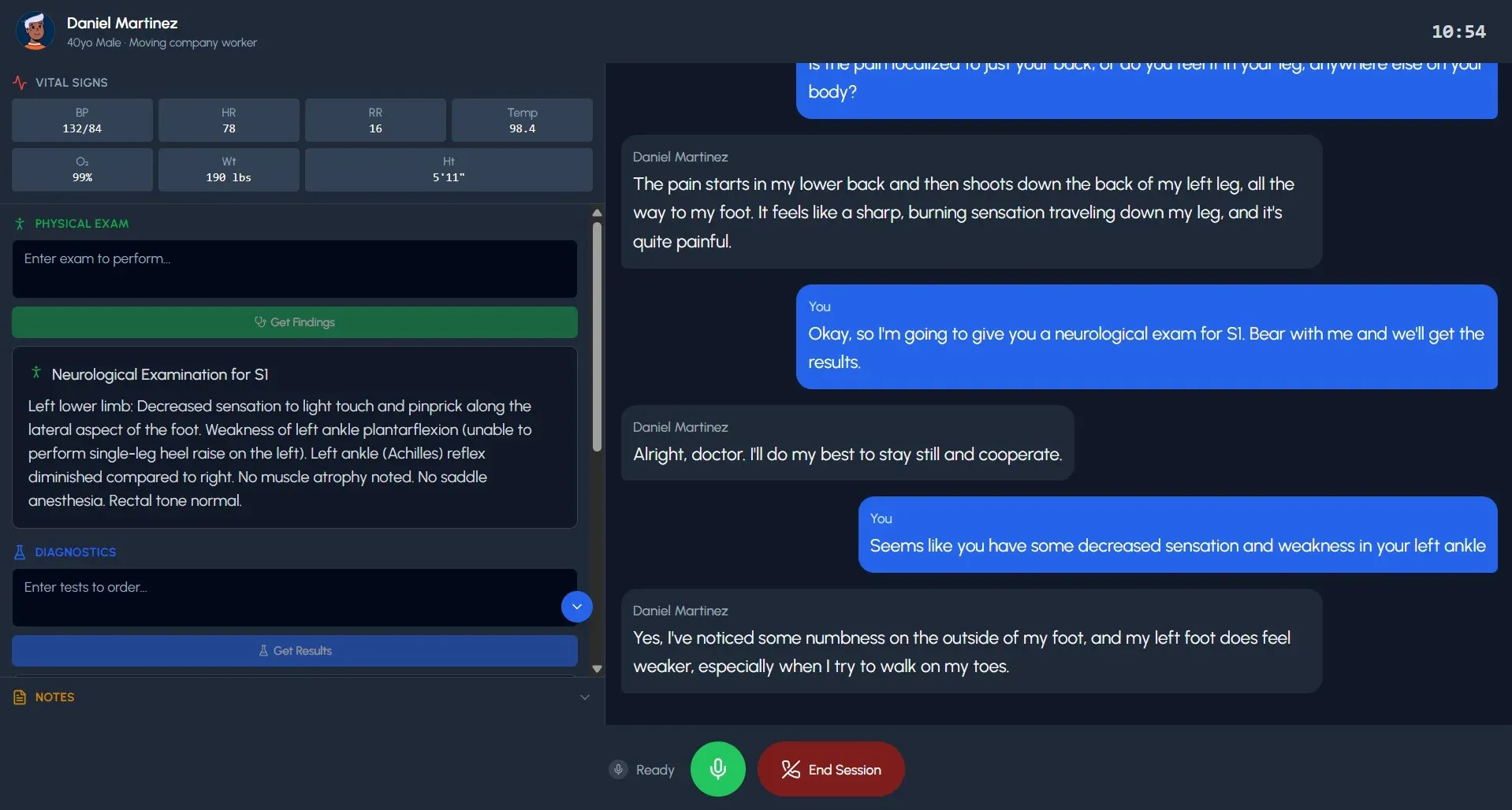
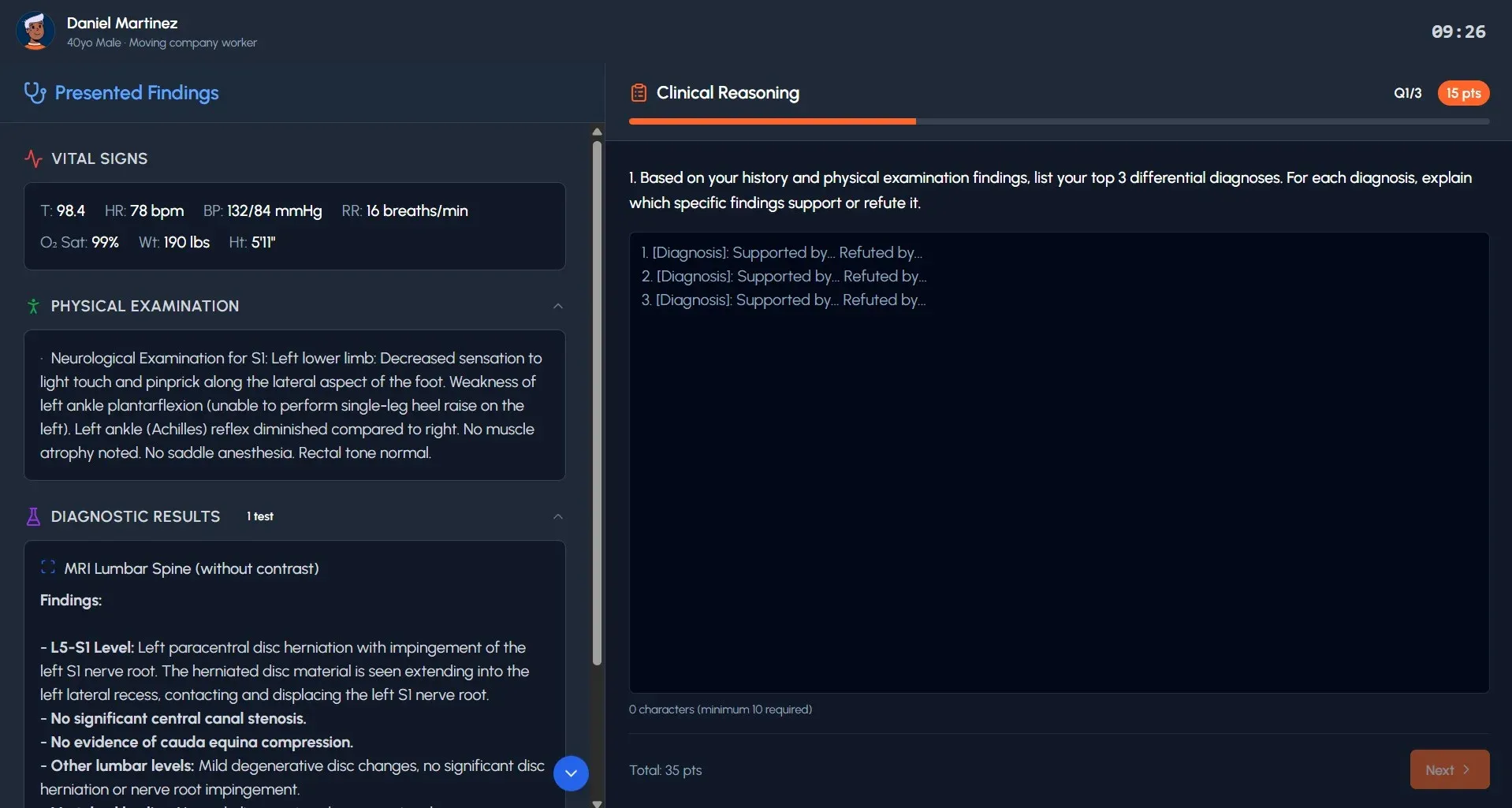
You order physical exams. Request labs. Generate your differential. Get scored immediately on history-taking, physical exam selection, diagnostic reasoning, and communication skills.
Failed? Run it again. Right now. At 2 AM in your pajamas if you want. No booking. No $100 fee. No waiting three weeks for an opening.
By exam day, this is your 15th practice run. Everyone else practiced once. When the standardized patient says something unexpected, you don't freeze. You've heard something similar before. You adapt. You respond. You move on.
When you walk out, you're not hoping you passed. You're confident you did.
15x
More practice encounters than a single standardized patient session
Real Clinical Practice - Without the Waiting List
Realistic AI patients
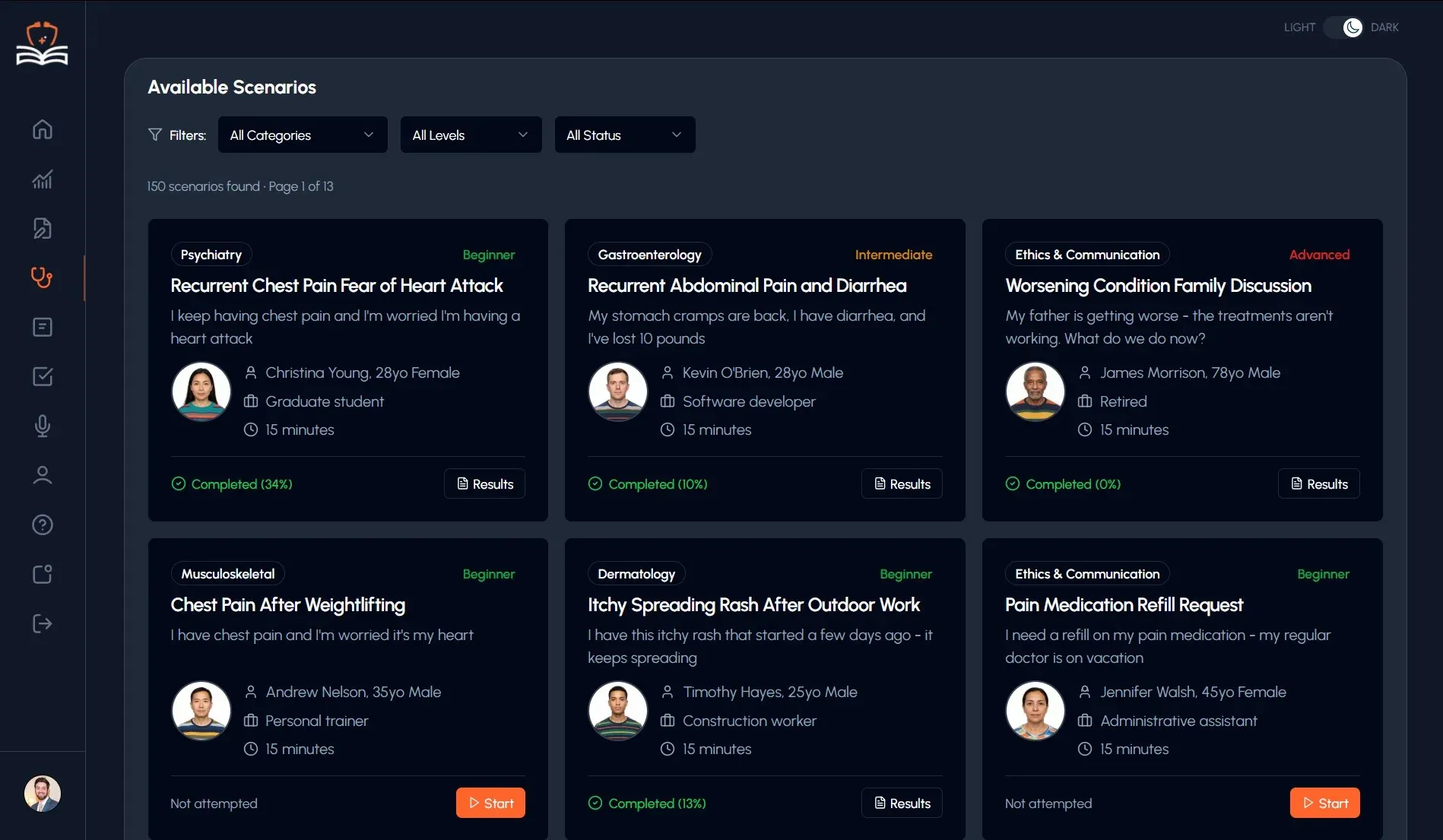
Natural language conversations that respond to your questions just like a standardized patient. Different scenarios, different presentations, every time.
Full clinical workflow
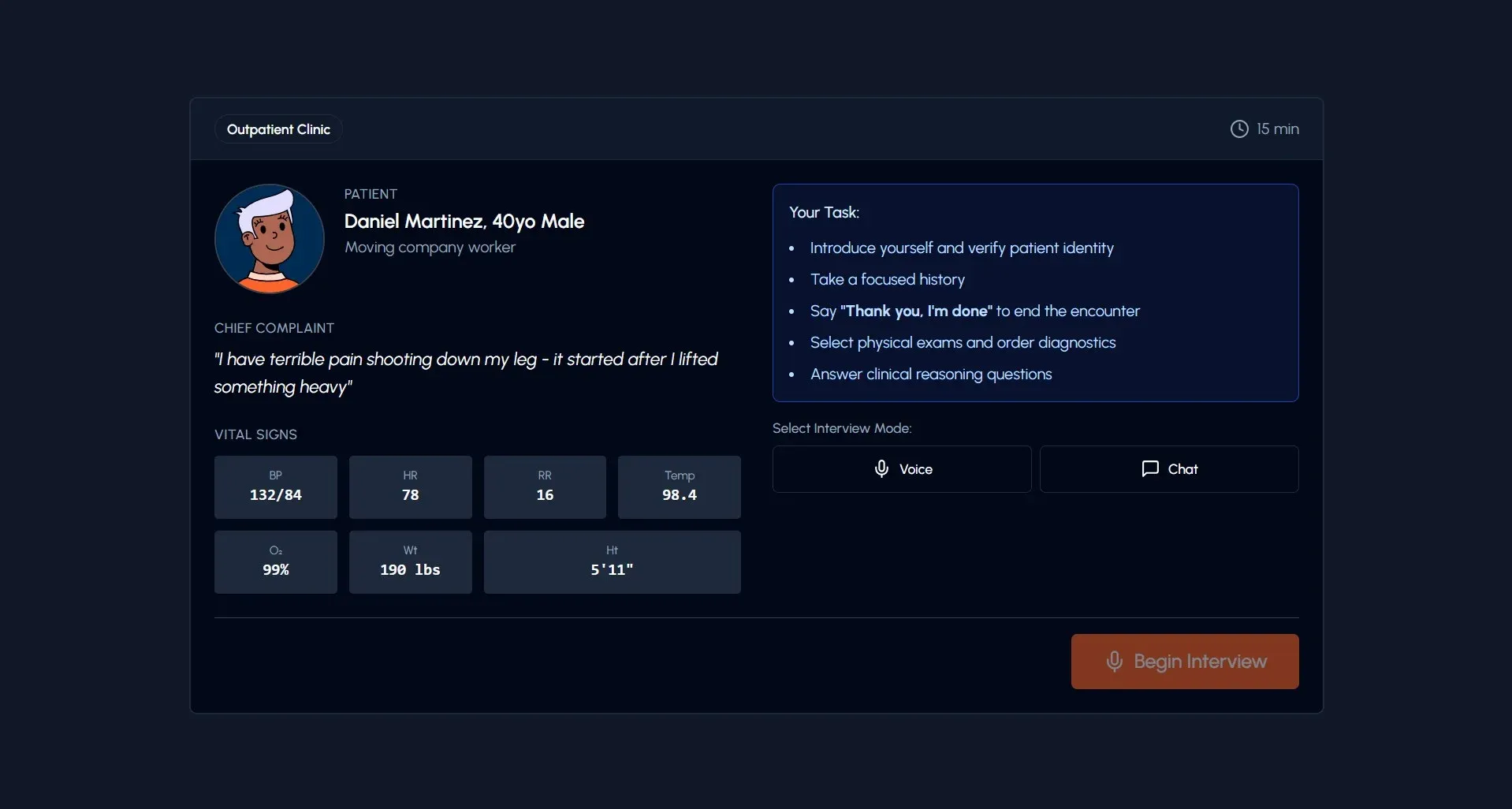
Take a history, order physical exams, request labs and imaging, generate a differential diagnosis - the complete OSCE encounter.
Instant scoring and feedback
Get scored on history-taking, physical exam selection, diagnostic reasoning, and communication skills. Know exactly what to improve.
Practice anytime, anywhere
Available 24/7. No booking required. No sim center scheduling. Practice at 2 AM if that's when you have time.
Multiple clinical scenarios
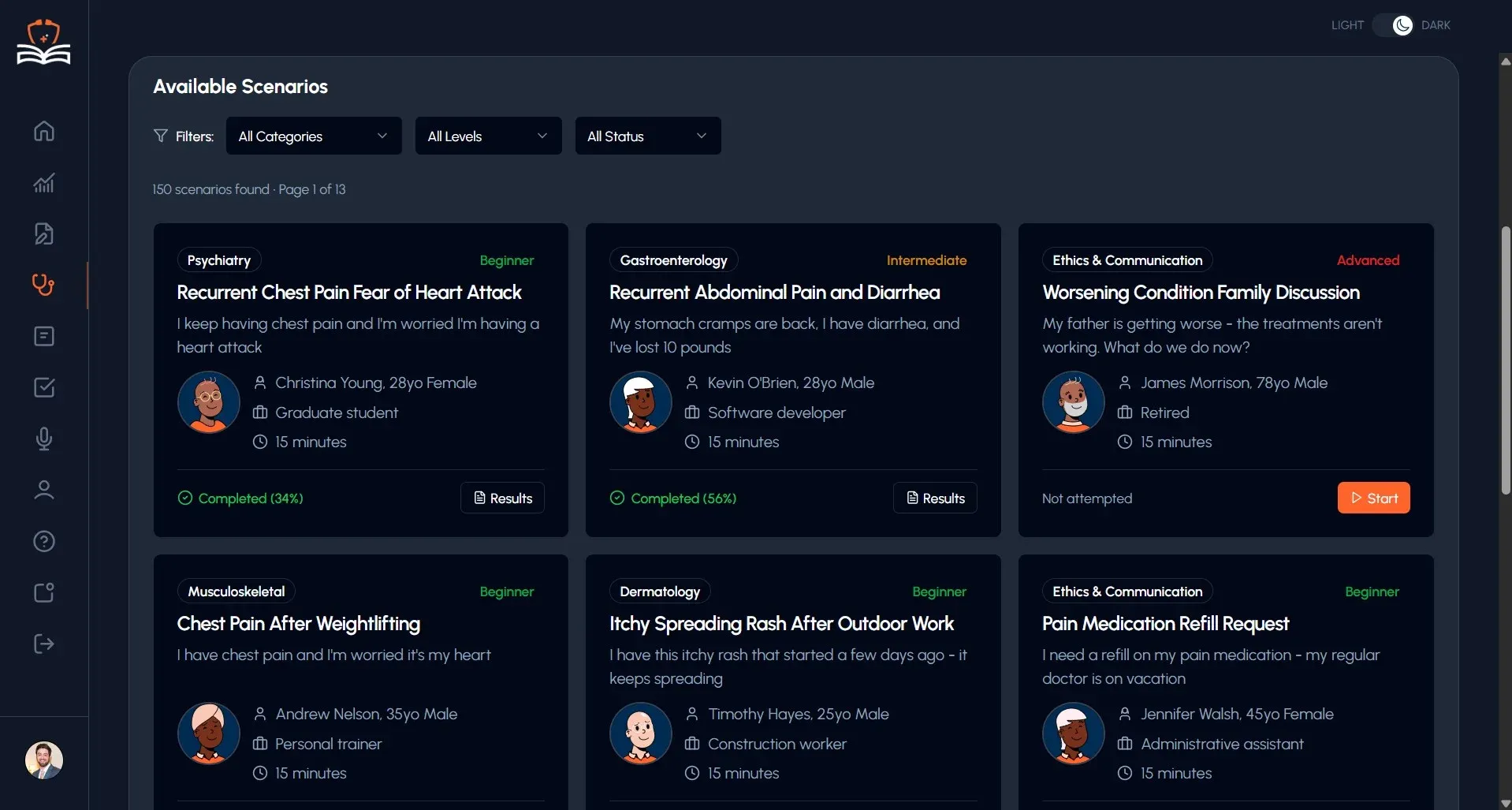
Chest pain, abdominal pain, shortness of breath, and more. Each scenario tests different clinical reasoning skills.
How to Prepare for OSCEs: Strategies That Work
Clinical skills exams test what textbooks can't - your ability to interact with a real patient under pressure. Here's what high-scoring students do differently.
Build a systematic opening for every encounter
The first 30 seconds set the tone. Practice a standard opening: introduce yourself, confirm the patient's name, ask an open-ended question ("What brings you in today?"), and actively listen before diving into your differential. Standardized patients score your communication from the moment you walk in.
Practice the transition from history to physical exam
Most students stumble at the pivot: "Based on what you've told me, I'd like to do a focused physical exam. Is that okay?" Smooth transitions show clinical competence. Practice verbalizing your thought process - "I'm going to listen to your heart because your symptoms suggest a possible cardiac cause."
Always summarize back to the patient before closing
Before leaving the room, summarize your findings and plan: "Based on our conversation and my exam, I'm concerned about X. I'd like to order Y tests. Do you have any questions?" This earns points on patient-centered communication and is a habit that will serve you in residency.
Time yourself - every station has a hard stop
OSCE stations typically run 10-15 minutes with a hard cutoff. If you're still taking history at minute 12, you won't have time for the physical exam or summary. Practice with a timer from day one. Aim to finish history by the halfway mark.
24/7
Available anytime, no booking needed
$0
Per session for subscribers vs $100+ at sim centers
Instant
Scoring and feedback after every encounter
Trusted by students at







Your OSCE Is Coming. Practice Until You're Ready - Not Until Your Session Runs Out.
Try your first AI clinical encounter tonight. Get scored instantly. Practice again and again until you're confident. No booking, no fees.