
Active studying wins. Retrieval practice, spaced repetition, and interleaving produce durable, exam ready recall in a way that re-reading and highlighting never do. Tonight, close your notes and try three things: turn your last lecture into a 15 question quiz, space out review across several days instead of cramming one, and mix topics instead of drilling one for hours. Several study tools exist because most students study the wrong material the wrong way.
TL;DR:
- Retrieval practice, spaced repetition, and interleaving produce better long-term retention than re-reading and highlighting, especially when questions are written in your own words.
- Passive study methods like re-reading, highlighting, or listening only build recognition, which often misleads students into overestimating their understanding; active strategies better simulate exam conditions.
- Engaging in brief active pauses, creating questions from lectures, and running timed practice tests significantly improve exam readiness within a few days to weeks of study.
- Passive methods are useful for initial familiarization, but effective review relies on converting passive exposure into active recall to cement memory.
- The most effective study routine combines passive preview, active retrieval, and spaced review, regardless of subject or learning style, to optimize exam performance.
Table of Contents
- Passive vs Active Studying: What's the Real Difference?
- What Do Passive and Active Study Habits Actually Look Like?
- What Are the Highest-Impact Active Study Techniques?
- When Is Passive Studying Actually Fine?
- How Do You Switch From Passive to Active Studying This Week?
- What Does the Research Actually Say?
- Common Misconceptions About Active and Passive Studying
- Do Learning Styles Change Which Method Works Best?
- An Editorial Take: Why Students Keep Falling Back Into Passive Habits
- Sources
- FAQ
Passive vs Active Studying: What's the Real Difference?
Passive studying means absorbing information without producing anything yourself. You're exposed to the material, but you're not doing anything with it.
Active studying means generating information from memory. Quizzing yourself, explaining a concept out loud without notes, working through practice problems cold. The cognitive lift is the whole point.
The gap between them comes down to recognition versus recall. Re-reading builds recognition: you see a term and think "yes, I've seen that," which feels like knowledge but often isn't. This is the illusion of familiarity that Johns Hopkins' Academic Support Center has flagged as one of the biggest traps in student self-assessment. Recall, by contrast, is what you actually need on exam day: pulling an answer out of your head with no prompt in front of you.
Short term, passive review feels productive and builds surface familiarity fast. Long term, it collapses. Active practice feels harder in the moment and produces the retention that actually survives to test day.
What Do Passive and Active Study Habits Actually Look Like?
Most students don't realize how much of their "studying" is passive until they audit a session honestly. Here's the same content, handled two different ways:
- Re-reading a chapter (passive) vs. closing the book and writing what you remember (active)
- Highlighting slides in yellow (passive) vs. turning each slide into a flashcard question (active)
- Listening to a recorded lecture (passive) vs. pausing every 10 minutes to summarize out loud, as if teaching it (active)
- Copying notes verbatim (passive) vs. rewriting notes as questions you'd expect on an exam (active)
The traps that keep students stuck in passive mode: cramming the night before, transcribing lectures word for word instead of processing them, and studying while texting or half watching a show. Carnegie Mellon's teaching center notes that even brief active pauses, like a one minute written reflection, meaningfully change how much sticks.
Run this quick self-audit before your next session: Did you produce anything from memory, or just consume? Could you explain the topic to a classmate right now without your notes? Did you check yourself against the actual answer, or just assume you'd have gotten it right?
What Are the Highest-Impact Active Study Techniques?
Three techniques carry almost all of the benefit, and none of them require expensive tools.
Retrieval practice means forcing yourself to answer a question without looking. Take yesterday's lecture, pull out every bolded term or emphasized concept, and write it as a question. A slide on beta blockers becomes "What's the mechanism of action, and what's the key contraindication?" Converting a full lecture into multiple prompts is achievable within a reasonable time frame and provides a solid practice target for active study.
Distributed practice spaces those questions across days instead of running them once. Reviewing the same set on day 1, day 3, and day 7 beats reviewing it three times on day 1, even though the total time is identical.
Interleaving mixes topics instead of blocking them. Studying cardiology, then a set of renal questions, then back to cardiology forces your brain to actively decide which framework applies, which is closer to what an exam actually demands.
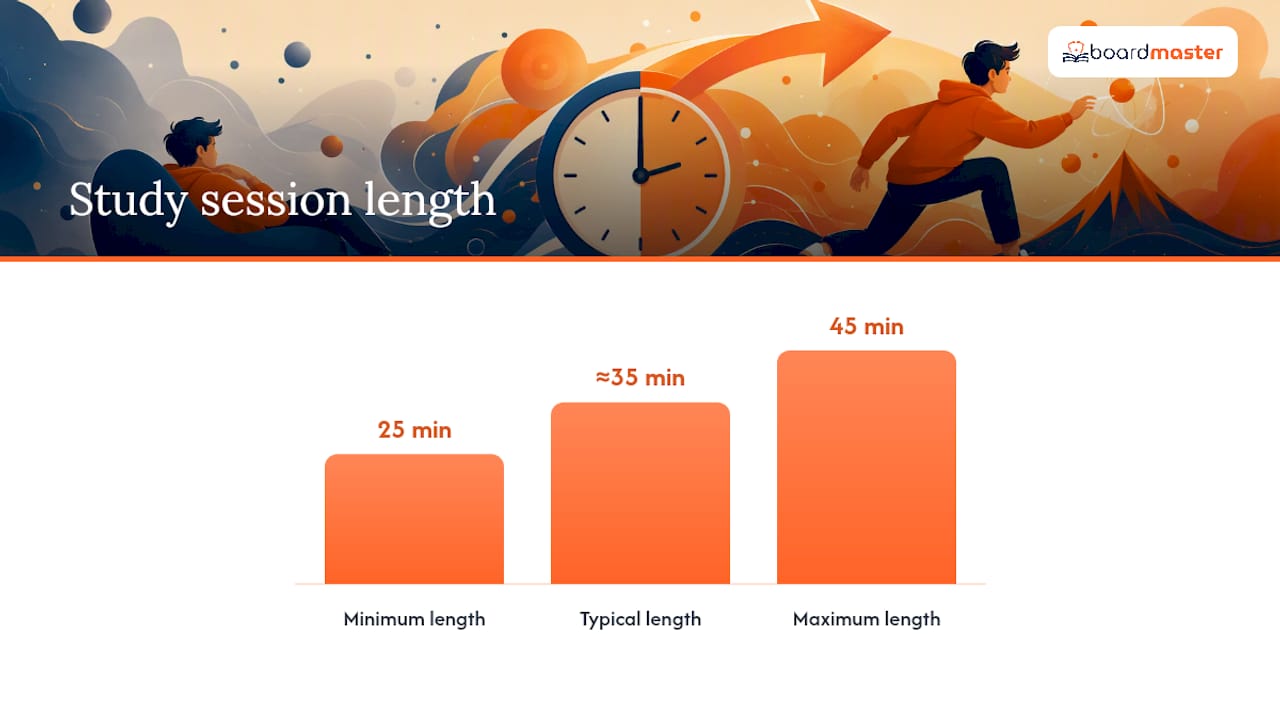
- Session length: 25 to 45 minutes of focused retrieval, then a real break
- Convert one lecture into 15 to 30 questions before moving to the next
- Mix at least two subjects per study block once you have more than one topic loaded
Statistic Callout: Reviews of study technique effectiveness consistently rank practice testing and distributed practice as high utility, while re-reading and highlighting rank low, because retrieval practice produces substantially better delayed retention than re-reading across the research base.
Pro Tip: Write your retrieval questions in your own words, not the professor's exact phrasing. If you can only answer a question when it's worded exactly like the slide, you've memorized the sentence, not the concept.
Guides on building dual-purpose study strategies walk through more ways to turn a single study block into both a first pass and an active review.
When Is Passive Studying Actually Fine?
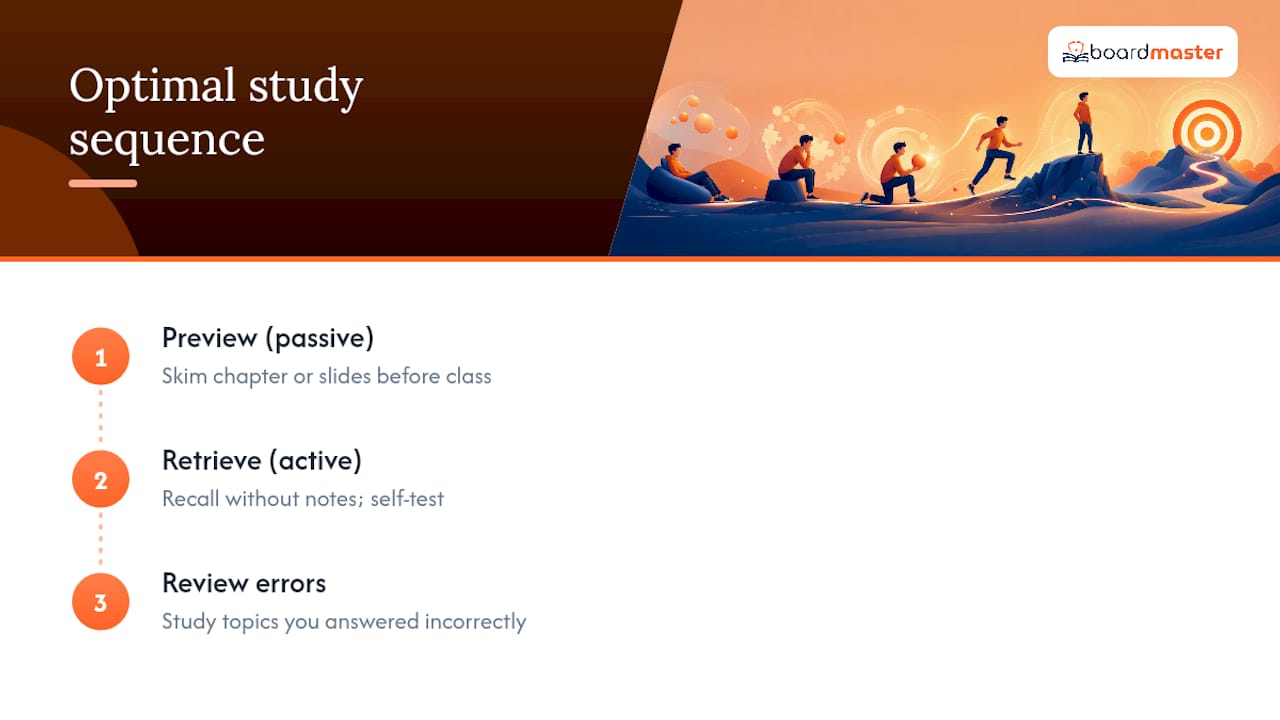
Passive methods aren't useless, they're just misused. A first pass through new material, skimming a chapter before lecture or previewing slides the night before class, is a legitimate use of passive exposure. You're building a rough map before you start testing yourself against it.
The sequence that works: preview passively, then retrieve actively, then review what you got wrong. Where passive study fails students is when it becomes the main event before an exam. Re-reading is fine for orientation but weak as a final review strategy, because it produces recognition, not the recall an exam actually tests.
How Do You Switch From Passive to Active Studying This Week?
You don't need a new system, just a new sequence. Here's a plan that works whether you have three weeks or three days.
- Tonight: Take your most recent lecture and convert it into 10 to 15 questions. Don't reread the slides first, just extract questions directly from headers and bolded terms.
- This week: Quiz yourself on those questions daily, not just once. Three weeks out from an exam is the point to start spaced repetition in earnest rather than waiting until the final week.
- One week before the exam: Run a full timed practice test under real exam conditions. No notes, no pausing. Track every question you missed by topic, not just by score.
- Three days before: Focus review time entirely on the weak topics your practice test flagged. Skip re-reviewing what you already got right.
Cut the obvious distractions: phone in another room, one tab open, one subject per block. A spaced repetition plan built for med school pacing gives a more detailed week-by-week structure if you want to see the cadence mapped out day by day.
Pro Tip: Track weak topics in a running list, not scattered across notebooks. When you sit down to review three days before an exam, that list should tell you exactly where to spend your time.
What Does the Research Actually Say?
The foundational work here comes from Roediger and Karpicke's studies on the testing effect, which found that students who quizzed themselves on material retained it far better a week later than students who simply reread it, even though the reread group felt more confident going in. That confidence gap is the illusion of competence in action.
Dunlosky and colleagues' widely cited review of study techniques rated practice testing and distributed practice as high utility, while ranking the techniques students actually prefer, highlighting and re-reading, as low utility. University learning centers echo the same guidance: students who improve their grades usually aren't studying more hours, they're restructuring how those hours get spent.
The takeaway is specific: retrieval and spacing aren't supplementary tricks, they should be the backbone of your study time, not an occasional add-on to reading.
Common Misconceptions About Active and Passive Studying
"If it feels hard, I'm doing something wrong." Backwards. Retrieval practice is supposed to feel harder than re-reading. Psychologists call this a desirable difficulty: the effort of pulling an answer from memory is what builds the retrieval path in the first place. Easy studying is often a warning sign, not reassurance.
"Highlighting counts as studying." It counts as decorating. Highlighting only helps if you do something with the highlighted material afterward, like turning it into a question. On its own, it's closer to labeling than learning.
"Active studying means never reading passively." No technique works in isolation. The mistake isn't using passive exposure, it's stopping there.
"More hours of studying means better results." Time spent doesn't predict outcomes nearly as well as what happens during that time. A focused 90 minute retrieval session usually beats four hours of distracted rereading.
"Active studying is only for certain subjects." It applies just as well to memorization heavy material as it does to conceptual subjects, since memory itself is reconstructive: generating an answer forces your brain to rebuild the connection, which is exactly what strengthens it.
Do Learning Styles Change Which Method Works Best?
Not the way most students assume. The popular idea that some people are "visual learners" and others are "auditory learners" who each need a matched teaching format hasn't held up well when tested directly, and it's not something the cognitive research behind retrieval practice or spacing relies on. Active techniques work across content types because the mechanism is memory reconstruction, not sensory preference.
What does vary by student is pacing and format preference, not underlying effectiveness. Some students retrieve better through spoken self-explanation, others through written quizzing, and others through problem sets. The technique category, retrieval, stays constant. Only the delivery format flexes.
The practical implication: don't use "I'm not a reading learner" as a reason to skip active recall. Use it as a reason to choose which active format, spoken, written, or applied, fits how you process information best. A student who struggles to sit still might do better pacing around a room explaining a concept out loud than sitting at a desk writing flashcards. Both are active. Neither is passive. The format is flexible; the requirement to generate, not just absorb, isn't.
An Editorial Take: Why Students Keep Falling Back Into Passive Habits
The most common mistake isn't ignorance, it's comfort. Students already know retrieval works better; they default to rereading anyway because it doesn't force them to confront what they don't know yet. That avoidance is the actual obstacle, not motivation. Tools that convert lecture notes directly into practice questions, BoardMaster among them, remove the friction of building those questions yourself, which is often the step where good intentions die.
— Dr. Ahmed Abuzoor
Sources
- Studying 101: Study Smarter Not Harder – The Learning Center
- Active Versus Passive Learning | Academic Support | Johns Hopkins University
- How research from psychology can help you study effectively | Psyche Guides
- PMC article on study planning and spaced repetition
FAQ
What Are the Downsides of Passive Learning?
Passive learning creates an illusion of familiarity that feels like mastery but often fails under exam conditions, since it builds recognition rather than the recall a test actually demands.
Can You Give an Example of Passive Learning?
Re-reading a textbook chapter, highlighting slides, or listening to a recorded lecture without pausing to summarize are all classic examples of passive learning.
What's the Difference Between Active and Passive Learning?
Passive learning is exposure based, like reading or listening, while active learning is generation based, like quizzing yourself or explaining a concept from memory without notes.
What Are Some Examples of Passive Study Strategies?
Common passive strategies include highlighting text, rereading notes, transcribing lectures word for word, and watching recorded lectures without follow up self-testing.
How Do I Know if I'm Studying Passively Without Realizing It?
If you can recognize an answer on a page but can't produce it from memory without a prompt, you're likely relying on passive review rather than active recall.