
TL;DR:
- Effective med school exam preparation uses active recall, spaced repetition, and AI-assisted question generation to improve retention and efficiency. Starting practice questions early and maintaining a consistent daily routine optimize exam readiness while avoiding burnout. Proper planning for exam day, including rest and nutrition, ensures peak performance under pressure.
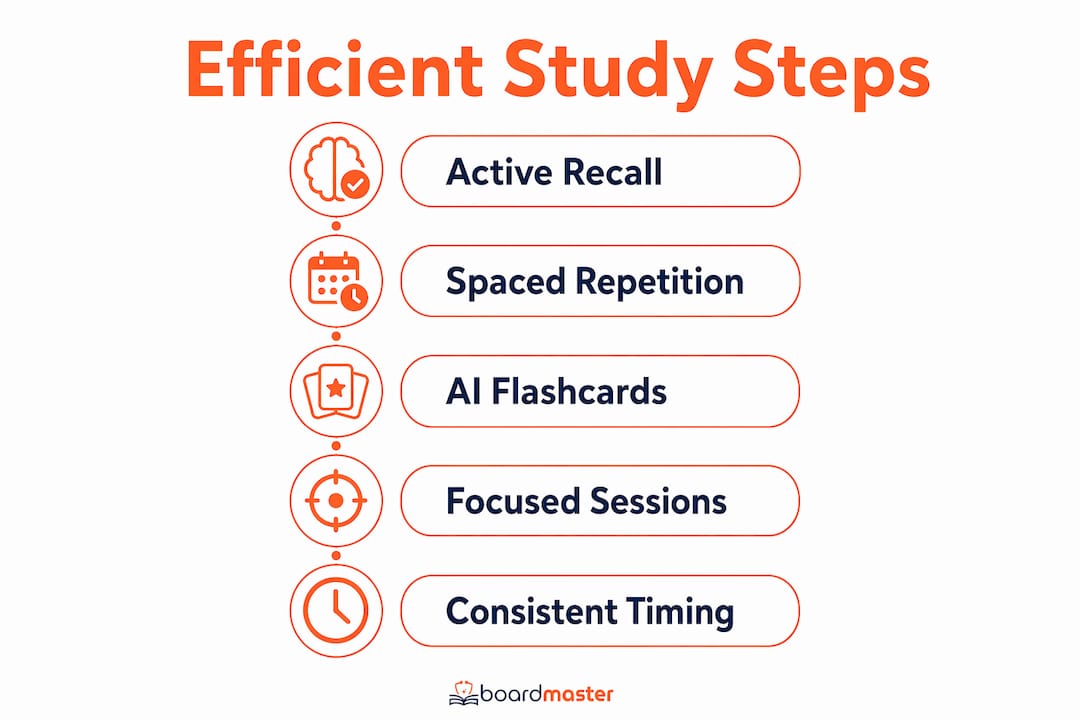
Efficient med school exam preparation is defined as a focused, repeatable study system that maximizes retention while cutting wasted effort. To truly streamline med school exam preparation, you need more than discipline. You need the right methods: active recall, spaced repetition, and AI-assisted question generation endorsed by bodies like the AMA and resources like Med School Insiders. These techniques work together to let you cover daily coursework and board readiness without burning out. The goal is a study system that runs consistently, not one that spikes before every exam.
What are the best evidence-based techniques to streamline your exam preparation?
Active recall and spaced repetition outperform passive review every time. Re-reading notes creates an illusion of competence. You recognize the material, but you cannot retrieve it under pressure. Retrieval practice forces your brain to reconstruct information, which is exactly what a multiple-choice exam demands.

Active recall means closing your notes and testing yourself. Spaced repetition means reviewing that material at increasing intervals before you forget it. Used together, these two methods build durable memory far faster than any passive approach.
Starting practice questions early is one of the most underused strategies in med school. Many students wait until they feel "ready," but that moment rarely comes. Beginning questions from day one, even when you score around 30%, reveals your weak areas immediately and guides your review toward what actually matters.
Here are the core habits that make evidence-based studying work:
- Test yourself daily. Convert lecture notes into questions on the same day you receive them. Information is freshest within hours of the lecture.
- Use spaced repetition scheduling. Review cards at intervals of 1 day, 3 days, 7 days, and beyond. This mirrors how long-term memory consolidates.
- Prioritize active over passive. Replace highlighting and re-reading with self-quizzing, practice vignettes, and written recall.
- Track your weak spots. Every question you get wrong is a signal. Flag it, review the concept, and return to it within 48 hours.
Pro Tip: Block focused 20–30 minute study sessions with no phone, no tabs, and no multitasking. Fragmented studying causes attention residue that damages recall. Shorter, uninterrupted sessions consistently outperform marathon cramming.
How can AI tools reduce manual effort in flashcard and question generation?
AI has changed the math on study prep. A 60-slide lecture that once took 90 minutes to convert into flashcards manually can now generate 80–120 cards in minutes. That is not a small efficiency gain. It frees up time you can redirect toward actual practice and review.
Here is how an AI-assisted workflow typically runs:
- Upload your lecture PDF. AI tools analyze text, diagrams, and figures to extract testable concepts.
- Receive structured flashcards. Cards are formatted in question-and-answer style, ready for spaced repetition scheduling.
- Get organ-system organization. Cards are sorted by system, so you can target cardiology one day and renal the next without losing context.
- Identify weak topics automatically. AI tracks your performance and surfaces the concepts you miss most often.
- Practice with vignette-style questions. AI generates USMLE-style clinical scenarios from your own lecture content, not generic question banks.
| Feature | Manual prep | AI-assisted prep |
|---|---|---|
| Cards per lecture | 15–25 (average) | 80–120 |
| Time to create | 60–90 minutes | Under 10 minutes |
| Spaced repetition scheduling | Manual | Automated |
| Weak topic identification | Self-tracked | Automated |
Building AI-driven spaced repetition decks from your own lectures also prevents last-minute cramming. When you upload daily, you grow an adaptive review system that stays aligned with your curriculum throughout the semester.
Pro Tip: AI tools also enable dialogic learning. You can ask follow-up questions and receive tailored explanations instantly, which accelerates comprehension far beyond static resources like textbooks or pre-made decks.
What does an effective daily study routine look like for med students?
The most effective daily structure follows a three-block model built around how your brain consolidates memory.
- Morning block (30–45 minutes). Start with spaced repetition review. Pull up your flashcard deck and work through due cards before new content enters your brain. This block also works well for a 10–15 minute flashcard review followed by a 20–30 minute practice question session.
- Afternoon block (2–3 hours). Cover new lecture content. Take notes actively, not passively. Convert key concepts into questions the same day.
- Evening block (45–60 minutes). Apply what you learned through practice questions. Focus on the organ system or topic from that day's lecture.
Timing matters more than most students realize. Starting study sessions at the same time as your actual exam trains your brain for peak alertness at that hour. If USMLE Step 1 starts at 8:00 AM, your morning practice block should start at 8:00 AM too.
Consistency beats volume. A student who studies 3 focused hours daily for 8 weeks retains far more than one who crams 12 hours the week before the exam. Build in physical activity, short breaks, and small rewards to keep motivation steady. A weekly schedule that balances lectures and board prep prevents the drift that causes students to fall behind on either front.
How should you prepare for exam day to maximize your performance?
Exam day performance is decided before you walk into the testing center. The logistics, sleep, and nutrition you manage in the 48 hours before the exam determine how well your preparation translates into your score.
Treat the day before the exam as a full rest day. Do not review new material. Do not run through practice questions. Let your brain consolidate what it already knows. Aim for 7–8 hours of sleep the night before. Sleep deprivation impairs working memory and slows processing speed, two things you cannot afford to lose during a multi-block exam.
On exam day itself, follow these steps:
- Arrive 30 minutes early. Know the testing center location in advance. Arriving late adds stress that lingers into the first block.
- Eat a real breakfast. Glucose fuels sustained cognitive effort. Avoid high-sugar foods that cause energy crashes mid-exam.
- Use breaks strategically. Step away from the screen during every break. Eat, hydrate, and move. Do not review notes between blocks.
- Reset after each block. Treat each exam block as a fresh start. What happened in block two does not affect block three unless you let it.
"The students who perform best on exam day are not the ones who studied the most the night before. They are the ones who prepared their body and mind to perform, not just their notes."
Deep breathing between blocks lowers cortisol and restores focus. Positive self-talk is not a soft skill. It is a performance tool that keeps you from spiraling after a difficult question.
What common pitfalls block efficient med school exam preparation?
The biggest mistake med students make is confusing familiarity with knowledge. Re-reading a chapter until it feels comfortable is not the same as being able to retrieve and apply it under exam conditions. Passive review creates an illusion of competence that collapses under timed, high-stakes testing.
The second major pitfall is separating clinical knowledge from test-taking skill. Students often confuse what they need for patient care with what they need for multiple-choice exams. Exam strategy is a separate skill. Learning how to eliminate wrong answers, recognize distractor patterns, and manage time per question block is not optional. It is part of the preparation.
Here are the four most common pitfalls and how to avoid them:
- Waiting to start practice questions. Start from day one. Early low scores are diagnostic, not discouraging.
- Relying entirely on pre-made materials. Generic decks do not reflect your professor's emphasis. Build or customize your own cards from your lectures.
- Studying in long, fragmented sessions. Consistent shorter sessions beat marathon cramming every time. Cognitive fatigue destroys recall accuracy.
- Ignoring faculty and peer input. Your professors signal what they test. Pay attention to what they emphasize in lecture and office hours.
Pro Tip: Review common exam prep misconceptions before you build your study plan. Correcting a flawed approach early saves weeks of wasted effort.
Key Takeaways
Efficient med school exam preparation requires active recall, spaced repetition, AI-assisted question generation, and a consistent daily routine built around your actual exam schedule.
| Point | Details |
|---|---|
| Active recall beats passive review | Self-testing builds retrieval strength that re-reading cannot replicate under exam pressure. |
| Start practice questions from day one | Early low scores identify weak areas and guide targeted review before gaps compound. |
| AI cuts flashcard creation time sharply | AI generates 80–120 cards from a 60-slide lecture, freeing time for actual practice. |
| Daily structure drives retention | A morning, afternoon, and evening block routine outperforms irregular, high-volume cramming. |
| Exam day prep starts 48 hours before | Rest, sleep, nutrition, and mental reset techniques determine how well your preparation shows up. |
What I have learned about med school exam prep after years in the field
Most students I have worked with arrive with the same problem: they study hard but study wrong. They spend hours with their notes and feel prepared, then underperform on the actual exam. The shift from passive to active study is the single biggest change I have seen produce real score gains.
AI tools changed my own relationship with time management. When I stopped manually creating flashcards and started building decks directly from lecture content, I recovered hours every week. Those hours went into practice questions and targeted review, which is where score improvement actually happens.
Balancing lecture demands with board prep used to feel like a zero-sum trade-off. It is not. When your daily review system is built from your own lectures, coursework and board prep reinforce each other. You are not studying two separate things. You are studying one integrated body of knowledge from two angles.
The students who sustain high performance are not the ones who study the most. They are the ones who protect their recovery time, take breaks without guilt, and treat their mental state as part of their preparation. Burnout does not just feel bad. It actively degrades memory consolidation and recall speed. Mindset management is not separate from exam prep. It is part of it.
— Dr. Ahmed Abuzoor
BoardMaster brings AI-powered precision to your exam prep
Medical students who want to close the gap between lecture content and board readiness have a direct path forward with BoardMaster.

BoardMaster lets you upload your lecture notes and instantly generates USMLE-style practice questions built around what your professors actually emphasize. That means your block exam preparation targets the right material from the start, not a generic question bank that may not reflect your curriculum. BoardMaster also includes access to 5,000+ physician-written board questions and an adaptive spaced repetition system that schedules review automatically. Students like Sarah have jumped from the 73rd to the 92nd percentile while cutting their study hours in half. BoardMaster merges coursework prep and board readiness into one focused system.
FAQ
What is the most effective way to study for med school exams?
Active recall combined with spaced repetition is the most effective approach. These two methods build durable memory by forcing retrieval practice at scheduled intervals, outperforming passive review in every evidence-based comparison.
When should I start using practice questions in med school?
Start practice questions from day one of your dedicated prep period. Beginning early, even when scores are low, identifies weak content areas immediately and guides targeted review throughout the semester.
How does AI help with med school exam preparation?
AI tools convert lecture PDFs into 80–120 flashcards per lecture and generate USMLE-style vignette questions automatically. This cuts manual prep time sharply and creates personalized study material aligned with your actual curriculum.
How should I structure my daily study schedule?
Follow a three-block structure: morning spaced repetition review, afternoon new content from lectures, and evening practice questions. Starting each morning session at your actual exam time trains your brain for peak alertness when it counts.
What should I do the day before a big exam?
Take a full rest day. Avoid new material and practice questions. Prioritize 7–8 hours of sleep, eat well, and confirm your testing center logistics so exam morning runs without added stress.