
The fastest way to build real diagnostic reasoning is a daily habit: work two or three short exam-style vignettes every day, then run one longer unfolding case each week, which forces you to prioritize and revise under pressure. A platform like BoardMaster helps here because it turns your own lecture notes into USMLE-style cases instead of generic question banks, so you practice the exact concepts your professors emphasize. Do this consistently and your diagnostic reasoning gets faster and your study time gets shorter, no longer.
TL;DR:
- Short vignette cases should take 10 to 20 minutes each, with three to five cases per session, to improve recall and pattern recognition.
- Unfolding cases require 30 to 60 minutes and help develop prioritization and management skills by simulating real-time clinical data changes.
- Repeating the reasoning process aloud and maintaining a mistake log enhances diagnostic thinking and helps identify recurring errors.
- Practicing with cases based on your own lecture notes accelerates learning by focusing on concepts emphasized in your coursework.
- Consistently generating multiple differential diagnoses before testing and revising based on results reduces premature closure and anchoring biases.
Table of Contents
- Types of Differential Diagnosis Practice Cases and When to Use Each
- How to Practice Case-Based Reasoning: A Repeatable Loop
- A Stepwise Differential Walkthrough: Chest Pain and Shortness of Breath
- Common Reasoning Pitfalls and How to Catch Them
- Where BoardMaster Fits Into Your Case-Practice Routine
- An Educator's Take on Case-Based Learning
- Try a Sample Case With BoardMaster
- Sources
- FAQ
Types of Differential Diagnosis Practice Cases and When to Use Each
Not all case formats train the same skill, and picking the wrong one wastes hours. There are four broad categories worth knowing.
- Interactive OSCE stations simulate a patient encounter in real time, testing history-taking, physical exam technique, and communication alongside diagnostic reasoning.
- Short exam-style vignettes compress a case into a paragraph plus a question stem, built for speed and pattern recognition under NBME-style time pressure.
- Unfolding (real-time) cases reveal information in stages, mimicking how a shift actually plays out as new data changes the picture.
- Curated case series and curricula, like the JAX differential diagnosis case studies, group cases by system or theme for structured, semester-long depth.
Use short vignettes for quick recall drills between classes. Reach for unfolding cases when you want to practice prioritization and management tempo, since unfolding case pedagogy specifically trains you to handle shifting clinical pictures. Curricular series work best when you're building depth in a weak subject area over weeks.
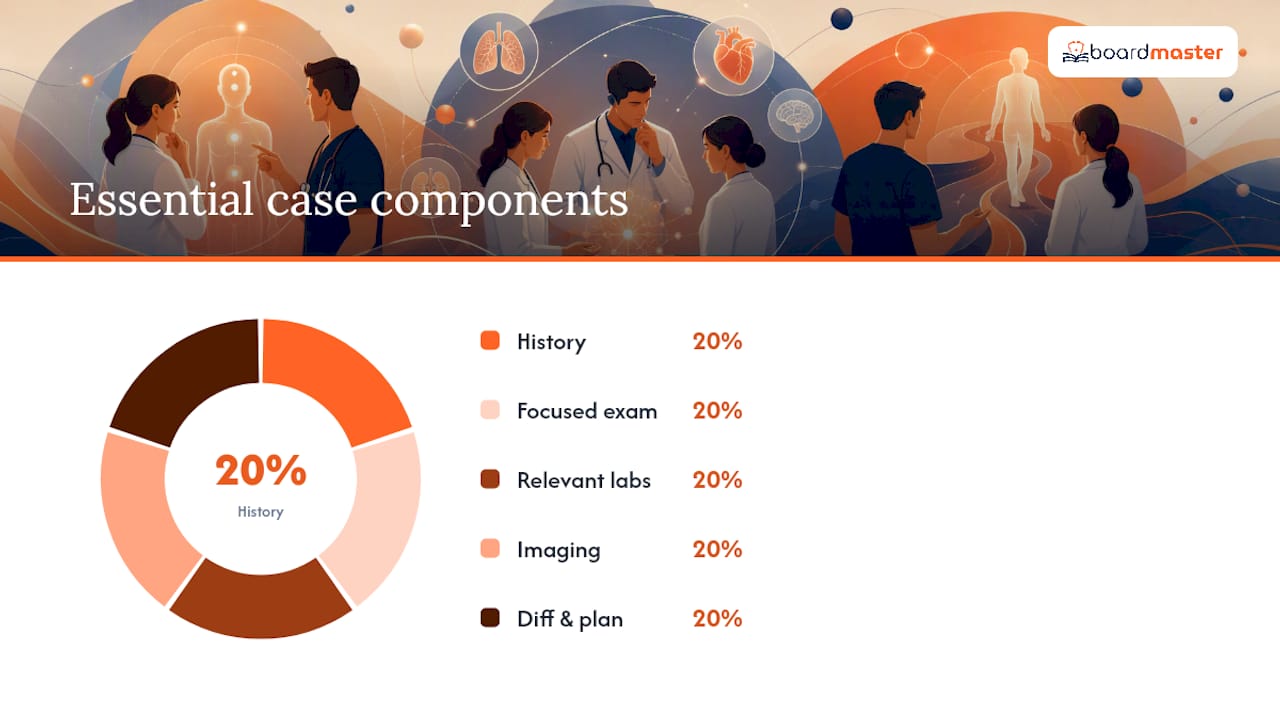
A well-built case, regardless of format, gives you a history, a focused exam, relevant labs or imaging, and a prompt to generate a differential and a next step. If a "case" skips straight to the answer without asking you to reason first, it's a flashcard wearing a costume.
How to Practice Case-Based Reasoning: A Repeatable Loop
Every case you touch, from a two-line vignette to a forty-minute unfolding simulation, should run through the same sequence. Repetition is what turns this into instinct instead of a checklist you have to think about.
- Read the stem once, fast. Resist the urge to reread; you want to simulate the pace of an actual encounter or exam.
- Generate three to five differentials before looking at any data beyond the initial presentation.
- Pick two or three high-yield tests and state out loud why each one changes your thinking.
- Interpret the results against your differential, not in isolation.
- Revise your list. Some diagnoses drop off, others move up.
- Commit to a management plan, including what you'd do if you're wrong.
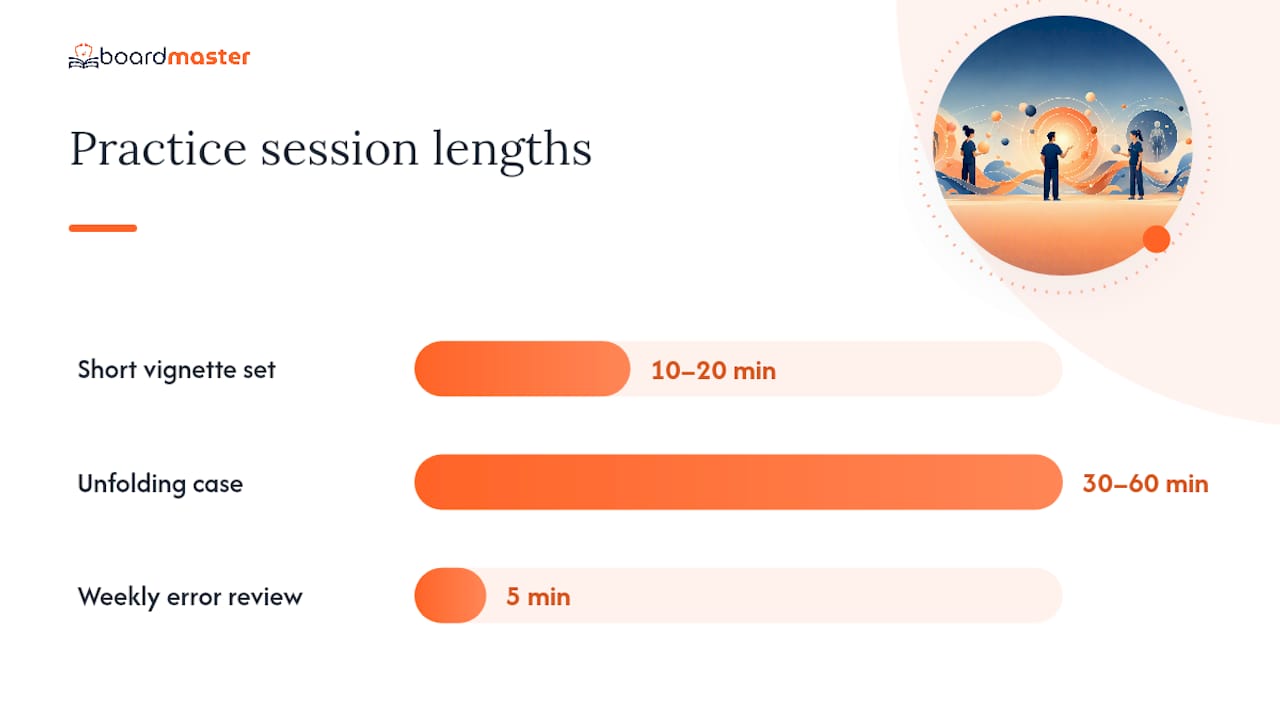
Timing matters. Short vignette drills should take 10 to 20 minutes for a set of three to five cases. Unfolding cases deserve 30 to 60 minutes since they include stabilization steps and evolving data, similar to the stepwise approach described in this unfolding case study dissection/43%3A_Clinical_Judgment_and_Critical_Thinking/43.03%3A_Unfolding_Case_Study_Dissection). Space your review sessions across the week rather than cramming them into one sitting.
Say your reasoning out loud, even alone, and keep a simple checklist: did I consider the dangerous diagnosis first? Did I anchor on the initial impression? Recording your reasoning, not just your final answer, is one of the more effective ways to catch premature closure before it becomes a habit.
Pro Tip: Keep a one-page error log with three columns: what you missed, why you missed it, and the corrective question you'll ask next time. Review it every Sunday for five minutes. Patterns show up fast.
A Stepwise Differential Walkthrough: Chest Pain and Shortness of Breath
Here's what the loop above looks like on an actual case.
A 34-year-old presents with acute-onset dyspnea and pleuritic chest pain that started two hours ago, worse with inspiration, no trauma, no prior cardiac history. That's your problem representation: young adult, acute onset, chest pain with a respiratory component.
Framed by anatomy and time course, your initial differential should include:
- Pulmonary embolism — acute onset, pleuritic quality, and risk factors like recent immobility or hormonal contraception all fit.
- Spontaneous pneumothorax — sudden pleuritic pain in a young adult is a classic pairing, especially in a tall, thin build.
- Pericarditis — pleuritic pain that changes with position points here too.
- Musculoskeletal strain — less dangerous, but common enough to stay on the list until ruled out.
An ECG comes back showing sinus tachycardia with no ST changes. That single finding doesn't rule anything out, but it shifts weight away from an acute coronary event and keeps pulmonary embolism and pneumothorax in play. A D-dimer returns elevated. On its own, that's a nonspecific finding since a wide range of conditions can raise it, but combined with your risk factors, it justifies moving straight to CT pulmonary angiography rather than waiting. This mirrors how case studies built around lab and imaging data force you to integrate results instead of treating them as a yes/no filter.
Next actions: order the CT angiogram, keep the patient on continuous pulse oximetry, and safety-net by instructing immediate return if pain worsens or breathing becomes labored. Pneumothorax gets deprioritized once the chest X-ray is clear, but it stays on your list until that film is actually read.
Common Reasoning Pitfalls and How to Catch Them
Most diagnostic errors trace back to a small handful of thinking patterns, and each one has a quick fix you can apply mid-case.
- Premature closure — locking onto the first plausible diagnosis and stopping the workup early. Correction: force yourself to name one more differential before ordering any test.
- Anchoring — over-weighting the initial impression even as new data arrives. Correction: re-read the case stem after each new result as if seeing it for the first time.
- Availability bias — favoring a diagnosis you've recently seen or studied over a rarer but more consistent one. Correction: ask whether the diagnosis fits the data or just fits memory.
A useful high-level habit here is what some clinical educators call a problem-oriented approach: describe the problem, generate options, weigh evidence, decide, and reassess, cycling back to step one whenever new information contradicts your current plan. This kind of iterative reframing is what separates reasoning that adapts from reasoning that just accumulates facts.
A single negative test rarely closes a case. In endocrine workups, for instance, an aldosterone-to-renin ratio can come back falsely negative, and trainees who accept that result without considering repeat or confirmatory testing walk away with the wrong answer. The same trap shows up anywhere a screening test has known limitations.
Picture a patient with resistant hypertension and a normal aldosterone/renin ratio on first pass. Anchoring on that negative result closes the door on primary aldosteronism too early. The catch: know which tests need confirmation before you trust a single value, a principle backed by research on confirmatory testing in clinical reasoning.
Where BoardMaster Fits Into Your Case-Practice Routine
The loop above works with any case bank, but it works faster when the material is actually tied to what you're being tested on. BoardMaster generates USMLE-style questions and OSCE-style simulations directly from your uploaded lecture notes, so your daily vignette drills reflect what your own professors emphasize instead of generic content you have to filter yourself.
- Tailored vignettes built from your coursework for daily 10 to 20 minute drills.
- OSCE-style simulations for weekly unfolding-case practice and prioritization drills.
- Spaced repetition flashcards to reinforce the differentials and mechanisms you keep missing in your error log.
One student improved significantly in exam performance while cutting study time in half using a targeted approach instead of a generic question bank. The platform's clinical content direction comes from Dr. Ahmed Abuzoor, whose editorial perspective on case-based learning closes out this article. Slot BoardMaster's short vignettes into your daily drills and its unfolding simulations into your weekly session, and the loop runs itself.
An Educator's Take on Case-Based Learning
The students who improve fastest aren't the ones who read the most cases. They're the ones who track their own mistakes and revisit them on purpose. Disciplined, repeated case work rewires how quickly you notice the dangerous diagnosis in a stack of plausible ones.
Try this: pick three chief complaints you're weak on, complete three short vignettes for each this week, then run one unfolding case tying them together. Log every miss, and if you can, review it with a classmate or mentor who will ask you why, not just what.
— Dr. Ahmed Abuzoor
Try a Sample Case With BoardMaster
BoardMaster gives you a direct way to run this entire routine without hunting down disconnected question banks and OSCE simulators separately. Upload your lecture notes and get tailored USMLE-style vignettes, OSCE-style clinical simulations, and spaced repetition flashcards built around what your professors actually emphasize, not a generic national average.

There's a free tier if you want to test a sample case before committing to anything, and paid plans unlock the full simulation library plus flashcard decks. Start on the BoardMaster landing page, or if you're coordinating case-based curricula for a class or study group, check the partnerships page for institutional options. Either way, the next step is small: run one sample case today and see how it compares to whatever you've been using.
Sources
- Unfolding case studies / simulation pedagogy (PMC12858445)
- Educational case studies using labs and imaging (Jefferson TMF)
This article is general information, not a substitute for advice from a qualified doctor. Consult a qualified healthcare professional about your own circumstances before acting on anything here.
FAQ
What Are Differential Diagnosis Practice Cases?
They're clinical scenarios, ranging from short vignettes to unfolding simulations, that give you a history, exam findings, and data so you can practice generating and narrowing a differential yourself.
How Many Practice Cases Should I Do Per Day?
Two to three short vignette-style cases a day plus one longer unfolding case per week builds both recall speed and prioritization skills without burning you out.
What's the Difference Between a Vignette and an Unfolding Case?
A vignette gives you all the data at once for a quick 10 to 20 minute drill, while an unfolding case reveals information in stages over 30 to 60 minutes to simulate real-time decision-making.
How Do I Avoid Premature Closure When Practicing Cases?
Force yourself to name at least one additional differential before ordering tests, and keep a written log of your reasoning so you can spot the pattern later.
Can BoardMaster Help With Case-Based Practice?
Yes. BoardMaster turns your own lecture notes into tailored USMLE-style vignettes and OSCE-style simulations, so your daily practice matches what your professors are actually testing.