
TL;DR:
- The USMLE-style question format features vignette-based multiple-choice questions that test clinical reasoning across disciplines. Mastering the two-step logic chain and applying reasoning skills are essential for success on these exams. Practice with targeted, course-aligned questions improves understanding and performance.
The USMLE-style question format is defined as a vignette-based, single-best-answer multiple-choice structure that tests clinical reasoning rather than isolated fact recall. Every question presents a patient scenario, then asks you to apply knowledge across multiple disciplines to reach the correct answer. The National Board of Medical Examiners (NBME) and the Federation of State Medical Boards (FSMB) jointly administer the USMLE, and both organizations design questions to reflect real clinical decision-making. Understanding what is USMLE-style question format before you sit for the exam is the single most effective preparation step you can take.
What is the USMLE-style question format?
The USMLE-style question format is a single best answer multiple-choice question embedded in a clinical vignette. Each vignette presents a patient's age, sex, chief complaint, history, physical exam findings, lab results, and sometimes imaging. Your job is not to recognize a fact. Your job is to reason through the scenario and select the one best answer from five options.
This format tests synthesis, not storage. A question might describe a 45-year-old man with fatigue, pallor, and a peripheral blood smear showing hypersegmented neutrophils, then ask for the most likely underlying mechanism. Recognizing the smear is step one. Connecting it to B12 or folate deficiency, then identifying the mechanism, is step two. That two-step logic chain is the defining feature of the USMLE exam question style.
USMLE questions integrate physiology, pathology, pharmacology, and microbiology within a single vignette. This cross-disciplinary design means you cannot silo your studying. A cardiology question may hinge on a pharmacology answer, and a renal question may require a physiology explanation.
What are the main USMLE question types?
USMLE questions fall into several distinct categories. Knowing each type sharpens your approach before you read a single answer choice.
- Clinical vignette questions. The most common type. A patient scenario includes history, exam, labs, and imaging. You select the best diagnosis, next step, or underlying mechanism.
- Two-step questions. These require you to first identify the correct diagnosis, then answer a secondary question about pathophysiology, treatment, or likely pathogen. Failure to correctly diagnose breaks the logic chain entirely, making the correct answer unreachable even if you know the secondary fact.
- Abstract and research-style questions. These present a table, graph, or study summary. You interpret the data and apply it clinically. Sensitivity, specificity, and odds ratios appear regularly.
- Multimedia questions. These embed an ECG tracing, histology slide, chest X-ray, or audio clip of a heart murmur directly into the question. You must interpret the media before selecting your answer.
- Negative format questions. These ask which answer is NOT correct or which finding is LEAST likely. The capitalized word signals the reversal. Missing it costs you the question.
Pro Tip: Read the last sentence of the question stem first. It tells you exactly what the question is asking. Then read the vignette with that question in mind, which cuts reading time and focuses your attention on the relevant details.
Each question type rewards a different cognitive skill. Clinical vignettes reward pattern recognition. Two-step questions reward logical sequencing. Multimedia questions reward perceptual training. Practicing all types through USMLE style practice tests before exam day prevents format-related surprises.
How is the USMLE Step 1 exam structured in 2026?
As of may 2026, Step 1 consists of 280 MCQs divided into 14 blocks of 20 questions each. Each block carries a 30-minute time limit. The total exam runs 8 hours, with up to 55 minutes of break time available between blocks. The exam takes place in a single session at a Prometric testing center.

Step 1 moved to a pass/fail scoring system on january 26, 2022. That change shifted the exam's purpose from a ranking tool to a competency threshold. Passing confirms foundational clinical science knowledge. It does not produce a three-digit score for residency applications.
| Feature | Details |
|---|---|
| Total questions | 280 MCQs |
| Block structure | 14 blocks of 20 questions |
| Time per block | 30 minutes |
| Total exam duration | 8 hours |
| Break time allowed | Up to 55 minutes |
| Scoring system | Pass/fail (since january 26, 2022) |
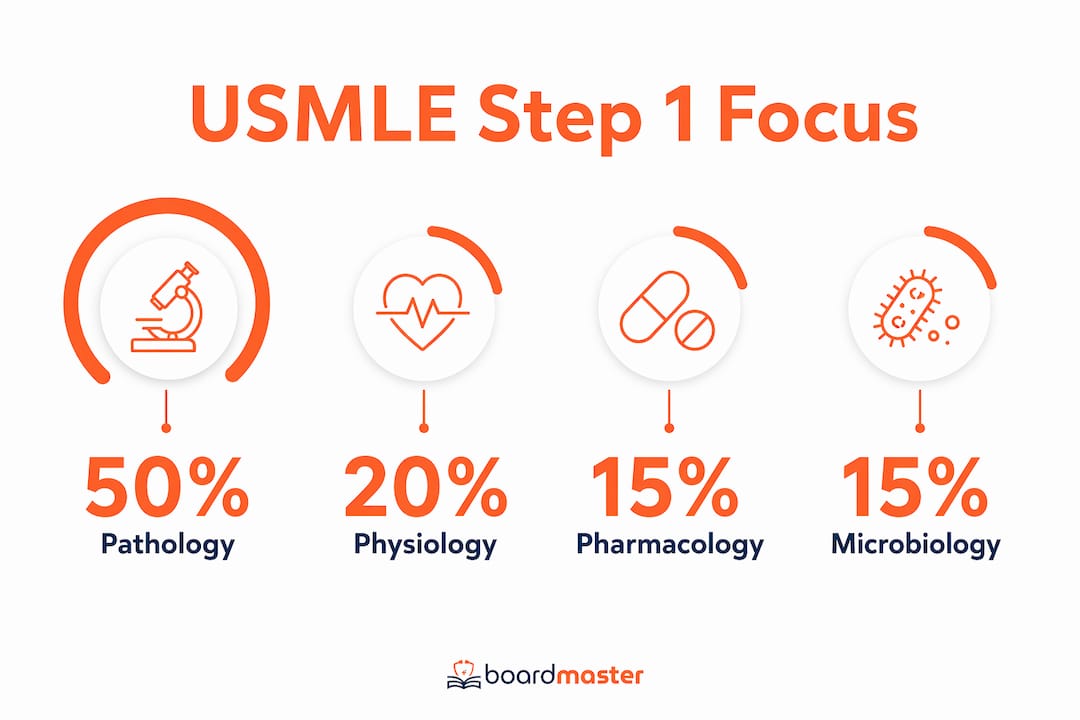
| Top content area | Pathology (over 50% of questions) |
Pathology accounts for over 50% of Step 1 questions, followed by physiology. That distribution tells you where to concentrate your study hours. Biochemistry, pharmacology, microbiology, and immunology fill the remaining blocks. Every subject appears through a clinical lens, not as an isolated science topic.
What reasoning skills do you need to answer USMLE questions correctly?
Clinical reasoning is the core skill the USMLE tests. Memorizing facts gets you partway there. Reasoning through a vignette gets you across the finish line.
A reliable approach to any question follows four steps:
- Identify the patient. Note age, sex, and any demographic clues. A 65-year-old smoker and a 25-year-old athlete present very differently even with the same chief complaint.
- Isolate the abnormal findings. List what is wrong: the elevated lab value, the abnormal exam finding, the unusual symptom. These are your diagnostic anchors.
- Understand the question stem. Read the final sentence carefully. Are you being asked for a diagnosis, a mechanism, a next best step, or a drug choice?
- Evaluate answer choices systematically. Eliminate clearly wrong options first. Then compare the remaining choices against your working diagnosis.
Practicing systematic reading reduces cognitive load and prevents errors under time pressure. Students who skip this framework tend to misread the question stem and select answers that are factually correct but do not address what was actually asked.
Pro Tip: When two answer choices both seem correct, ask which one directly addresses the question stem. The USMLE rewards the most specific, most direct answer, not the most comprehensive one.
Two-step questions deserve special attention. Mastery of the logic chain in these questions matters more than rote fact recall. If you misidentify the diagnosis in step one, no amount of pharmacology knowledge saves you in step two. Practice dissecting question stems until the diagnostic step feels automatic.
Cross-system integration is equally critical. A single vignette may require you to connect a renal tubular defect to a metabolic acidosis to a compensatory respiratory response. Studying each system in isolation leaves gaps that two-step questions exploit. Review high-yield topics by system to build the connective tissue between disciplines.
How do question formats differ across Step 1, Step 2 CK, and Step 3?
The USMLE format explained across all three steps shows a clear progression: from foundational science to clinical management to independent patient care.
| Feature | Step 1 | Step 2 CK | Step 3 |
|---|---|---|---|
| Primary focus | Basic science, pathophysiology | Clinical diagnosis and management | Independent patient care |
| Question count | 280 MCQs | Up to 318 MCQs | MCQs plus case simulations |
| Blocks | 14 blocks of 20 | 8 blocks | Two-day exam |
| Session length | 8 hours | 9 hours | Two days |
| Special format | Multimedia items | Long clinical vignettes | Computerized Case Simulations (CCS) |
| Scoring | Pass/fail | Three-digit score | Three-digit score |
Step 2 CK consists of up to 318 MCQs across 8 blocks in a 9-hour session. The questions are longer and more clinically detailed than Step 1. You interpret lab trends, imaging findings, and physical exam data to make management decisions. The emphasis shifts from "why does this happen" to "what do you do next."
Step 3 adds a format not seen in the earlier steps: the Computerized Case Simulation, or CCS. Step 3 CCS tests patient care management over time, requiring you to order tests, prescribe treatments, and respond to changing patient status in a simulated clinical environment. This format rewards clinical workflow skills that MCQs alone cannot measure. For a deeper look at the clinical focus differences, the Step 2 CK format overview covers the shift in question style in detail.
Key Takeaways
The USMLE-style question format tests clinical reasoning through vignette-based, single-best-answer MCQs, and mastering the two-step logic chain is more decisive than memorizing isolated facts.
| Point | Details |
|---|---|
| Core format definition | USMLE questions are vignette-based, single-best-answer MCQs requiring multi-step clinical reasoning. |
| Step 1 structure in 2026 | 280 MCQs in 14 blocks of 20, with 30 minutes per block and pass/fail scoring. |
| Two-step question logic | Correct diagnosis in step one is required before the secondary question can be answered correctly. |
| Cross-disciplinary integration | Each vignette blends pathology, physiology, pharmacology, and microbiology into one reasoning task. |
| Step progression | Format shifts from basic science (Step 1) to clinical management (Step 2 CK) to case simulations (Step 3). |
Why most students struggle with USMLE questions (and what actually fixes it)
Students consistently tell me they "know the material" but still miss questions. After years of working with medical students, I can tell you that phrase almost always means the same thing: they know facts, but they have not practiced reasoning.
The two-step question is where this gap shows up most painfully. A student reads a vignette about a child with recurrent infections, correctly identifies the immunodeficiency, but then selects the wrong answer because the question asked about the underlying genetic defect, not the clinical syndrome. They got step one right and still failed. That is not a knowledge problem. That is a logic-chain problem.
My honest recommendation is to stop treating USMLE practice questions as a test of what you know. Treat them as a training ground for how you think. Every wrong answer deserves a two-part review: what was the correct diagnosis, and what was the reasoning path from vignette to answer? If you can articulate that path out loud, you own the question type. If you cannot, you are still memorizing.
The students I have seen improve the fastest are the ones who practice with questions tied directly to what they are currently studying. Generic question banks give you random exposure. Targeted practice builds the specific reasoning patterns your professors are testing. That alignment between course content and question format is what actually moves the needle.
— Dr. Ahmed Abuzoor
BoardMaster turns your lecture notes into USMLE-style questions
Understanding the USMLE question format is step one. Practicing it with questions built from your actual course material is step two.

BoardMaster's AI question generator converts your uploaded lecture notes into USMLE-style vignette questions that reflect exactly what your professors emphasize. The physician-written QBank adds over 5,000 board-style questions for deeper practice. One student, Sarah, moved from the 73rd to the 92nd percentile while cutting her study hours in half by focusing on targeted, high-yield questions instead of reviewing everything. BoardMaster's USMLE prep platform combines adaptive learning, exam simulation, and course-aligned question generation so your prep covers both block exams and boards at the same time.
FAQ
What is the USMLE-style question format?
The USMLE-style question format is a vignette-based, single-best-answer multiple-choice structure that presents a patient scenario and requires clinical reasoning to select the correct answer. It tests application and synthesis across disciplines, not isolated fact recall.
How many questions are on USMLE Step 1 in 2026?
Step 1 contains 280 MCQs divided into 14 blocks of 20 questions each, with 30 minutes per block and a total exam duration of 8 hours.
What are two-step USMLE questions?
Two-step questions require you to first identify the correct diagnosis, then answer a secondary question about mechanism, treatment, or pathogen. Missing the diagnosis in step one makes the correct secondary answer unreachable.
How does Step 2 CK differ from Step 1 in question format?
Step 2 CK uses longer clinical vignettes focused on diagnosis, management, and treatment decisions across up to 318 MCQs in a 9-hour session, compared to Step 1's emphasis on foundational science and pathophysiology.
Does Step 3 use a different question format than Step 1 and Step 2?
Step 3 includes both MCQs and Computerized Case Simulations (CCS), which require you to manage a patient's care over time in a simulated clinical environment, a format not present in Step 1 or Step 2 CK.