
TL;DR:
- USMLE Step 1 is a pass/fail exam testing integrated basic sciences and clinical application for US medical licensure. It requires broad mastery, active question practice, and proper pacing to succeed within a structured study plan. Effective preparation and strategic exam-day management are key to confidently advancing in your medical career.
USMLE Step 1 is defined as the first standardized licensing exam in the United States Medical Licensing Examination series, testing your command of foundational sciences and their direct clinical application. Every medical student pursuing licensure in the United States must pass it before advancing to third-year clinical rotations. Since january 2022, the exam has used a pass/fail scoring system, shifting focus from numeric ranking to clinical readiness. Understanding what is USMLE Step 1 explained in full means knowing its structure, content, scoring rules, and the preparation strategies that actually produce results.
What is USMLE step 1 and why does it matter?
USMLE Step 1 is the gateway exam between preclinical and clinical medical training. Passing Step 1 is required before you begin third-year rotations, making it a hard prerequisite for clinical phase progression. The exam tests whether you can apply basic science knowledge to real patient scenarios, not just recall isolated facts.
The exam's importance did not shrink when numeric scores were retired. Step 1 remains a critical gatekeeper for residency eligibility, because program directors still use it as a filter for clinical readiness. Failing means delaying rotations, retaking the exam, and disrupting your entire training timeline. Passing means moving forward with your medical career intact.
What is the USMLE step 1 exam format and structure?
The exam runs approximately eight hours on a single test day. It is divided into blocks of multiple-choice questions, each in a single-best-answer format. Some items include multimedia elements such as lab images, electrocardiograms, and histology slides.
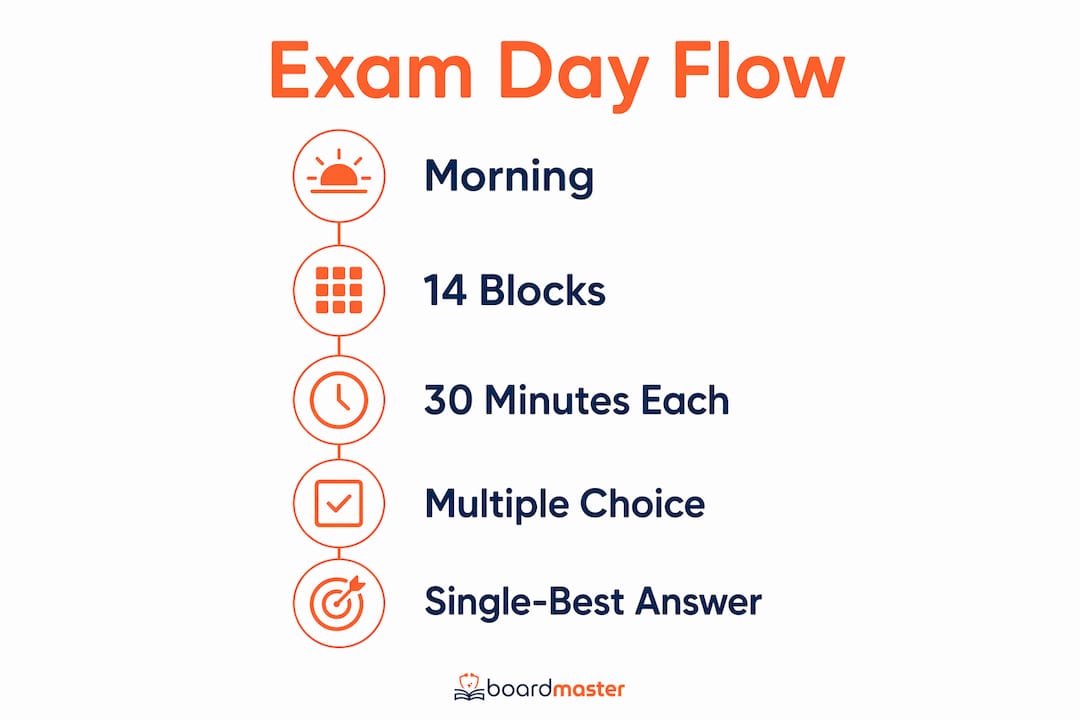
Here is the core structure at a glance:
| Element | Details |
|---|---|
| Total questions | 280 questions |
| Block structure | 14 blocks of 20 questions, 30 minutes each |
| Total break time | 55 minutes, self-managed |
| Optional tutorial | 15 minutes at the start |
| Question format | Single best answer, multiple choice |
| Multimedia items | Images, lab values, audio clips |
Key structural points to keep in mind:
- You control when you use your 55 minutes of break time across the day.
- Skipping the optional tutorial adds those 15 minutes to your break bank.
- The exam is administered at Prometric test centers across the country.
- 2026 administration follows the same block structure, with no announced changes to question count.
Pro Tip: Skip the tutorial on test day if you have practiced with it during NBME practice exams. Bank those extra minutes for a longer mid-exam break instead.
The single-best-answer format sounds simple, but many questions present two plausible options. The skill tested is choosing the most correct answer given the full clinical context, not just identifying a fact.
What content areas does USMLE step 1 cover?
Step 1 covers integrated case-based items rather than isolated subject questions. A single question might require you to identify a pathogen, explain its mechanism of resistance, and select the correct antibiotic, all in one vignette. That integration is the defining feature of the exam's content design.
The core subject areas tested include:
- Pathology: Disease mechanisms, cellular injury, inflammation, and neoplasia
- Physiology: Organ system function and homeostatic regulation
- Pharmacology: Drug mechanisms, side effects, and clinical indications
- Microbiology: Bacteria, viruses, fungi, and parasites with their clinical presentations
- Biochemistry: Metabolic pathways, genetics, and molecular biology
- Anatomy: Gross anatomy, embryology, and histology
- Behavioral sciences: Biostatistics, epidemiology, and medical ethics
Integration of physiology, pharmacology, pathology, and microbiology through clinical vignettes is the core skill the exam measures. Rote memorization of isolated facts will not carry you through questions that require reasoning across two or three systems simultaneously.
The behavioral sciences and biostatistics section surprises many students. Questions on sensitivity, specificity, and study design appear regularly. These are high-yield areas where focused review pays off quickly because the concepts are finite and testable in predictable ways.

How has step 1 scoring changed since 2022?
USMLE Step 1 moved to a pass/fail scoring system in january 2022, replacing the three-digit numeric score that previously defined residency competitiveness. The change was designed to reduce student anxiety and shift focus toward clinical competency rather than score optimization.
The estimated passing threshold sits at 60–65% correct across the exam. That standard was formally reviewed and reaffirmed in december 2024, meaning the bar has not moved since the transition. You do not need a perfect score. You need a consistent, broad command of the tested material.
Several practical rules govern the scoring and progression system:
- Once you pass, you do not retake the exam regardless of how close to the threshold your performance was.
- Failing requires a retake, and multiple failures can affect residency applications.
- The seven-year rule requires completing all three USMLE steps within seven years of passing Step 1.
- Step 1 passage is required before beginning clinical rotations at most U.S. medical schools.
The pass/fail shift did not eliminate the exam's weight in your career. Residency programs now lean harder on Step 2 CK scores and clinical evaluations. Passing Step 1 cleanly and moving forward quickly is the smartest strategic move.
What are the most effective preparation strategies for step 1?
Preparation timelines fall into three practical categories based on your schedule and baseline knowledge. Study schedules vary from three-month intensive plans running 8–10 hours per day, to six-month moderate plans at 4–5 hours per day, to twelve-month part-time plans for students managing coursework simultaneously.
Here is a proven preparation framework:
- Set your baseline first. Take an NBME practice exam before you build your study plan. Your score tells you where your knowledge gaps are, not where you think they are.
- Build your resource stack. The standard high-yield stack includes First Aid for USMLE Step 1 as your primary reference, Pathoma for pathology, and UWorld as your primary question bank.
- Use Anki for spaced repetition. Pre-made decks like Anki's Zanki or AnKing align directly with First Aid and Pathoma content. Daily Anki review compounds retention over weeks.
- Do questions from day one. Passive study is a common pitfall; active recall through question practice is what builds the reasoning skills the exam tests.
- Run NBME exams as diagnostics. Early use of NBME assessments correlates with better targeted study adjustments and higher predicted performance. Take one every two to three weeks in the final stretch.
- Schedule rest days without guilt. At least one full rest day per week is non-negotiable. Burnout during peak study weeks is the most common reason students underperform on test day.
Pro Tip: When you get a UWorld question wrong, do not just read the explanation and move on. Write a one-sentence summary of the concept in your own words and add it to your Anki deck that same day.
For students who want a more personalized approach, customizing your USMLE study plan based on your individual baseline and course schedule produces better results than following a generic timeline. The goal is matching your study intensity to your actual knowledge gaps, not logging hours for the sake of it.
How do you maximize performance on exam day?
Exam day performance is a skill you practice, not a trait you either have or lack. The eight-hour format creates a stamina problem as much as a knowledge problem. Students who manage their energy across all 14 blocks consistently outperform students who sprint through the first half and fade in the second.
Practical exam day strategies:
- Spend no more than 90 seconds on any single question during your first pass. Flag difficult items and return to them.
- Use your break time after every third or fourth block, not just when you feel exhausted. Proactive breaks prevent the cognitive drop that hits without warning.
- Eat a real meal before the exam and bring snacks for breaks. Blood sugar management is not optional during an eight-hour test.
- Use the on-screen calculator for any math-based question rather than doing mental arithmetic under pressure.
- For integrated clinical vignettes, read the last sentence of the question stem first. Knowing what is being asked before reading the full vignette saves time and prevents misdirection.
Exam day pacing across 14 blocks of 30 minutes each means you have roughly 90 seconds per question. That pace feels comfortable in practice but tightens under real test conditions. Simulate it exactly during your NBME practice runs.
Key takeaways
USMLE Step 1 is a pass/fail exam requiring broad mastery of integrated basic sciences, and the most effective preparation combines active question practice, spaced repetition, and regular NBME diagnostics.
| Point | Details |
|---|---|
| Pass/fail since 2022 | The estimated passing threshold is 60–65% correct, reaffirmed in december 2024. |
| Integrated content | Questions test pathology, pharmacology, physiology, and microbiology together in clinical vignettes. |
| Active study wins | UWorld, Anki, and NBME practice exams outperform passive reading for building exam-ready reasoning. |
| Prep timeline options | Choose a 3-month, 6-month, or 12-month plan based on your baseline score and daily availability. |
| Rest is required | One full rest day per week prevents burnout and sustains performance during peak preparation weeks. |
What i have learned after watching hundreds of students prepare for step 1
Most students who struggle with Step 1 do not have a knowledge problem. They have a study method problem. I have watched students spend twelve weeks buried in First Aid, reading it cover to cover twice, and still walk out of the exam shaken. The issue is not effort. The issue is that passive reading does not train the reasoning the exam actually tests.
The students who perform best treat UWorld as a teaching tool, not a score tracker. They do questions in tutor mode, read every explanation regardless of whether they got the answer right, and build connections between systems. A question about a patient with hypokalemia is not just a nephrology question. It is a pharmacology question, a physiology question, and sometimes a cardiology question all at once.
My other strong conviction is that NBME practice exams are underused. Most students take one or two near the end of their prep as a final check. The smarter approach is taking one early, even when your score looks rough, because that score tells you exactly where to spend your next four weeks. A low NBME score at week three is not a crisis. It is a map.
The pass/fail change did reduce some pressure, and that is genuinely good for student mental health. But I have seen students interpret it as permission to aim for "just passing." That mindset creates risk. Aim to pass comfortably, with margin. The students who pass cleanly move forward with confidence. The ones who barely scrape through carry that anxiety into their clinical years.
Finally, build rest into your schedule before you need it. Burnout does not announce itself. It shows up as flat Anki retention, wrong answers on questions you knew last week, and a creeping sense that nothing is sticking. A planned rest day prevents that spiral. An unplanned crash in week seven of your dedicated period is far more costly.
— Dr. Ahmed Abuzoor
How BoardMaster sharpens your step 1 preparation
BoardMaster is built specifically for medical students who need to study smarter, not just longer. The platform's AI question generator converts your own lecture notes into USMLE-style practice questions, so every question you answer targets the exact concepts your professors emphasize. That means your Step 1 prep and your coursework reinforce each other instead of competing for time.
Students using BoardMaster report cutting study hours significantly while improving their performance percentile, because the questions they practice are tied directly to high-yield content rather than generic question bank material. BoardMaster's AI-powered USMLE prep tools complement UWorld and Anki by filling the gap between what your school tests and what the boards test. If you want a study system that adapts to your actual course material, BoardMaster is the place to start.
FAQ
What is USMLE step 1 testing exactly?
USMLE Step 1 tests your ability to apply foundational sciences, including pathology, physiology, pharmacology, and microbiology, to clinical scenarios. Questions are integrated case-based vignettes, not isolated subject recall.
When did step 1 switch to pass/fail scoring?
Step 1 moved to pass/fail in january 2022. The estimated passing threshold of 60–65% correct was reviewed and reaffirmed in december 2024.
How long should i study for USMLE step 1?
Preparation timelines range from three months at 8–10 hours per day to twelve months for students studying part-time alongside coursework. Your baseline NBME score should determine which timeline fits your situation.
Is uworld enough to pass step 1?
UWorld is the most widely used question bank for Step 1 prep, but it works best as part of a full resource stack that includes First Aid, Pathoma, and Anki for spaced repetition. No single resource covers every angle the exam tests.
Can i retake step 1 if i fail?
Yes. Students who fail may retake the exam, but multiple failures can affect residency applications. Passing on the first attempt is the strongest outcome for your medical career progression.