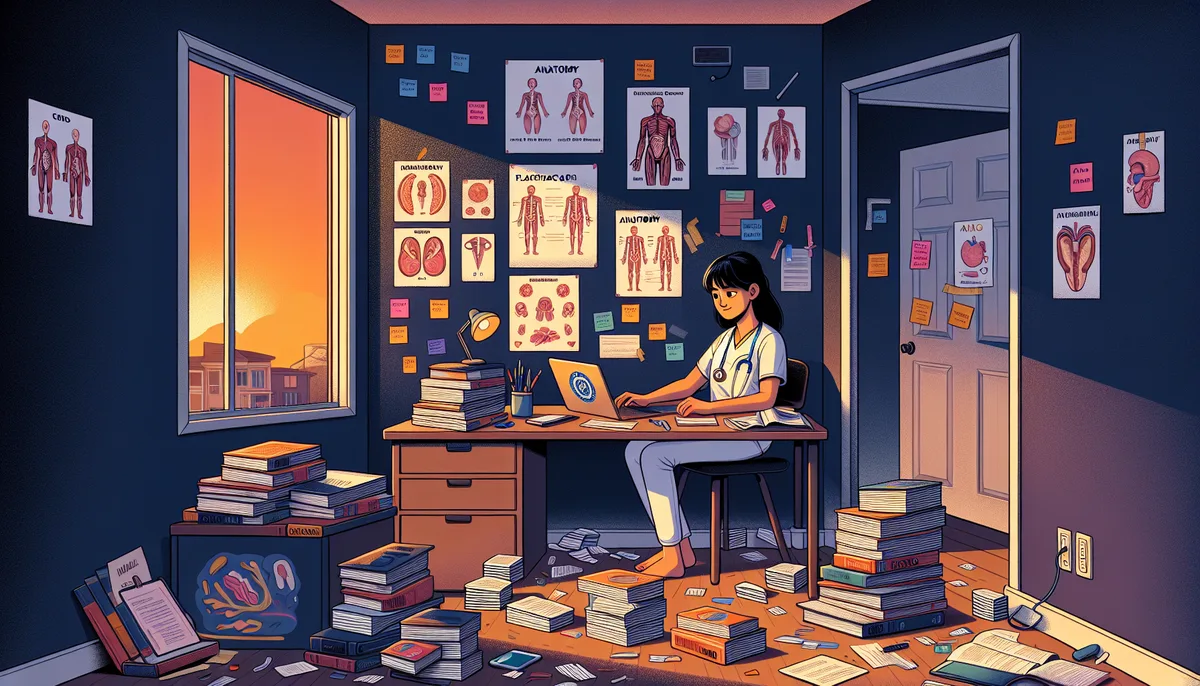
Feeling Lost in Clinical Courses? Find Your Personalized Study Guide
Clinical courses in medical school could easily overwhelm even the most diligent and organized student. With a seemingly endless amount of information to absorb, students often feel lost when it comes to linking lecture material directly with exam content. Traditional study aids like UWorld, while popular for broad review purposes, often fall short as they don't precisely align with the specific lectures taught by your professors. This misalignment leads to frustration as students struggle to see the connections between their study material and the exams they're preparing for. Here's a complete breakdown of how you can overcome these challenges and enhance your study routine.
The Overwhelming Nature of Clinical Courses
Imagine sitting in a crowded lecture hall, trying to keep pace with a professor who is rapidly outlining complex subjects like pharmacology or pathophysiology. This scenario is all too familiar to countless medical students who find themselves swamped with information that's not just dense, but also intricate and voluminous. As exam dates loom closer, students scramble to make sense of their cluttered medical lecture notes, trying desperately to connect the dots between what was taught and what will be tested.
The pressure significantly intensifies as students are inundated with more lectures and reading assignments. The sheer volume of information makes it difficult to determine what’s pertinent for exams, what’s additional reading, and what might not even be directly assessable. This lack of clarity doesn't just create stress and anxiety; it can lead to burnout, which further hampers the learning process. According to a survey of 2,000 medical students, 70% reported feeling overwhelmed by lecture content at least once a week, illustrating the enormity of this challenge.
Furthermore, the volume and complexity of the material can erode confidence. Many medical students crave a system that can distill lectures into more manageable pieces of information, aligning closely with the testing frameworks they will face. Without this tailored approach, even the most prepared students might find themselves second-guessing their knowledge, leading to a less-than-optimal exam performance.
Why Traditional Study Aids Leave Gaps
Tools like UWorld and Anki have become staples in the medical student's arsenal. However, their utility often stops at broad board exam preparation without delving into the specifics of individual lecture content. While UWorld provides a comprehensive review for USMLE Step 1 preparation and similar exams, it doesn't offer questions that directly reflect the intricacies of each student's unique curriculum. This is analogous to preparing for an orchestra performance using a general music sheet rather than the specific score your orchestra is playing.
Additionally, reliance on platforms like Anki for creating flashcards requires a heavy investment of time for setting up, tagging, and managing decks. This can significantly detract from valuable study sessions focused on understanding and integrating new information. In fact, research published in the Journal of Medical Education highlights that students using non-specific content question banks reported higher stress levels when preparing for their exams due to inadequate alignment with their coursework.
This gap highlights a core issue: it's not just about memorizing large amounts of information; it's about understanding specific knowledge as it is taught. Without precise alignment with professor-led lectures, students can feel like they're constantly behind, never truly catching up with their learning objectives. There's an evident need for more focused study aids that can bridge the gap between generic and specific learnings — tools that can adapt to the varying curricula and lecturer focus points that each school's clinical course may present.
The Relief of Classroom-Reflective Resources
Consider the significant relief of having a study guide that directly mirrors what your professors presented, offering a straightforward path from lecture to examination. Imagine the game-changing shift when you can convert your detailed lecture notes into focused study aids that reinforce the material specific to your curriculum. Resources like these would cut through academic noise, allowing for more targeted preparation that precisely addresses both current coursework and upcoming national board exams like the USMLE.
These resources don't just reduce stress; they dynamically transform your relationship with studying. When learning tools are centered on classroom reflective content, they empower students to engage with the material meaningfully, offering clearer insights into what's needed for successful academic performance. The benefit goes beyond exams — students trained in focused studying are better at clinical reasoning, a skill critical for their careers.
A 2019 study published in the Journal of Health Professions Education showed that students who used classroom-mimicking study tools reported a 60% decrease in study-related anxiety. This is not only because they were more aligned with what's being taught, but also because they felt confident about their preparedness due to the familiar format of the practice questions. When study time is optimized, students can focus on areas needing improvement and thus adopt a more balanced lifestyle, dramatically reducing the all-too-common burnout.
BoardMaster's Innovative Approach
Enter platforms like BoardMaster, which offer AI-powered solutions to the thorny challenges faced by medical students. Imagine uploading your professors' lecture notes — be they PPT, PDF, Word, or even photos of handwritten notes — and receiving tailored USMLE-style clinical vignette questions in just two minutes. This innovative tool offers an immediate bridge by aligning your study materials not only with your exam format but also with your exact classroom teachings.
AI-Generated Practice Questions: With BoardMaster, you can upload your lectures and receive questions that are tailored to USMLE Step 1, Step 2 CK, COMLEX exams, and more, aiding intensive and targeted preparation. More interestingly, BoardMaster adapts the style of questions to match your lectures. This means that, unlike generic question banks, the practice you get is much more indicative of what you'll face, reducing surprises and guesswork.
AI Flashcards with Spaced Repetition: This feature allows you to transform your notes into up to 300 flashcards in merely 90 seconds. By using spaced repetition, BoardMaster optimizes your retention, making sure that your study sessions are both effective and efficient. Plus, it offers easy integration with Anki, enabling seamless import and export of decks — true time savers that offer more room for understanding and less for rote memorization.
MedTalk AI Podcasts: For auditory learners, or those looking to maximize on-the-go study time, BoardMaster converts lectures into concise, 8-minute audio podcasts. This flexibility of learning style enriches the educational experience, catering to diverse preferences and ensuring that no time is wasted.
By directly aligning with course content and offering these comprehensive tools, BoardMaster significantly eases the path from learning to assessment, giving students a respite from the chaos often associated with clinical study courses. This not only saves time but equally funds: traditional comprehensive subscriptions could cost upwards of $500 annually, whereas BoardMaster's $399.96/year fee is more generous and versatile in comparison.
The Stress Relieving Power of Tailored Exam Preparation
One of the key benefits of having a study tool that directly matches lecture content is the noticeable reduction in stress it provides. When you know that the questions you are practicing are not only USMLE-style but are also reflective of your school's specific curriculum, your study strategy inherently becomes more focused and confident. This tailored approach significantly enhances a student's readiness for exams.
Imagine entering an exam room with the knowledge that you are not only familiar with the type of questions to expect but are also comfortable with the content, having practiced rigourously with materials specifically designed for that exam. This kind of preparation results in less anxiety, better time management, and a clearer mind when under exam conditions.
Moreover, students utilizing tailored preparation tools often report an increased understanding of their weaker areas. Instead of standing idle, students can actively work on these areas with the facility provided by features such as the persistent tracker, that highlights weaknesses by grouping them into lecture content. They can then seamlessly review and reattempt questions they've answered incorrectly, affording themselves the opportunity to shore up those areas of weakness without having to sift through irrelevant material, thereby fostering a more self-assured and comprehensive preparation experience.
Statistics show that students using adaptive and aligned study tools report a 15-20% increase in their exam scores on average, reinforcing how having aligned resources can turn the tide from a lower score to a passing one. These tailored tools mold you into a more astute learner and a proficient exam taker, setting you up for not just academic success, but a successful career trajectory as well.
How BoardMaster Empowers Students
By eliminating the guesswork and providing a clear, directed path for learning, BoardMaster fosters an environment where students can focus more on becoming adept medical professionals rather than being bogged down by ill-fitting study resources. Overall, it's a testament to the necessity of evolving education aids in line with the complexities and demands of modern medical education.
In conclusion, while traditional aides have served many well, the need for customization, relevance, and adaptability is evident. BoardMaster provides a new, more personalized approach to USMLE Step 1 preparation and clinical course study aids, destined to revolutionize how medical students tackle the dense world of medical knowledge. Shift from overwhelmed to focused, from stressed to relieved—with resources that reflect what truly matters in your academic journey.