
TL;DR:
- Behavioral science appears on the USMLE because it evaluates essential clinical reasoning skills beyond anatomy and physiology. It covers three key domains—ethics, biostatistics, and psychiatry—each requiring distinct study strategies to improve performance and clinical competency. Mastering this subject enhances patient care by improving ethical judgment, diagnostic accuracy, and statistical interpretation from medical school through residency.
Behavioral science appears on the USMLE because it measures clinical reasoning skills that pure anatomy or physiology questions cannot capture. The exam's designers at the NBME include medical ethics, biostatistics, and psychiatry to confirm that future physicians can make sound decisions with real patients, not just recall facts under pressure. Behavioral sciences represent 8–13% of Step 1 content in 2026. That share is large enough to move your score by several percentile points. Understanding the rationale behind its inclusion changes how you study it.
Why behavioral science appears on USMLE: the core reason
The USMLE is designed to test whether you can practice medicine safely. Behavioral science covers the three competencies that determine whether a physician is safe beyond the operating room: ethical judgment, statistical literacy, and psychiatric recognition. Strip any one of those out and you produce a doctor who cannot obtain informed consent, cannot interpret a clinical trial, or cannot spot major depressive disorder in a post-op patient.
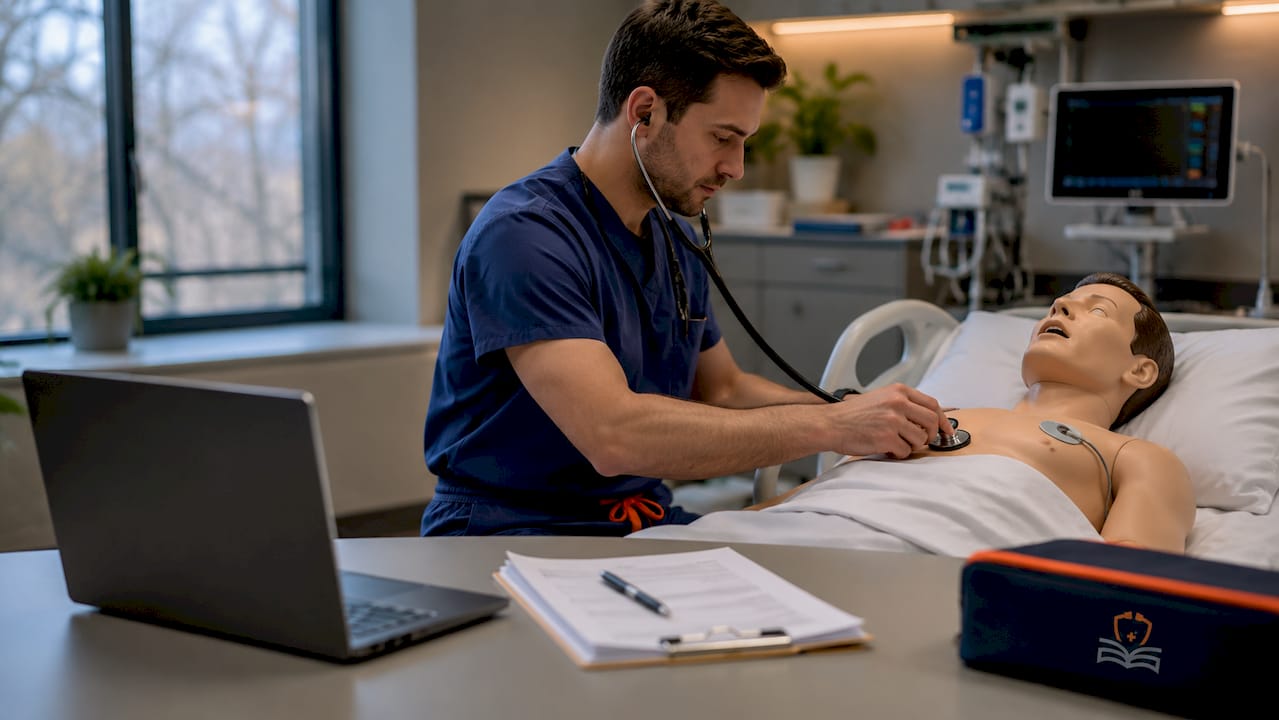
The NBME does not include behavioral science as an afterthought. Behavioral science encompasses three distinct domains: medical ethics and law, biostatistics and epidemiology, and psychiatry and psychology. Each domain tests a different cognitive skill. Ethics tests judgment under ambiguity. Biostatistics tests calculation under time pressure. Psychiatry tests pattern recognition against DSM-5 criteria. Treating all three as one subject is the most common reason students underperform in this category.
The importance of behavioral science on the USMLE also reflects a shift in how medical schools define competency. Residency programs expect incoming interns to communicate with patients, navigate ethical dilemmas, and screen for mental health conditions from day one. The exam simply mirrors that expectation.
What domains does behavioral science cover on the USMLE?
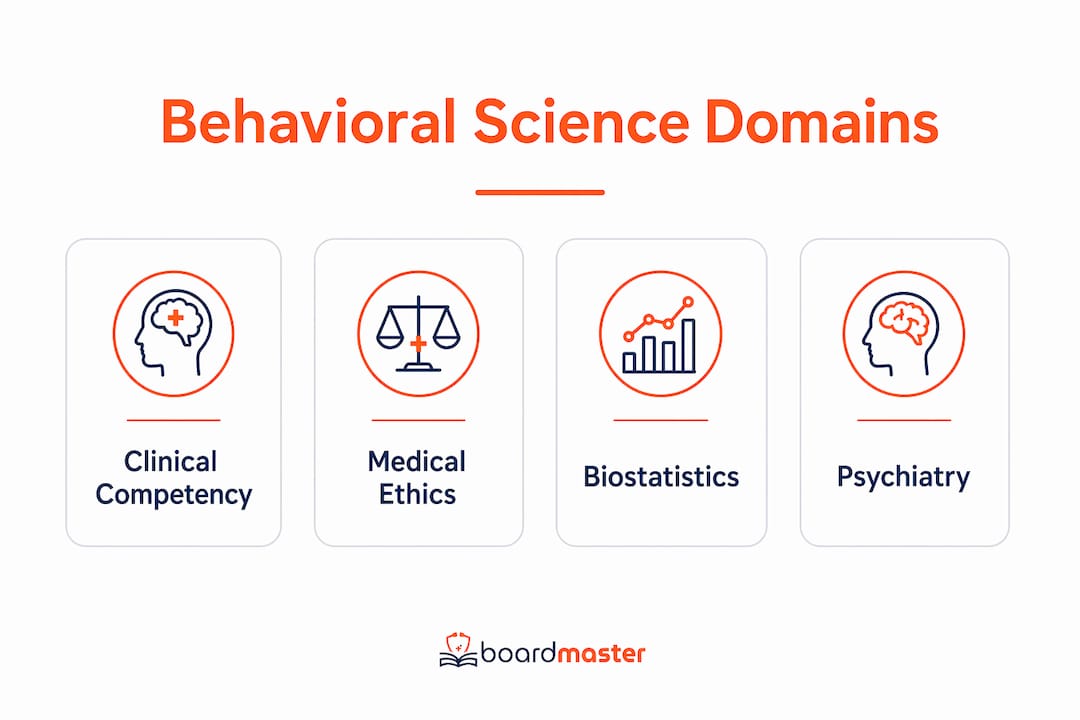
Behavioral science is not one subject but three overlapping domains, each requiring a different study approach. Knowing the difference before you open a review book saves weeks of misdirected effort.
Medical ethics and law
Ethics questions present clinical scenarios where a patient's autonomy conflicts with a physician's recommendation, or where confidentiality rules bump against public safety. The skill tested is framework application, not memorization of legal statutes. You need to recognize which principle is at stake and apply it quickly. The four principles of biomedical ethics (autonomy, beneficence, non-maleficence, and justice) appear constantly, often disguised inside complex family dynamics or end-of-life scenarios.
Biostatistics and epidemiology
Biostatistics questions require you to calculate sensitivity, specificity, positive predictive value, or likelihood ratios from a 2x2 table. Students must perform these calculations in under 45 seconds. That time constraint is the real test. A student who understands the formula but cannot execute it quickly will still miss the question.
Psychiatry and psychology
Psychiatric content focuses on DSM-5 diagnostic criteria and pathophysiology. Questions follow predictable patterns. A patient presents with a cluster of symptoms, and you select the diagnosis that fits the criteria. The trap is over-analyzing psychodynamic theory when the answer is a straightforward DSM-5 match.
| Domain | Core Skill Tested | Common Pitfall |
|---|---|---|
| Medical Ethics | Framework application | Choosing beneficence over autonomy |
| Biostatistics | Timed calculation from 2x2 tables | Slow setup under exam pressure |
| Psychiatry | DSM-5 pattern recognition | Over-analyzing psychodynamics |
Pro Tip: Separate your study sessions by domain from day one. A single "behavioral science" study block mixes three different cognitive tasks and trains none of them well.
How does behavioral science test clinical reasoning?
The USMLE does not ask you to define confirmation bias or recite Erikson's stages. It embeds behavioral concepts inside clinical vignettes that look like real patient encounters. Exam questions require recognizing core diagnostic or ethical issues from messy clinical scenarios. That design is intentional. It mirrors what happens on a hospital floor.
Here is what that looks like in practice:
- A vignette describes a 67-year-old patient refusing a blood transfusion for religious reasons. The question asks what the physician should do next. The correct answer respects patient autonomy, even if the refusal is life-threatening.
- A table shows 200 patients screened for a disease. You must calculate the positive predictive value and select the answer within your time limit.
- A patient presents with two weeks of depressed mood, anhedonia, sleep disturbance, and fatigue. You identify major depressive disorder by matching the symptom count to DSM-5 criteria, not by exploring childhood trauma.
"Success in behavioral science mainly comes from recognizing question patterns rather than memorizing facts." — Dr. Lisa Patel, as cited in NBME exam preparation research
The pattern recognition point is critical. Students fail by memorizing defense mechanisms or formulas instead of applying frameworks. The exam rewards the student who has practiced applying knowledge under pressure, not the one who has read the most pages.
A solid Step 1 study plan accounts for this distinction by building timed practice into every behavioral science session, not just the week before the exam.
Why behavioral science matters for patient care
The role of psychology in USMLE preparation extends well beyond the exam room. Every skill tested in behavioral science has a direct clinical application that you will use in residency and beyond.
- Ethics literacy protects patient autonomy. A physician who cannot identify an informed consent violation will eventually commit one. Ethics training builds the reflex to pause and ask the right question before acting.
- Psychiatric literacy improves diagnosis and treatment. Unrecognized depression in a post-surgical patient leads to poor recovery outcomes. Recognizing the DSM-5 criteria on an exam trains the same recognition skill you need at the bedside.
- Stress management is a clinical tool, not just a personal one. Approximately 25% of medical students show significant anxiety symptoms before major NBME exams. Behavioral science training teaches the same cognitive techniques used in clinical practice to manage patient anxiety and your own.
- Statistical literacy makes you a better clinician. A physician who cannot interpret a sensitivity or specificity value cannot critically evaluate a diagnostic test or a clinical trial result.
Pro Tip: When you study ethics cases, write out the reasoning in one sentence: "I chose this answer because patient autonomy overrides physician preference here." That habit transfers directly to clinical documentation and patient conversations.
The impact of behavioral science on medicine is not abstract. It shows up every time you explain a diagnosis, obtain consent, screen for depression, or read a study in a journal club.
What are the best study strategies for behavioral science?
Mastering behavioral science for the USMLE requires a different approach for each domain. Generic question bank grinding without domain-specific technique produces mediocre results. Experts recommend separating behavioral science into its domains early and using distinct learning methods for each.
- Ethics: Memorize the four-box model (medical indications, patient preferences, quality of life, and contextual features) and practice applying it to one new case per study session. Do not read ethics theory. Practice ethics decisions.
- Biostatistics: Build 2x2 tables from scratch every day. Working backward from 2x2 tables and drilling calculations repeatedly is the single most effective biostatistics technique. Time yourself. Speed matters as much as accuracy.
- Psychiatry: Use flashcards for DSM-5 criteria. Anki decks organized by disorder category work well. Review one disorder cluster per session and test yourself with clinical vignettes, not definition matching.
- Mixed practice: Run timed blocks of 40 questions that mix all three domains. This simulates real exam conditions and trains you to switch cognitive modes quickly.
- Customize your prep: Upload your professor's lecture notes into a tool like BoardMaster to generate USMLE-style questions that target exactly what your course emphasizes.
| Study Method | Domain | Time Investment |
|---|---|---|
| Four-box model case practice | Ethics | 15 minutes daily |
| Timed 2x2 table drills | Biostatistics | 20 minutes daily |
| Anki DSM-5 flashcard review | Psychiatry | 20 minutes daily |
| Mixed timed question blocks | All three | 3x per week |
A customized USMLE study plan that allocates specific time blocks to each behavioral science domain consistently outperforms a general "study more" approach.
How does behavioral science weighting affect your USMLE prep?
Behavioral sciences represent 8–13% of Step 1 exam content in 2026. That percentage means roughly 19–31 questions on a 240-question exam. Missing most of those questions can drop your score by a full standard deviation.
The NBME places behavioral science alongside foundational sciences as a baseline clinical competency. Passing Step 1 requires demonstrating that competency, not just surviving it. Students who treat behavioral science as a low-priority subject because it feels softer than biochemistry consistently underestimate its score impact.
| Exam Component | Approximate Weight | Score Impact |
|---|---|---|
| Behavioral Sciences | 8–13% | 19–31 questions |
| Biochemistry | 14–17% | 34–41 questions |
| Pathology | 44–52% | 106–125 questions |
Step 2 CK carries more weight in residency selection, but Step 1 behavioral science remains the foundation. The reasoning skills built during Step 1 prep carry directly into Step 2 CK psychiatry and ethics questions. Students who skip behavioral science in Step 1 prep pay for it twice.
Avoiding common exam prep misconceptions about behavioral science being "easy points" is one of the highest-yield mindset shifts you can make before you start studying.
Key takeaways
Behavioral science on the USMLE tests three distinct clinical competencies, and mastering each one requires a separate, domain-specific study strategy.
| Point | Details |
|---|---|
| Three separate domains | Ethics, biostatistics, and psychiatry each require a different study method, not one generic approach. |
| Score weight is significant | Behavioral sciences cover 8–13% of Step 1, representing up to 31 questions that directly affect your score. |
| Clinical reasoning over recall | Questions embed behavioral concepts in clinical vignettes, rewarding pattern recognition and framework application. |
| Patient care connection | Ethics, psychiatric, and statistical skills from this content area transfer directly to clinical practice from day one. |
| Domain-specific strategies | Daily timed 2x2 drills, DSM-5 flashcards, and ethics case practice outperform passive reading for every domain. |
Behavioral science is the subject most students get wrong twice
I have watched hundreds of medical students approach behavioral science the same way: they skim First Aid, do a handful of ethics questions, and assume the psychiatry section will take care of itself. Then they get their score back and wonder why they lost points in a category they thought was manageable.
The uncomfortable truth is that behavioral science is the most misunderstood section of Step 1. Students underestimate it because it does not feel like "real medicine." There are no organ systems to memorize, no enzymatic pathways to trace. That surface-level softness is exactly what makes it dangerous. The questions are harder than they look because they test judgment, not knowledge.
What I have found actually works is treating each domain as its own mini-subject with its own study schedule. Students who drill 2x2 tables daily for two weeks develop a calculation reflex that holds up under exam pressure. Students who practice one ethics case per day stop second-guessing themselves on autonomy questions. The pattern recognition that Dr. Lisa Patel describes is real, and it only develops through repetition with feedback, not passive reading.
Behavioral science also has a compounding benefit that most students miss. The stress management frameworks you study for the exam are the same ones you will use to manage patient anxiety in your intern year. The psychiatric screening criteria you memorize for Step 1 are the same ones you will apply in your first outpatient clinic. This subject pays dividends that extend well past your score report.
Embrace it as a clinical skill set, not a test requirement. That shift in perspective alone will change how you study it.
— Dr. Ahmed Abuzoor
How BoardMaster targets your behavioral science weak spots
Behavioral science prep fails when students practice the wrong questions for too long. BoardMaster solves that directly. Upload your lecture notes and BoardMaster generates USMLE-style questions focused on exactly what your professors emphasize, including ethics scenarios, biostatistics calculations, and DSM-5 pattern recognition. Students like Sarah jumped from the 73rd to the 92nd percentile while cutting study hours in half by focusing only on high-yield content.

BoardMaster's AI-powered USMLE prep tools include a physician-written question bank with behavioral science questions built to mirror real exam vignettes. Stop practicing generic questions that miss your course's emphasis. Start practicing the questions that will actually show up.
FAQ
What percentage of USMLE step 1 is behavioral science?
Behavioral sciences account for 8–13% of Step 1 content, which translates to roughly 19–31 questions on the full exam.
What topics fall under behavioral science on the USMLE?
Behavioral science covers three domains: medical ethics and law, biostatistics and epidemiology, and psychiatry and psychology. Each requires a distinct study strategy.
Why do students struggle with behavioral science questions?
Students fail by memorizing facts instead of applying frameworks. Behavioral science questions are embedded in clinical vignettes that reward pattern recognition and timed reasoning, not passive recall.
How should i study biostatistics for the USMLE?
Practice building and solving 2x2 tables daily under timed conditions. Speed and accuracy together are the target, since exam questions require completing these calculations in under 45 seconds.
Does behavioral science matter for step 2 CK and residency?
Yes. The clinical reasoning skills built during Step 1 behavioral science prep carry directly into Step 2 CK psychiatry and ethics content. Residency programs expect these competencies from day one of intern year.