
Finding a personalized medical question bank that truly fits exam prep and clinical learning needs takes more effort than expected. Many platforms do not list pricing publicly or require contacting sales, making it hard to compare costs and content fit up front. This comparison covers question depth, adaptive features, and pricing transparency across five platforms so medical students and educators can pick the best match without a blind trial.
Table of Contents
AMBOSS
At a Glance
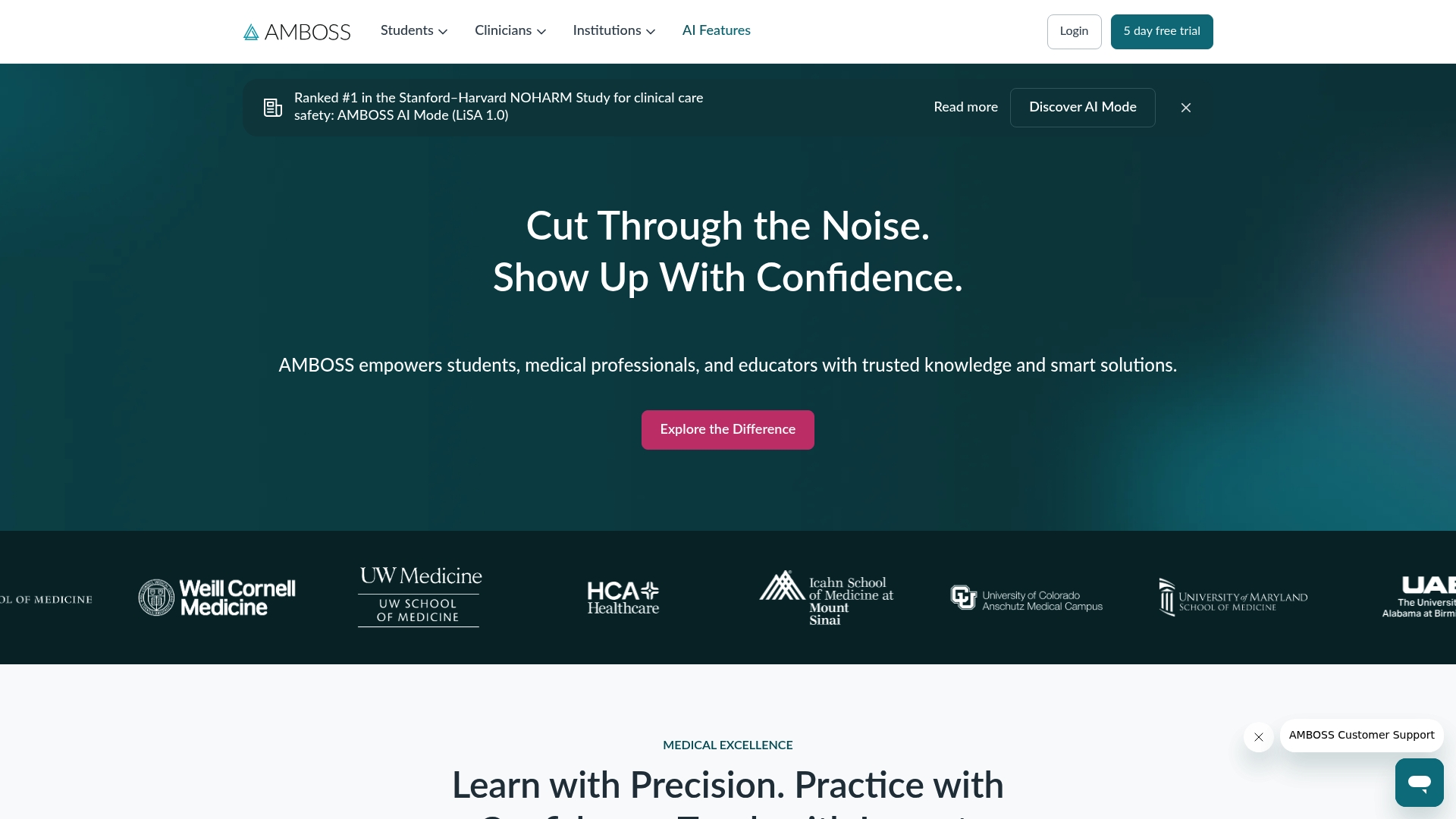
According to the company, AMBOSS includes 22,000+ exam-style questions and was developed by over 150 physicians. That question count links questions to a large medical library and fast clinical reference tools. The platform targets study, bedside reference, and institutional teaching.
Core Features
The medical library pairs that question count with linked evidence based articles and concise clinical summaries. The platform offers AI driven clinical reference tools that surface quick answers and relevant citations at the point of care. Educator tools let faculty create sessions, assign work, and track progress while mobile apps and a browser extension enable offline and instant lookup.
Key Differentiator
AMBOSS centers on AI powered personalization and real time clinical decision support backed by physician developed content. That focus helps clinicians find actionable answers at the bedside and students practice clinical reasoning with context. Compared with BoardMaster, AMBOSS favors broad clinical reference and exam practice across rotations rather than professor specific question tailoring.
Pros
Content is developed and curated by practicing physicians, which supports evidence based learning and clinical reliability. Mobile apps and offline access make the platform usable during hospital shifts and poor network conditions. Educator features and a large question bank support both exam preparation and assigned classroom work.
Cons
- Some features or content sections appear inaccessible or incomplete, which reduces transparency.
- Pricing details are not publicly available, requiring direct contact to learn subscription or institutional terms.
- The site shows broken links and occasional 404 errors, which can interrupt focused study or clinical lookup.
When It May Not Fit
If you need question sets generated directly from uploaded lecture notes, AMBOSS may not match that workflow. Organizations that require transparent, public pricing or self serve purchases will need to contact sales. Users who depend on flawless site navigation could find the reported broken links a real obstacle.
Who It's For
Medical students preparing for board style exams, clinicians wanting quick clinical references, and educators running assigned sessions will find value here. Students who want professor specific, lecture aligned questions may prefer BoardMaster for tighter course alignment. Institutions seeking integrated clinical reference across rotations will find AMBOSS relevant.
Real World Use Case
A student downloads the mobile app before a rotation and studies offline between shifts. They practice clinical style questions tied to concise library articles, then use the clinical tools to check management steps at the bedside. That workflow keeps study and patient care aligned without flipping between multiple resources.
Pricing
Pricing is not publicly listed. The vendor appears to offer subscription plans and institutional licensing that require contacting sales for quotes. Many schools and hospitals arrange institutional access for students and staff through their library or education office.
Website: https://amboss.com
Board Vitals
At a Glance
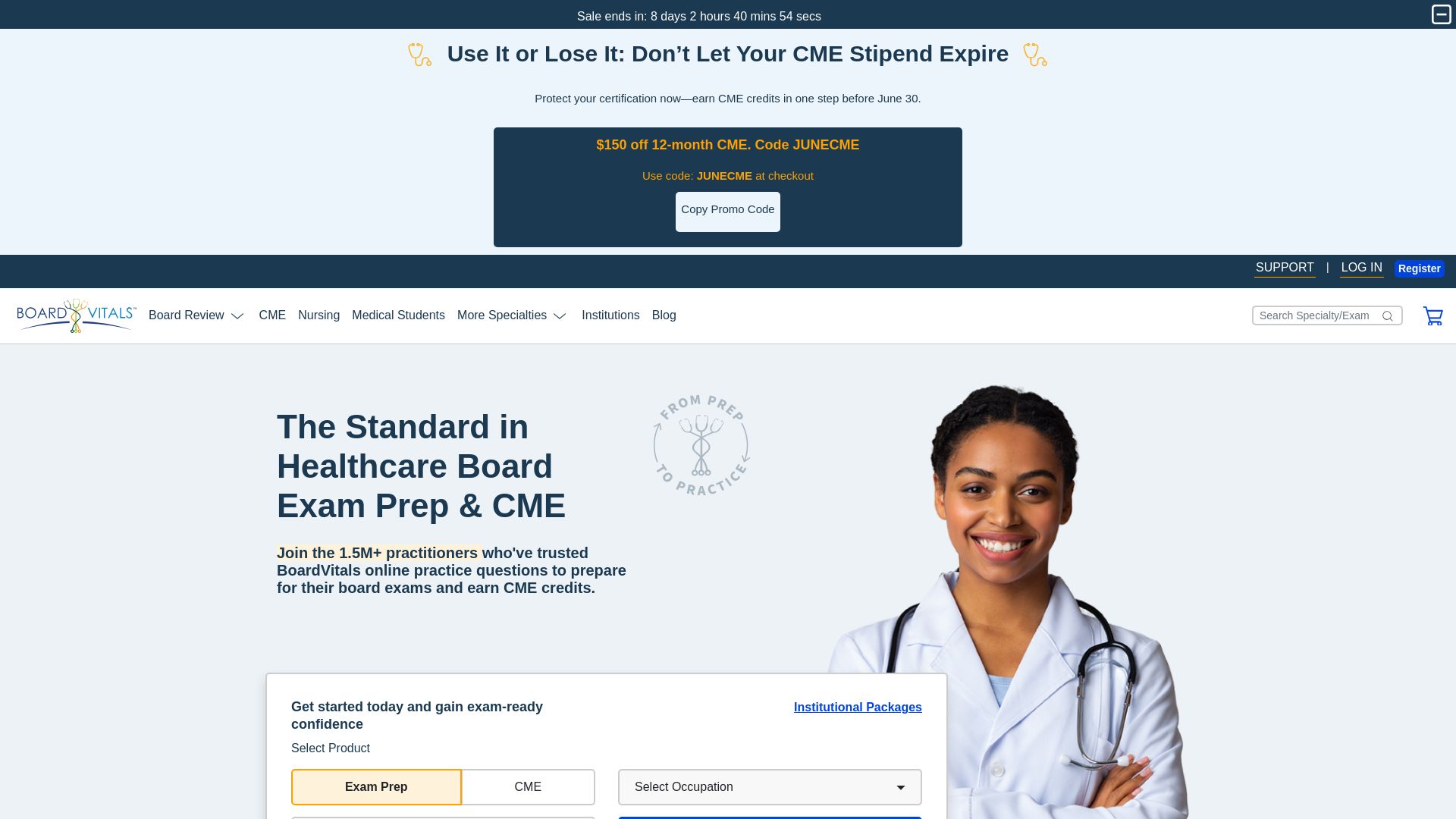
BoardVitals reports it is trusted by more than 1.5 million practitioners and over 2,000 institutions. The platform focuses on exam-style practice questions, detailed rationales, and adaptive study paths. This makes it a widely used study option for clinicians preparing high-stakes certification exams.
Core Features
Board Vitals delivers challenging exam-style practice questions with detailed explanations and rationales that link incorrect choices to the correct concept. The platform offers AI-powered risk assessment and adaptive testing, full-length practice exams, and a mobile app for study on the go. It also includes CME and MOC credit options and content that spans many medical specialties and allied health fields.
Key Differentiator
BoardVitals centers study around personalized adaptive learning driven by its risk assessment engine. That system adjusts question selection as you identify weak areas and then offers mastery testing to confirm remediation. The product pairs analytics with dense explanations so you can track progress and fix specific concept gaps rather than guessing which topics to revisit.
Pros
BoardVitals reports a 9% higher pass rate than the national average, which suggests many learners see measurable benefits from its study model. The question bank mimics real exam difficulty and includes high-quality images and video to support visual learning. Frequent content updates and institutional licensing options make the library useful for individual students and program directors who need reliable, clinically focused practice material.
Cons
- Some reviewers report difficulty completing purchases after claiming CME credits. This can interrupt access for people who expect instant enrollment.
- The question set can feel overwhelming for learners with limited clinical background. Beginners may need supplemental, lower-difficulty study resources.
- Pricing information is not posted clearly on the homepage. Prospective subscribers often must contact sales for exact figures.
When It May Not Fit
If you are early in medical training and need gentle introductions to core concepts, this resource may feel too advanced. Programs with tight budgets that require transparent, published pricing could find the sales-first approach inconvenient. If you want an exam plan that starts at absolute beginner level, look for resources that explicitly label novice tracks.
Who It's For
BoardVitals fits practicing clinicians and senior trainees who want rigorous question practice and CME credit. It also suits institutional programs that require tracked analytics and full exam simulations. If you plan to combine course exam prep with board study, this platform aligns study tasks and credit needs.
Real World Use Case
A cardiologist used BoardVitals to simulate ABIM exam conditions with full-length practice tests and focused question blocks. The analytics highlighted weak subspecialty areas, which guided a two-week review plan. The cardiologist also earned CME credits while preparing, keeping credentialing and study work aligned.
Pricing
The vendor does not publish detailed pricing on the public homepage, and some offerings require direct sales contact to get exact figures. Institutional licensing and individual subscription models are available, but you must request a quote to see current rates.
Website: https://boardvitals.com
MedStudy
At a Glance
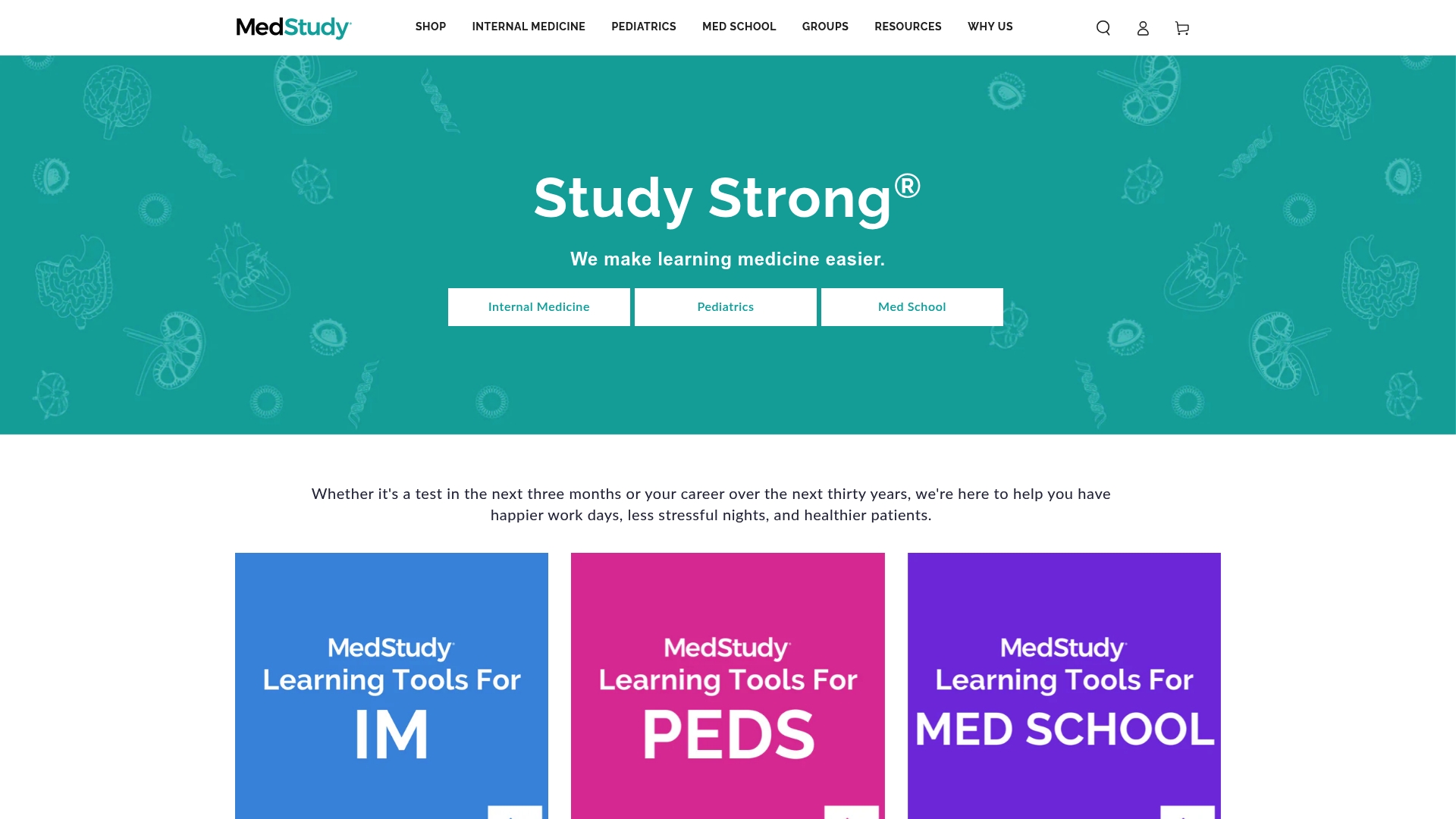
MedStudy issues CME and MOC credits across many of its courses. The platform links print textbooks to digital question banks and flashcards for topic-focused review. According to the company, MedStudy has been trusted by thousands of physicians over 30 years.
Core Features
MedStudy bundles full specialty textbooks with question banks and flashcards that reference the same topics. The platform uses personalized study plans and spaced repetition to guide review and tracking. MedStudy also issues CME and MOC credits, and it keeps content updated to match current exam blueprints.
Key Differentiator
MedStudy centers its content around current exam blueprints and keeps that content synchronized across print and online formats. That tight alignment makes it straightforward to move from a textbook explanation to a matched practice question and back. The approach suits candidates who want study materials that reflect real exam structure.
Pros
MedStudy combines longform textbooks with active practice material, which helps you build depth and then test recall within the same topic. The question banks are aligned to licensing exam blueprints, and the linked flashcards speed review when you have limited time. According to the company, the product has a long track record and positive reviews from clinicians, which suggests steady editorial maintenance and frequent updates.
Cons
- Content density requires sustained, scheduled study to get results.
- Digital access can be disrupted by browser settings or device-specific issues.
- Textbooks often cost several hundred dollars, which raises the upfront cost for print-heavy learners.
When It May Not Fit
If you need short, lightweight review packets or flashcard-only platforms, MedStudy can feel heavy and time consuming. If your internet access is unreliable or you rely on unsupported devices, the digital components may hinder daily practice. The product fits people prepared to commit regular study blocks.
Who It's For
Students, residents, and practicing physicians who prefer textbook depth paired with targeted practice questions will find value here. Candidates preparing for USMLE Steps or ABIM recertification who want exam-aligned content and formal credit options match this profile well.
Real World Use Case
A third-year medical student uses MedStudy textbooks for weeklong topic review and then drills the linked question bank each evening. The student tracks weak areas with the platform and focuses flashcard sessions on those topics, which increases confidence before shelf exams and board preparation.
Pricing
Price varies by product. Textbooks typically cost several hundred dollars. Question banks and subscriptions start at about $29/month or $299/year. Bundles and institutional discounts are available.
Website: https://medstudy.com
Ora AI
At a Glance
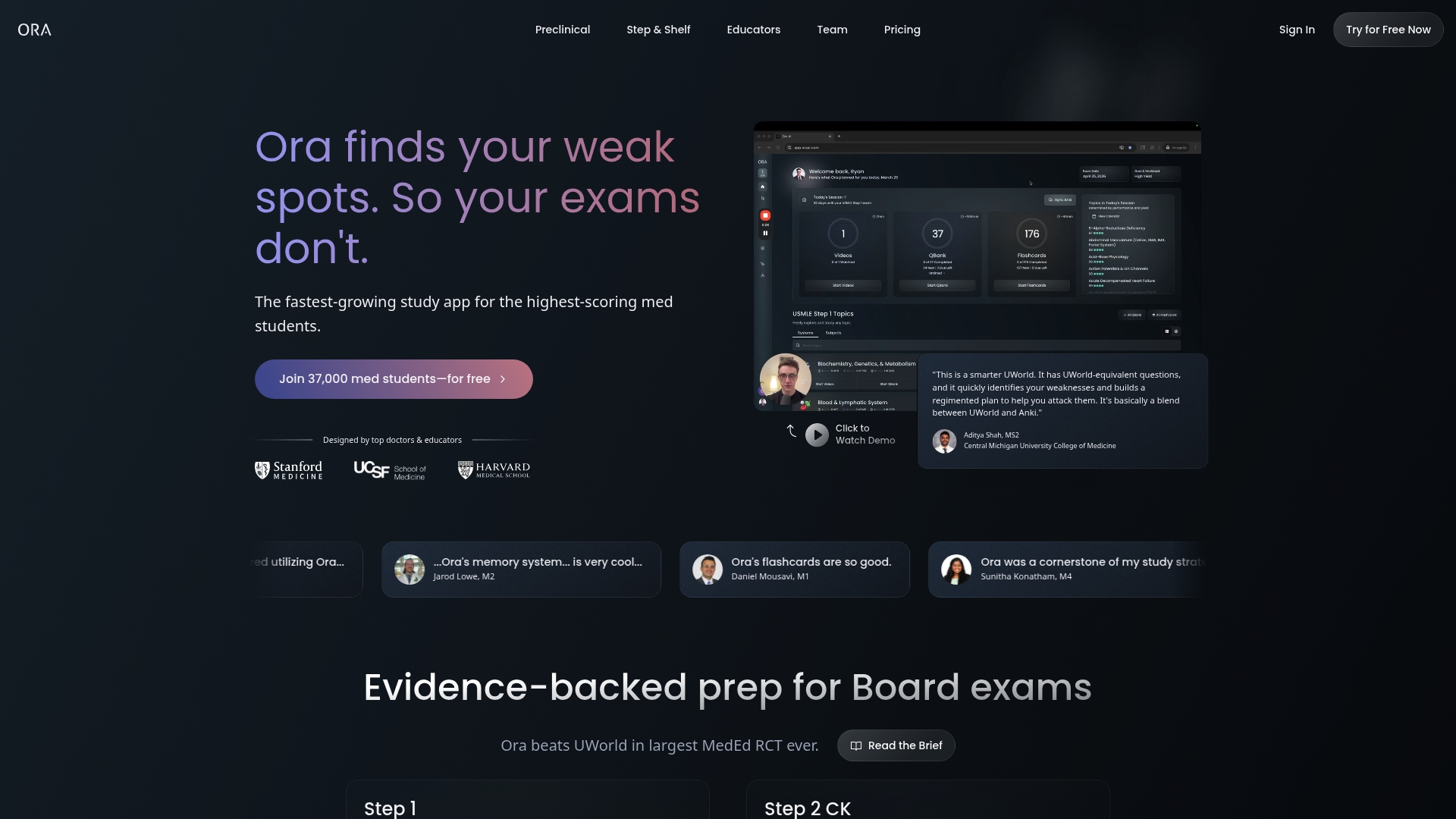
Ora AI reports a 100% USMLE Step 1 first attempt pass rate in vendor trials. That result comes from the company trials and does not represent independent verification. The product packages an AI QBank, flashcards, video lessons, spaced repetition including FSRS, and mobile apps aimed at preclinical and board exam preparation.
Core Features
Ora AI combines an integrated QBank with flashcards so practice and review remain in one study flow. The platform uses spaced repetition algorithms including FSRS to schedule reviews based on recall difficulty and past performance. An AI Copilot offers topic guidance while the video library and reference content fill gaps across preclinical to shelf exam topics.
Key Differentiator
The vendor claims multi institution randomized controlled trial validation showing superior performance on USMLE and NBME exams. That research focus targets medical schools and educators who prioritize tools backed by formal trials rather than only marketing claims.
Pros
High quality flashcards and an intuitive interface make daily sessions easier to sustain for busy students. That figure and the trial emphasis give a clear signal that the vendor runs formal studies rather than only anecdotal tracking. Personalized daily study plans and advanced spaced repetition adapt workload to performance so students focus study time where they need it most.
Cons
- Claims rely primarily on internal research and specific trials. Independent validation is limited and not detailed here.
- Public pricing and the extent of full content coverage are not listed in this summary. That makes budgeting and content scope hard to judge before contacting the vendor.
- Effectiveness depends on regular engagement and consistent use. Students who study irregularly will not capture the spaced repetition benefits.
Who It's For
Medical students preparing for USMLE Step 1 and Step 2, M1 and M2 preclinical exams, and NBME shelf tests will get the most direct benefit. Medical schools and faculty seeking curriculum alignment or cohort study management can use the platform for institutional programs. Educators who value research backed claims and trial data will find the vendor focus relevant.
Real World Use Case
A second year student builds a daily routine that mixes QBank blocks, flashcard reviews, and short video sessions. The AI Copilot clarifies concepts missed in practice questions while FSRS schedules review of weak topics. An academic program uses cohort tools to run aligned study periods and compare exam performance across curricular blocks.
Pricing
Pricing is not listed in this informational summary. Contact Ora AI for current individual and institutional pricing and licensing options.
Website: https://oraai.com
QUPI
At a Glance
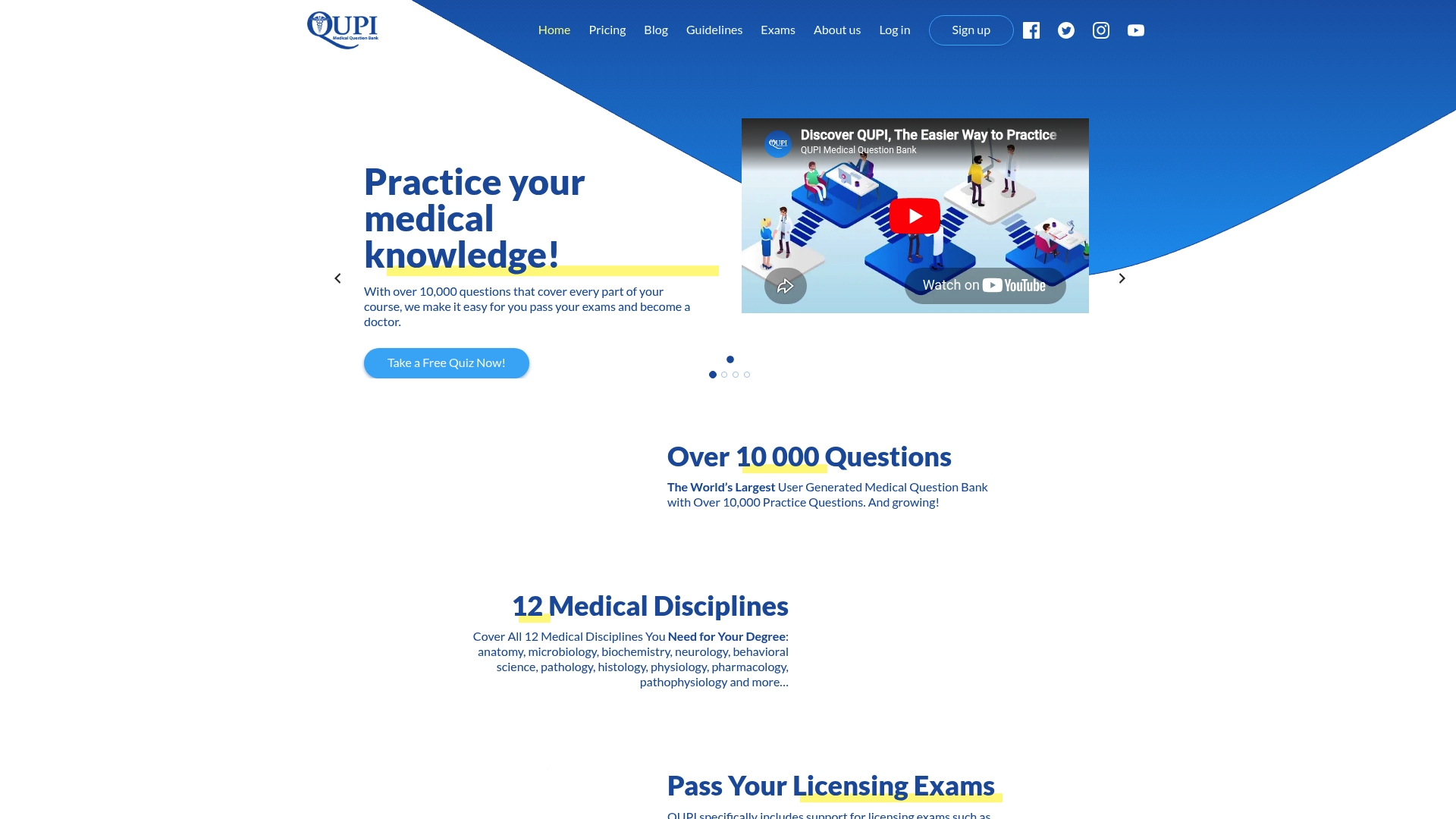
QUPI reports over 10,000 practice questions across 12 medical disciplines. The vendor advertises a free 7-day trial for new users. That question count supports timed exam modes and focused drills for licensing exams.
Core Features
QUPI groups questions by discipline and difficulty and lets you build customizable quizzes that match course emphasis. The platform includes exam simulation with timed test modes and a mobile app for study on commutes. Community content and a newsletter add study tips and peer discussion.
Key Differentiator
QUPI centers on a large repository of user generated questions that peers validate before wider use. That model creates quick coverage for varied exam formats such as USMLE and PLAB. The community review workflow makes the bank adaptable to regional exam styles.
Pros
The question volume gives broad topic coverage, which helps when you need repeated practice across subjects. Flexible quiz settings let you focus on weak areas and reproduce exam timing. Mobile access keeps short sessions productive between classes or during commutes. The free trial allows you to test content fit before committing to a subscription.
Cons
- Quality can vary because content begins as user generated material and relies on community validation.
- Subscription pricing may put this out of reach for students on tight budgets.
- Question formats include fewer detailed patient case builds compared with some clinical case banks.
When It May Not Fit
If you need only faculty reviewed, high fidelity clinical cases, QUPI may fall short. If you study offline often, the platform depends on internet access for updates and sync. If your budget allows only free resources, the subscription model could be a barrier.
Who It's For
QUPI fits medical students preparing for licensing exams who want broad question exposure and mobile study options. It also suits students who value peer discussion and quick quiz creation. Educators looking for a large, adaptable question pool may find it useful as a supplementary resource.
Real World Use Case
A student in the UK used QUPI on a phone to practice PLAB questions during commutes. They created targeted quizzes in pathology and pharmacology to drill weak topics. That routine helped focus limited study time and build exam stamina.
Pricing
QUPI operates on subscription plans after the trial period. Specific prices are not publicly listed, so check the site for current tiers and student discounts. The free trial lets you assess content quality before purchasing a plan.
Website: https://qupi.com
Comparison of alternatives
Medical education platforms present unique offerings that cater to varied study preferences, focusing on factors like content organization, subject relevance, and technological integration. Below, we analyze and contrast several alternatives to aid decision-making.
Alignment of study resources and features
BoardMaster provides an approach by crafting tailored question banks derived from uploaded professor lectures, creating an option that aligns study materials directly with course content. On the other hand, AMBOSS excels in clinical reference utility, offering point-of-care tools to bridge patient care practices with learning—a dimension by others in clinical settings. Meanwhile, BoardVitals focuses on adaptive testing, helping students repair knowledge gaps by emphasizing identified weaknesses.
Accessibility to hybrid learning tools
In the hybrid learning space, MedStudy offers integrated study plans, linking physical textbooks with digital resources. This alignment suits learners seeking extensive resource depth, although its format can present challenges for time-constrained candidates. Alternatively, QUPI emphasizes accessible study through community-driven quizzes and mobile compatibility, ensuring study continuity across varied timeframes.
Best fit
- Students who desire question banks built around uploaded lecture materials should opt for BoardMaster.
- Clinicians requiring a resource that extensively integrates clinical practice references will find AMBOSS.
- Advanced trainees seeking detailed rationalization and analytics in testing scenarios will benefit from BoardVitals.
- Learners pursuing topic-driven mastery that synchronizes between paper and online study formats might prefer MedStudy.
- Those who prioritize budget-friendly plans alongside topic adaptability can consider QUPI.
Our pick
For medical students aiming to maximize study efficiency through tailored lecture-aligned question crafting, BoardMaster leaps beyond competition. Its unique integration dramatically boosts the relevance of preparation efforts for institution-specific assessments. That said, prospective users aiming for broader clinical applicability or detailed exam analytics should explore AMBOSS or BoardVitals. Still, for those emphasizing streamlined alignment, BoardMaster provides support.
Compare these leading medical study platforms based on their use cases and core features to identify the best fit for your needs.
| Platform | Core Feature | Key Differentiator | Best For | Pricing | Limitation |
|---|---|---|---|---|---|
| BoardMaster | Adaptive question bank | Tailored feedback based on input | Students needing professor-specific alignment | Price not published | Professor-specific tailoring not provided |
| AMBOSS | Extensive library and clinical reference | AI-driven decision support | Students and clinicians needing on-the-go resources | Price not published | Broken links, inconsistent performance |
| Board Vitals | Advanced adaptive testing | Risk assessment and mastery features | Practitioners seeking challenging exam practice | Price not published | Advanced content may overwhelm new learners |
| MedStudy | Specialty textbooks and question banks | Blueprints paired to print and digital | Physicians preferring in-depth, structured study | From $29/month | Dense material requires consistent engagement |
| Ora AI | Integrated QBank and flashcards | Research-backed spaced repetition | Students preparing for USMLE exams | Price not published | Reliant on consistent usage for effectiveness |
| QUPI | Diverse user-generated practice sets | Peer-validated content adaptability | Students needing broad exposure | Price not published | Quality variation due to user-generated content |
How to Focus Your Medical Exam Study When Facing Multiple Tuskegee.edu Alternatives
Many medical students struggle to study the right material for both class exams and board exams. The challenge grows when trialing different platforms that lack alignment with individual professors and course specifics. You want targeted questions that reflect your curriculum, not generic question banks that waste study time.
BoardMaster answers this need by generating USMLE-style questions tailored to your uploaded lecture notes. This means you zero in on the concepts your professors emphasize and cut study time in half while improving confidence. Sarah, for example, moved from the 73rd to the 92nd percentile using BoardMaster's focused question sets.
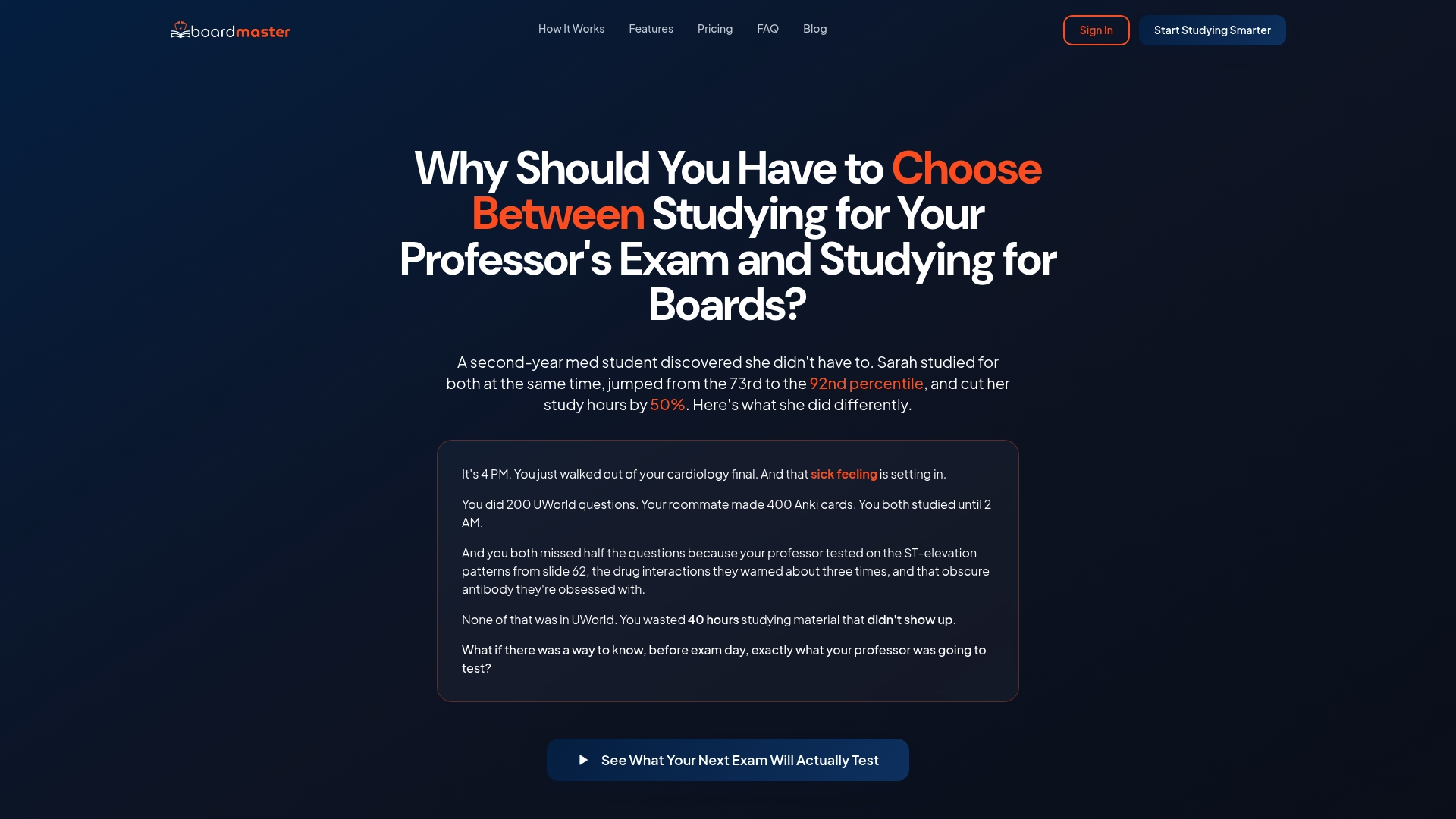
Stop wondering if your study plan fits your classes. Visit BoardMaster now to upload your notes and get personalized practice questions that match your course and board goals. See how aligning study with your curriculum leads to better results.
FAQ
How does BoardMaster support personalized study plans for medical students?
BoardMaster generates personalized study plans based on each student's performance. The platform uses an extensive question bank and detailed analytics to help students focus on areas needing improvement. This tailored approach can significantly enhance exam preparation efficiency.
What is the difference between AMBOSS and BoardMaster in terms of question style?
AMBOSS offers a large medical library with over 22,000 exam-style questions linked to clear clinical references. BoardMaster specializes in professor-specific question sets tailored to individual lecture content, which may better suit students looking for close alignment with course material.
Can I use BoardMaster for CME credits as a practicing clinician?
BoardMaster does not explicitly mention CME credit options, unlike some competitors that offer formal certifications. Practicing clinicians may want to explore platforms that integrate those features along with board-style practice questions.
How does pricing for BoardMaster compare with other platforms like BoardVitals?
Pricing for BoardMaster is not publicly listed, requiring direct contact for information. In contrast, BoardVitals provides details about its subscription plans that report a 9% higher pass rate than the national average. This creates a challenge for potential users to gauge value until they inquire directly with BoardMaster.
Does BoardMaster provide exam simulations similar to QUPI?
BoardMaster does not offer the same timed exam simulation features that QUPI provides. Instead, it focuses on personalized question analysis to improve areas where students struggle, which may be more beneficial for individualized learning rather than full-exam practice.