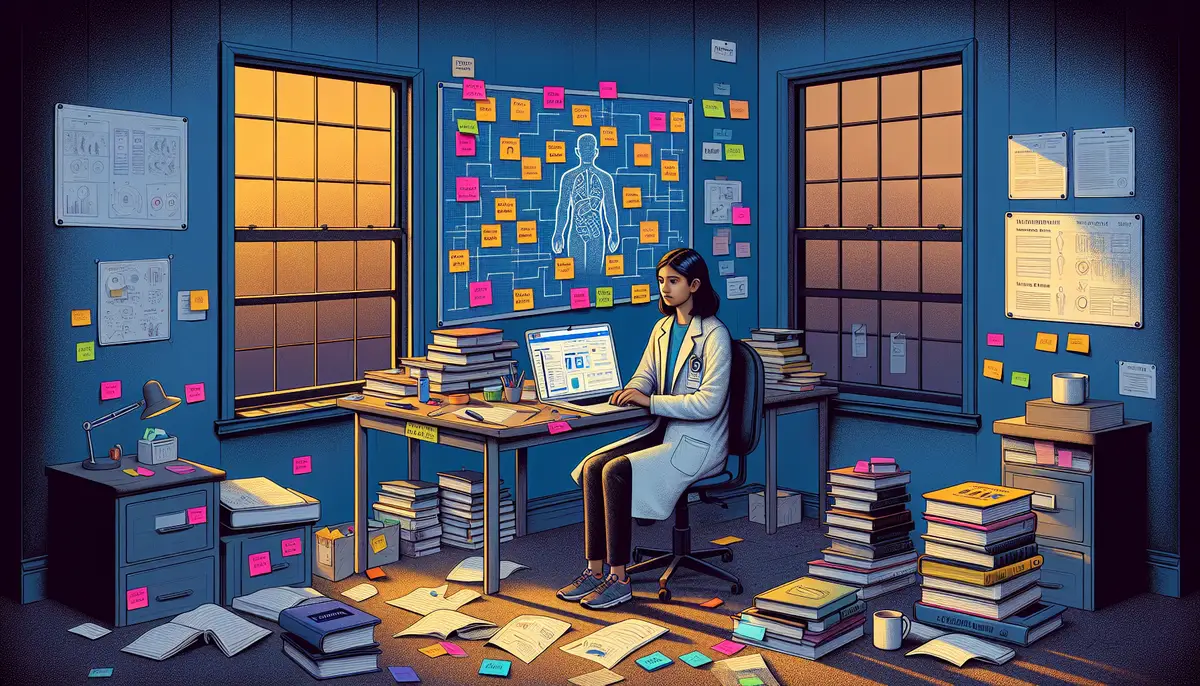
Why Are Lecture Notes So Overwhelming?
Every medical student recognizes the feeling of being overwhelmed by a seemingly insurmountable pile of lecture notes and PowerPoints, frantically trying to sift through information the night before an exam. In these moments, the mental clutter is palpable. The weight of trying to distill complex information from lengthy lectures into retainable knowledge is daunting. According to a study published in Academic Medicine, medical students often face an information overload, which exacerbates stress and hampers effective study practices. This scenario is not just exhausting—it’s also inefficient.
Despite relying on systems like manually typing notes or spending endless hours on Anki, many find that these methods fall short in delivering personalized and efficient learning. Students frequently end up with generic study materials that don’t align with their actual curriculum, resulting in time wasted on irrelevant content. EduMed.org notes the lack of personalization as a common issue in traditional study approaches, further complicating the path to achieving academic excellence.
Here's a complete breakdown of how to transform these lecture notes from chaos to clarity, ensuring that every study session becomes a step towards mastery.
| Feature | Traditional Approach | BoardMaster Approach |
|---|---|---|
| Note Organization | Manual sorting into outlines | AI categorizes and creates targeted questions |
| Flashcards | Hours on Anki | 300 cards in 90 seconds |
| Clinical Practice | Limited real-world application | AI patient encounters with feedback |
| Access to Questions | Self-created, limited scope | 5,000+ USMLE-style questions |
| Feedback Mechanism | Delayed and generic | Immediate, personalized feedback |
The Many Facets of Information Overload
The educational journey of a medical student is peppered with endless codes, terms, and concepts that must be stored in memory. Each lecture adds to this towering collection, creating a backlog that feels nearly impossible to manage. The problem isn't just about quantity; it's also about how these notes are organized and used.
Medical education relies on understanding rather than rote learning, making organizational strategies essential. Poorly structured notes can obscure critical interconnections between topics, leading to a superficial understanding rather than profound insight. A study by the Journal of Educational Psychology indicates that structured and organized material significantly aids comprehension and retention, further emphasizing the need for an efficient approach.
Why Common Methods Fall Short
- Handwritten Notes: While they offer a personal touch, manually written notes can be disorganized and cumbersome to revise.
- Digital Notes: Although easier to store and organize, they often lack contextual depth that aids deeper understanding.
- Flashcards: Without customization, they become arduous to manage and less impactful for specific exams.
Envisioning a Seamless Study Experience
Imagine a study environment where you feel in complete control. Every lecture is not only archived but transformed into strategically structured resources. Picture your scattered notes morphing into targeted questions and customized flashcards in minutes, directly aligning with your course and exam requirements. Transforming chaos into clarity means focusing on essential information while enhancing your grasp on key topics, paving the way for efficient and effective study sessions.
How Tools Like BoardMaster Transform Study Habits
Tools like BoardMaster emerge as game-changers amidst the chaos of traditional study methods. Leveraging AI within sleep-deprived student minds provides specific, tailored solutions that were once out of reach. By allowing uploads of varied formats—PPT, PDFs, Word, even photos of handwritten notes—BoardMaster crafts USMLE-style clinical vignette questions in about two minutes. This feature alone targets the problem areas in conventional study habits, providing a seamless experience where students can focus directly on the professor's teachings.
BoardMaster's AI-powered features extend to producing a staggering 300 flashcards in just 90 seconds, utilizing spaced repetition to ensure efficient learning. These AI flashcards custom-fit to the lecture material make them far superior to traditional self-created cards, especially in subjects covered by existing platforms like Anki, which require considerable time investment without guaranteed customization.
Additional advanced functionalities include AI OSCE practice sessions offering scored feedback and MedTalk AI Podcasts for quick audio learning. These resources signify a shift from passive to active learning where students interact with material in enriching, engaging ways.
Practical Steps to Organize Your Lecture Notes
Step 1: Digitize Your Materials
Start by converting handwritten notes into digital formats for easier manipulation. Using tools like CamScanner or Microsoft Office Lens can prove invaluable.
Step 2: Regular Revisions
Set weekly review sessions for your notes. This helps maintain a manageable workload and keeps your information fresh while aiding long-term retention.
Step 3: Utilize AI Tools
Beyond organization, implement AI-driven platforms that optimize your notes into practical study aids. Tools like BoardMaster transform raw data into structured clinical questions and flashcards, emphasizing high-value details crucial for exams.
Step 4: Centralized Access
Consider cloud-based solutions like Google Drive or Dropbox to store and categorize all your materials. Having one location for all resources simplifies access and reduces the risk of misplacing key information.
Transforming the Study Landscape
The integration of AI tools in the medical education landscape represents not just an improvement in learning efficiency but also a fundamental shift in preparation methods. Students report enhanced focus, reduced stress, and improved scores without the endless grind. By employing BoardMaster's transformative tools, the shift from gestion to proficiency is possible, moving beyond surviving to excelling in medical school.
This evolution is supported by testimonials from thousands of students who experience firsthand transformations by using BoardMaster's AI-driven features, excelling in exams efficiently.
Potential Cost Savings
BoardMaster offers enticing financial savings compared to competitors such as UWorld and Amboss. Where traditional external OSCE sessions start at $100, BoardMaster covers these needs at no additional charge with its tools. The subscription cost aggregates to $33.33/month annually or a flexible $39.99 monthly option, making it both a cost-effective and comprehensive solution.
For students aiming to transition from chaotic study habits to clarity, organized notes and tailored study aids create the opportunity for academic success. Experience the integrated future of learning with AI and let tools like BoardMaster redefine your medical education journey.
Start today—organize effectively, learn efficiently, and conquer your medical education challenges with confidence.
Explore efficient medical studying today and witness how smart learning choices and innovative tech spearhead successful outcomes.