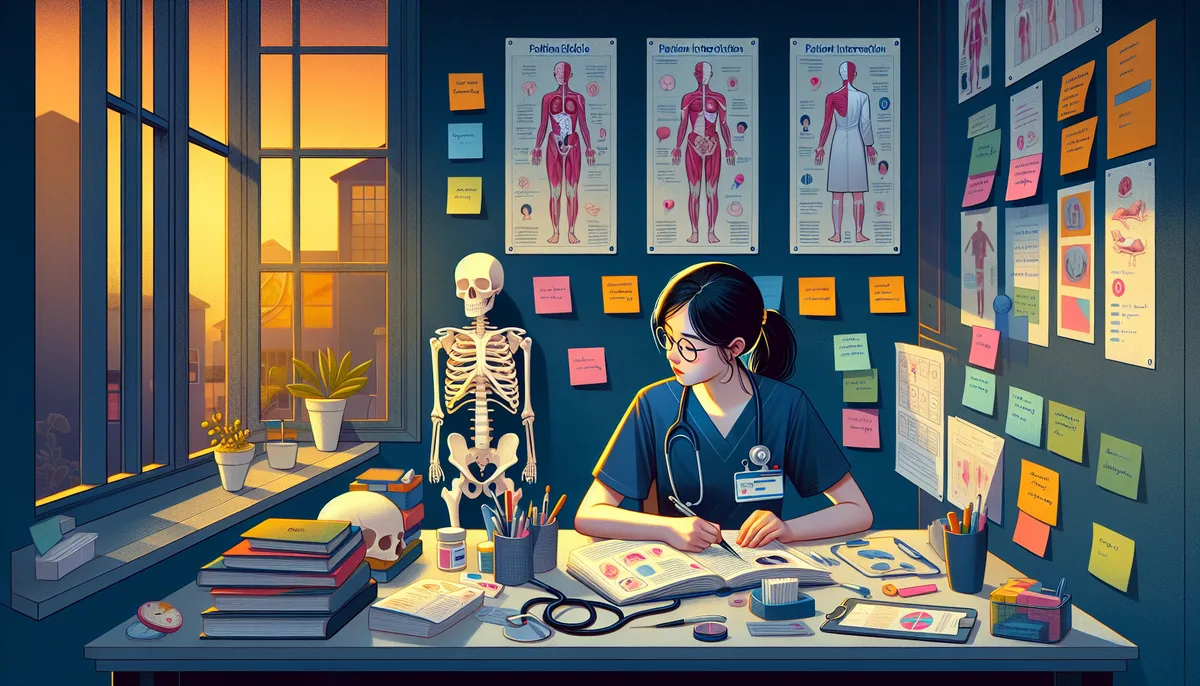
Mastering Clinical Skills: A Personalized Approach with AI
Honing clinical skills is critical for medical students aiming to excel in their future careers. These skills not only affect patient care but are also essential components of medical education assessments like the Objective Structured Clinical Examinations (OSCE). Traditional methods of OSCE preparation often involve practice sessions with peers or standardized patients, yet they can lack consistent feedback and personalization. AI has emerged as a transformative tool in clinical skills preparation, offering dynamic, customized learning experiences that enhance student confidence and competency. Here's a complete breakdown of how integrating AI in clinical skills education is reshaping the landscape and elevating training to new heights.
The Importance of Clinical Skills for Medical Students
Clinical skills are the cornerstone of effective healthcare delivery. From the first patient history to complex physical examinations, these abilities ensure that physicians diagnose accurately and treat patients efficiently. However, developing proficiency in clinical skills poses several challenges for medical students. The workload, combined with the pressure to make fast, accurate decisions, can be overwhelming.
Consider a typical day for a second-year medical student: they juggle intense academic pressures with their growing immersion in clinical environments. With limited time and resources, these students often find it difficult to focus adequately on the practical components of their studies. Many report a lack of confidence in clinical settings, which can translate into performance anxiety during examinations and actual patient encounters. This makes the need for effective, skills-based training crucial.
Why Traditional OSCE Practice Falls Short
Traditional OSCE practice sessions, while foundational, often fail to meet the diverse and adaptive needs of students today. These sessions typically use standardized patients or peers to simulate real clinical interactions. However, access to these resources can be limited, costly, and inflexible, reducing their educational value.
Furthermore, traditional methods may lack the capacity to offer tailored feedback, a critical component for personal growth and mastery. While students can receive immediate verbal feedback, the depth and scope are often constrained by time and resource limitations. This inadequacy highlights a significant gap in the existing framework of medical training. For example, students might practice numerous scenarios but only gain feedback on a fraction, leading to missed learning opportunities and underdeveloped skills.
How AI Transforms Clinical Skills Learning
AI's role in revolutionizing clinical skills preparation is profound, providing targeted, instant feedback systems that are both scalable and accessible. Through AI, medical students can now experience bespoke assessment environments that replicate real-world patient care scenarios.
AI-powered platforms create a tailored learning experience by analyzing individual performance and adapting to the user's strengths and weaknesses. Instant feedback allows students to refine their techniques and knowledge with each practice session, fostering continuous improvement and skill retention.
These systems leverage vast data to simulate a range of medical scenarios, offering practice opportunities that reflect complex clinical situations. AI's ability to track progress and suggest personalized study paths based on real-time performance data ensures that students remain engaged and focused on areas that most require development.
How BoardMaster's AI OSCE Practice Stands Out
Tools like BoardMaster offer a distinct advantage by incorporating AI-driven patient encounters that provide real-time feedback and assessment. With AI OSCE Practice, users can engage in patient scenarios modeled after the OSCE format, receiving scored feedback that highlights their performance metrics and areas for improvement.
BoardMaster's offering allows students to participate in up to 10 practice sessions per month under its subscription model, giving them ample opportunity to hone their skills. This level of access and frequency contrasts starkly with traditional practice methods, where logistical constraints might limit repeated exposure to diverse scenarios.
The instant feedback provided by BoardMaster's system is also a key differentiator. Students receive detailed insights into their performance, which helps them identify and address their weak points effectively. This dynamic feedback loop accelerates the learning process and builds a solid foundation for successful clinical practice.
Personalized Practice: AI's Role in Real Patient Interaction Reflection
AI provides an unprecedented ability to customize learning pathways, allowing for practice sessions that closely mimic real patient interactions. These personalized encounters are crucial in building confidence and ensuring readiness for real-world clinical environments.
Students can upload lecture materials to platforms like BoardMaster, which then generates practice questions and scenarios reflective of their unique curriculum. This alignment with educational content ensures that practice is relevant and directly applicable to the student's learning objectives.
The ability to engage with AI-driven simulations anytime offers a practical solution to the unpredictable schedules inherent in medical training. This flexibility enables students to practice at their own pace, reinforcing learning through repetition and immediate adaptation based on feedback and results.
Embracing AI-Driven Tools for Enhanced Clinical Learning
The integration of AI into clinical skills education fosters a forward-thinking approach to medical training. By embracing these advanced tools, students can develop their skills more efficiently, gaining confidence through consistent, personalized practice.
AI platforms not only offer a cost-effective alternative to traditional methods but also ensure that students can access high-quality training resources independently. This autonomy empowers learners to take control of their education, cultivating a proactive attitude toward skill development and lifelong learning.
Adopting AI in medical training isn't just about technology—it's about transforming educational experiences to equip tomorrow's physicians with the tools they need to succeed. These platforms provide a sustainable and innovative solution to enhance clinical learning, enabling students to meet the evolving demands of modern healthcare.
Comparison: Traditional OSCE Practice vs. AI-Powered Platforms
| Aspect | Traditional OSCE Practice | AI-Powered Platforms (e.g., BoardMaster) |
|---|---|---|
| Accessibility | Limited | High |
| Cost | High | Moderate (monthly subscriptions) |
| Feedback Quality | Variable | Detailed and immediate |
| Personalization | Minimal | High |
| Flexibility in Scheduling | Low | High |
Traditional OSCE practice methods, while valuable, are often limited by logistical constraints and cost. AI-powered platforms offer a scalable, more personalized approach, enhancing learning through flexibility, accessibility, and comprehensive feedback mechanisms.
A Warm Invitation to Embrace AI for Clinical Success
BoardMaster's AI-powered tools redefine how medical students prepare for clinical skills assessments, providing a platform that identifies and addresses individual learning needs. Starting at $1.09 per day under its annual subscription plan, BoardMaster offers an affordable, comprehensive alternative to tools like UWorld, Amboss, and traditional OSCE sessions.
With BoardMaster, medical students can transform their preparation strategy, moving beyond mere practice to a truly personalized learning journey. Explore the future of medical education today by signing up for free and experience the difference this innovative platform can make in mastering clinical skills with confidence and competence.