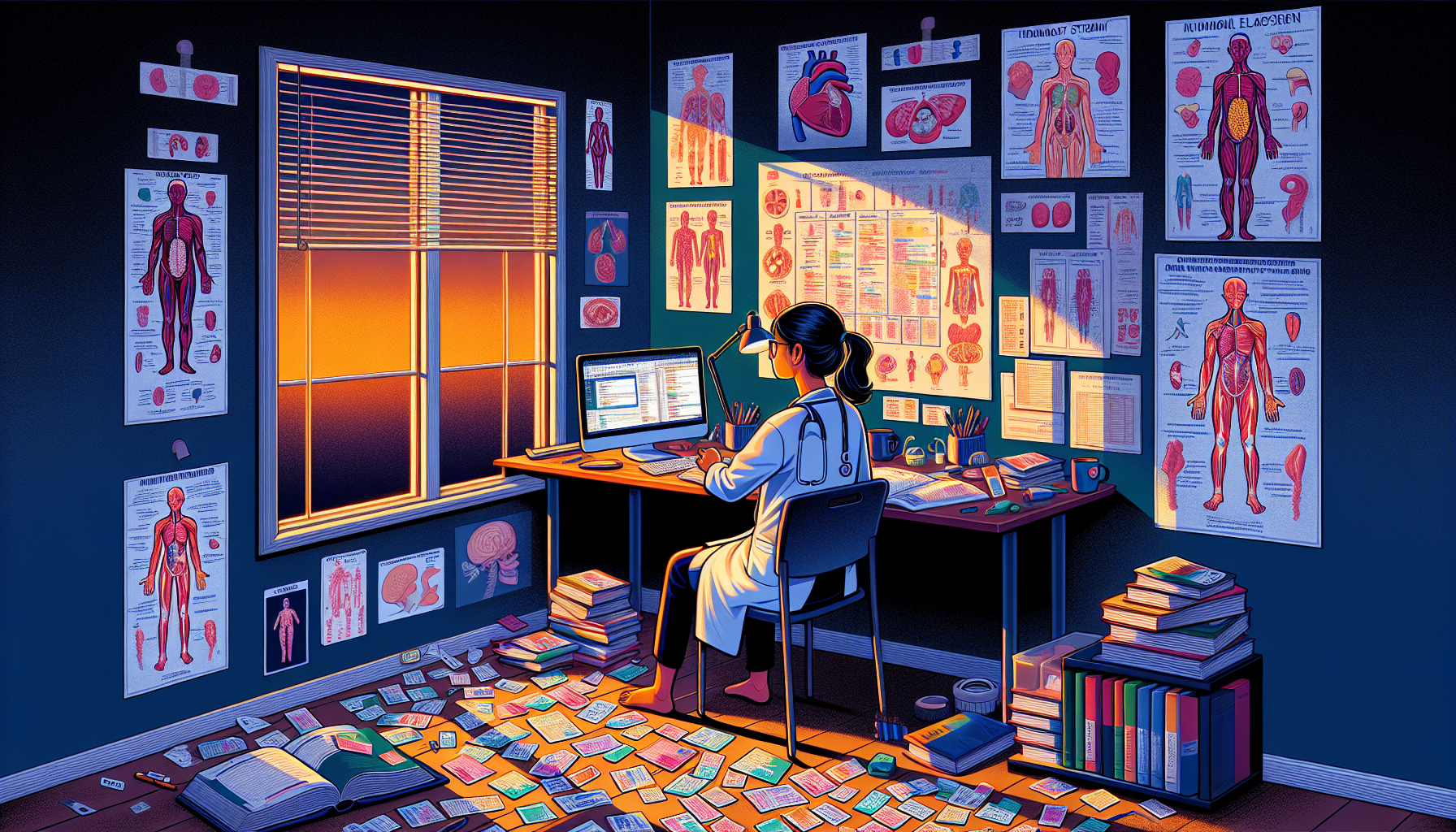
The AI Revolution in Medical Education
Artificial intelligence has rapidly moved from a conceptual idea to a cornerstone of modern medical education. This shift is reshaping the way students learn, practice, and ultimately prepare for their medical careers in 2025.
How Is AI Changing Medical Education?
AI's impact on medical education is profound due to its ability to tailor learning experiences to each individual's needs. As opposed to traditional methods, where education is curative, AI promotes a preventative approach by targeting specific weaknesses early on.
Why Traditional Methods Fall Short
Traditional medical education typically follows a rigid structure, designed for mass instruction rather than personal growth. Course materials often fail to address every student's unique learning style, resulting in knowledge gaps and inefficiencies that can be detrimental to both academic performance and future patient care.
While textbooks and lectures have formed the backbone of medical education for centuries, they require students to adapt to their structure rather than the other way around. Students often resort to supplementary tools like models and online resources, but these come with the limitations of content relevancy and focus on specific learning needs.
Personalized Learning at Scale
Adaptive Study Plans
AI is transforming this landscape by introducing adaptive study plans that cater to individual learning trajectories. By analyzing patterns in student performance and engagement, AI tools customize study timelines and content to optimize retention.
An average second-year medical student could benefit immensely from a personalized approach that identifies weaknesses in renal physiology and, therefore, suggests additional study on this topic while reducing time spent on areas where the student excels.
Intelligent Content Delivery
Moreover, AI does not merely personalize what you study, but also how you study it. Through intelligent content delivery, AI platforms may decide that a visual learner could benefit more from interactive diagrams rather than text-heavy presentations, or that kinesthetic learners need simulation exercises.
The Rise of AI-Powered Practice Questions
Dynamic Question Generation
Perhaps one of the most revolutionary AI applications is dynamic practice question generation. Using algorithms, these systems can take a body of study material and generate comprehensive and targeted practice questions. These are not just random questions but are aligned specifically with what students are exposed to in their courses.
In traditional formats, students often spend hours crafting flashcards or searching for relevant questions. Instead, advanced memory techniques that tie into dynamic question generation set a new standard by generating questions within minutes, thereby saving valuable study time.
Comparison Table: Traditional vs AI-Enhanced Methods
| Feature | Traditional Approach | AI-Enhanced Approach |
|---|---|---|
| Study Plan | Standard syllabus, passive | Custom, adaptive to gaps |
| Content Delivery | Lectures, textbooks | Visual, interactive, tailored |
| Practice Questions | Static, limited | Dynamic, content-matched |
| Patient Interactions | Rare, scheduled | Frequent, virtual patients |
| Cost | High, variable | Lower, comprehensive |
Simulated Clinical Practice with Virtual Patients
Simulated Patient Encounters
Clinical reasoning is a challenging skill to master, yet vital for any medical student. AI-powered virtual patients can simulate authentic clinical situations, offering a risk-free environment to practice not only theoretical knowledge but also decision-making, history-taking, and examination skills.
For instance, a student can interact with a virtual patient experiencing chest pain, order tests, and decide on treatment plans. This offers a practical dimension to their learning that was previously seen only in real-world clinical rotations. For those struggling with clinical skill exams, simulated practice provides critical exposure.
Future Prospects in AI and Medical Education
The advent of AI in medical education does not mean that traditional methods become obsolete; rather, they're enhanced. AI allows educators to focus on the humanistic and ethical teaching that makes great physicians, while AI handles the churn of academic data processing.
It's crucial for educational institutions to remain updated on these transformative technologies. As we move forward, the discussion will shift from whether AI has a place, to how we harness its potential optimally, preserving the integrity and human touch of medicine.
Looking towards the horizon of medical education, platforms like those powered by AI are already paving new paths for learners across the world. Harnessing AI for Effortless Learning in Med School explains how integrating these tools can enhance efficiency without compromising depth.
What Makes AI Tools Distinct?
AI platforms in medical education—such as tools offering AI-generated questions and flashcards—provide an all-in-one solution that overcomes the limitations of traditional study methods. With these tools, students receive actionable, personalized guidance. Notably, platforms that support comprehensive features like OSCE simulations and intelligent flashcard systems are making waves by reducing study time while increasing material retention.
How to Take the Leap into AI-Enhanced Medical Learning
If you're looking to incorporate AI into your study regimen, consider starting with platforms offering flexible features and strong academic credibility. They should match your learning style while efficiently handling complex, heavy course loads.
The integration is as straightforward as uploading your notes and lectures to an AI system, allowing it to generate practice questions and flashcards tailored to your educational needs, without the exhaustive manual input that competitors require.
Embrace the broad spectrum of AI-powered educational tools to revolutionize your medical learning journey. Whether choosing a platform with a solid cost-to-benefit cover or simply exploring available adaptive tools, committing to AI-enhanced education should enhance your success in ways traditional methods can't match.